
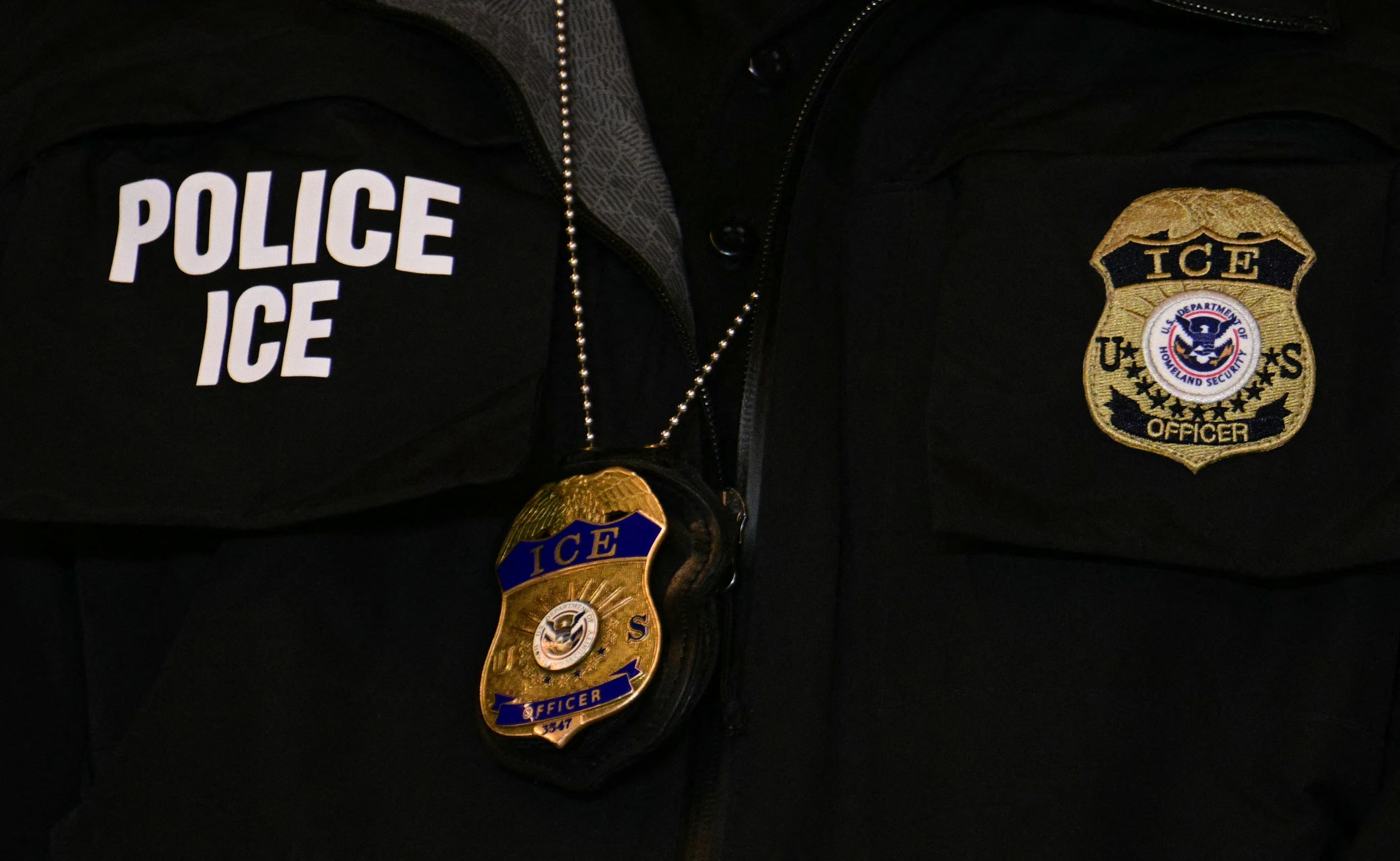
In March, Vivian, an undocumented transgender sex worker from the state of Chiapas, Mexico, was driving from San Diego to her house in Santa Ana when her biggest fear came true: She was stopped by Immigration and Customs Enforcement at a traffic checkpoint. "Thank God they let me go," she says.
But she fears one day they might not. Last year, her friend Sadis was working at a hotel in Saddle Brook, N.J, when police attempted to detain her. "She jumped into an Uber to try to get away," Vivian says. Police caught up. Sadis was arrested, handed over to DHS, and sent back to Honduras. A week after arriving, she was tortured, possibly by gang members; they were never caught. "They threw her off a bridge like an animal," Vivian says. Sadis didn't survive.
Though Vivian has an asylum case pending in New York, that is no guarantee that in the meantime she won't be sent to a detention center or deported, as so many have as they await their hearings. The legal asylum process can take years as court dates are delayed because judges have been fired and immigration courts are closing, says Isa Noyola of the Transgender Law Center, where she directs their Border Butterflies Project, an LGBTQ+ immigration services program that has offices in Oakland and Tijuana. There is a backlog of 3,288,166 cases in immigration courts nationwide, according to Syracuse University's Transactional Records Access Clearinghouse.
Vivian is 29 and splits her time between California and New York. She would like to drive for Uber, but she can't work legally until her work permit is renewed. Renewals are taking from eight to 18 months to be granted, says Abigail Anzalone, co-director of Urban Justice Center's Sex Workers Project.
Instead, Vivian engages in sex work. Sex work is common for transgender immigrant asylum seekers, people "who get pushed to the fringes of the formal economy," says Molly Cohen, a senior supervising attorney at Urban Justice Center's Sex Workers Project.
Vivian screens her clients with video calls prior to accepting a date, and she uses Mr. Number, a screening app that allows people to report dangerous clients and undercover law enforcement. But there's no way for her to guarantee safety. "It's a really scary job. I'm always afraid that people are going to stab me, kill me, hurt me," she says. "I don't really do it for pleasure. I just do it for money."
Asylum seekers are caught in a terrible bind. They must do illegal work to make ends meet while their cases slowly wind their way through the courts. But if they get caught, a criminal charge may stop them from being granted asylum. Even if trans immigrants are lucky enough to get a hearing, the judge who hears their case may not be sympathetic. More than a hundred immigration judges have been fired under the Trump administration, to be replaced with so-called "deportation judges."
"The fair and good judges are gone," Anzalone says. "The judges with the highest [asylum] grant rates were on the chopping block first."
Prosecutors have also made life for trans asylum seekers more complicated, proposing to send trans people to countries that have asylum cooperative agreements with the U.S. but are dangerous for LGBT people. One Department of Homeland Security prosecutor sought to send one of Cohen's trans Mexican clients to Uganda, which has the death penalty for gay sex. Cohen was able to avoid this by pointing out that, according to the law, people can't be sent to countries where they could be expected to face harm.
Anti-trans laws also make transgender people more likely to encounter law enforcement in the first place. "Even just simply going to the restroom at an airport could lead to police interaction, which then could trigger folks calling ICE to say, hey, this person doesn't speak English, and we think they're undocumented or 'illegal,'" Noyola says. She adds that supporting trans immigrants has become more challenging during the second Trump administration, which is "trying to make it essentially illegal to do the work that we do."
How many of the 60,311 people who are in ICE detention are transgender is unknown. ICE was once required to record the number of transgender, gender non-conforming, and intersex detainees. In February 2025, the Trump administration put an end to this practice. The last data we have is from Jan. 12, 2025, when 47 trans people were in ICE custody. The numbers are most likely higher now, because overall detention rates have gone up significantly and the Trump administration has singled out transgender individuals in all walks of life. "Transgender asylum seekers are targeted and disproportionately criminalized when it comes to trying to seek humanitarian protection," Cohen says.
ICE detention centers are unpleasant for everyone, but they are particularly bad for trans people, who are housed by their sex assigned at birth and frequently denied gender-affirming treatments. They are at higher risk for sexual violence and harassment, Noyola says. They are also much more likely to be put in solitary confinement, known as "administrative detention," ostensibly for their safety.
Even during the Biden administration, when protections for trans people were stronger, conditions for trans people in ICE detention were dangerous. A 2022 Williams Institute policy brief said that transgender and gender non-conforming people in ICE custody faced "discrimination, neglect, abuse and torture," were "subject to inhumane conditions," and "held for significantly longer than the average person detained."
Conditions are worse today. Noyola cited one of her clients, a non-binary immigrant with leukemia in an Arizona detention facility, who has been denied medication for their cancer and has lost 70 pounds.
Vivian is just one of a number of trans immigrant sex workers whose lives have been upended by ICE. Anzalone, who is representing Vivian in her asylum case, says she has received reports of ICE targeting sex workers in Florida, Virginia, Massachusetts, and New Jersey.
As Vivian awaits her asylum decision, she lives with constant anxiety. "ICE is like a torture to me every day," she says. "They are tormenting transgender people. I have trouble breathing because I'm so anxious, but I try to relax and speak with a therapist. … I don't even trust my shadow."
The reason Vivian and many others like her ended up in the U.S. was to escape violence in their home countries. Being transgender was a daily struggle when Vivian was growing up in Chiapas. "People tried to kill me. I survived a knife attack, an acid attack. Ever since I was a child, people tried to hurt me," she says. "I had to escape."
At age 15, Vivian hopped on a truck and fled to Mexico City. She began selling sex at the Alameda Central, a large wooded park full of lavender trees downtown.
Vivian came to the U.S. briefly in 2021, when she was 20, before returning to Mexico. She came again in 2024 to escape the violence that was affecting her friends, many of whom had been killed. At least 35 transgender people were murdered in Mexico last year, according to Trans Murder Monitoring.
Noyola says that cartels in Mexico regularly target trans people, who are uniquely vulnerable, threatening violence unless they or their families make regular payments. Trans Law Center's Tijuana shelter houses such people. But if trans people or their families pay off the cartels, they can be denied asylum in the U.S.: The government can allege that the asylum-seeker gave material support to a terrorist organization. Anzalone says one of her clients, a trans woman from El Salvador, was forced to pay extortion money in 2011 when she was 19 years old under threat of death. Now she may be denied asylum because of it. Anzalone is now trying to prove that the organization she paid off was not classified as a terrorist organization 15 years ago.
Sex work is risky for trans people, even without the threat of ICE detention. The 2015 U.S. Transgender Survey found that 72 percent of trans sex workers had ever been sexually assaulted. Vivian briefly worked on the street in the Bronx, but found it too dangerous. "On the street, there's a lot of problems. The police are out there. … There's a lot of turf wars and stuff," she says. Vivian now finds clients online. "I prefer to just meet clients at home," she says.
She prefers working and living in New York because she gets housing and medical support from the HIV/AIDS Service Administration. Vivian previously tested positive for HIV, but the ongoing treatment she receives allows her to have an undetectable and non-transmittable level of the virus in her body. "I don't know how I would live if I didn't have this help," she says.
Sex workers in New York City are a bit more protected because the city police do not formally cooperate with ICE's immigration detainers. But work in New York has become harder to come by. "Business in New York has gone completely down," Vivian says. Most of her customers are also immigrants and they're afraid to leave the house for fear of being deported.
"When ICE came, everything got worse. People did not want to go out. People were not hiring anyone. People were afraid to go out on the street," she says. "My clients themselves are terrified of the police and of ICE."
She also has fewer venues where she can safely work. "The police are just circulating through the hotel, looking, trying to figure out what time you're working and then trying to pick people up," she says. Money is very tight. "There were days that I just didn't have anything to eat."
Vivian doesn't understand why the government wants her dead. "I also have a heart," she says. "I'm trying to be well and do my best. People don't need to treat me badly."