
There’s an apocryphal story concerning the original pitch for Girls: Supposedly, Lena Dunham wrote it on the back of a cocktail napkin. It was all vibes but no plot or fleshed-out characters, and situated the show concept somewhere between Gossip Girl and Sex and the City. It was about the sort of girls Dunham—then 23 years old and making a web series in SoHo—knew and was friends with. The cocktail-napkin pitch has become a metonym for her career more broadly—evidence of either her breezy genius or the unacknowledged privilege that underpins it all.
Except, Dunham writes in her new memoir Famesick, that story is bullshit. “I’d actually written it on my brother’s laptop, borrowed for the trip.”
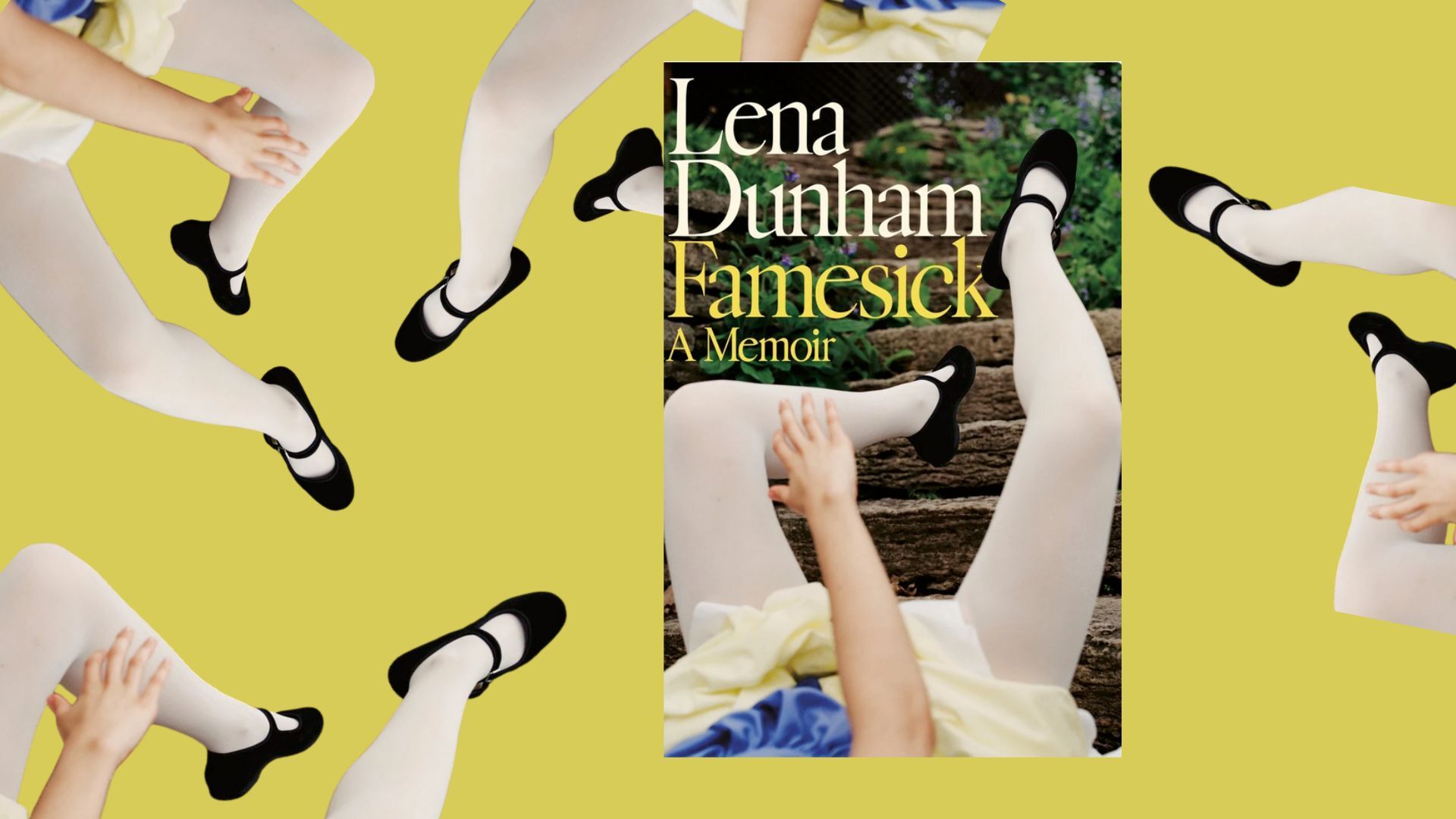
Dunham wants you to know that she understands her name ceased to be a precise identifier for her individual person long ago. She accepts that a life and legacy defined by those stories is the price she’s paid for fame. She gets it, she really does. But she wants you to know her side, too. Famesick is a granular, exhausting, 15-year-long account of her side, from her early days as an indie filmmaker in New York, her stay in rehab for a Klonopin addiction, to her new life in London with her husband, musician Luis Felber.
Famesick’s title implies an examination of the twined nature of illness and fame that might produce the kind of reassessment of maligned celebrity that became popular in the 2020s with early episodes of You’re Wrong About, except this time, the subject would do the debunking herself. The book is dedicated to 27 deceased celebrities including Marilyn Monroe, Liam Payne, and Eve Babitz, as well as “anyone else who was too Famesick to be cured.”
The dedication might lead you to believe that this new word, capitalized for emphasis, will play a role in the memoir, but the word “famesick” appears only once in the text, when referencing a friend who left a group chat of new mothers (plus Dunham) because Dunham was taking up too much space talking about her endometriosis and a final attempt at IVF. One by one, the mothers leave the group chat to “focus on the baby.” Later, one of these women develops the same illnesses as Dunham and crawls back looking for advice, and Dunham writes, “Maybe she was just famesick, suffering, and unaware. Who am I to judge?”
That is not to say that fame and sickness aren’t themes of the book; its narrative is built around their ratcheting intensity, how the demands of both mounted until her body and brain broke at once, culminating in a triad of catastrophes that took place in the span of one month: a hysterectomy, the end of her five-year relationship with Jack Antonoff, and a disastrous PR scandal. But where other memoirs of chronic illness—a genre sufficiently established at this point to have earned the moniker “sick lit”—weave in everything from literary criticism to sociopolitical histories of illness, Dunham mainly avails herself of juicy details about her relationships with Antonoff, Adam Driver, and Jenni Konner. Conveniently, she is often the victim in the dissolution of her closest relationships.
With respect to fame, Dunham presents herself as a naive people pleaser who feels the highs and especially the lows of public life acutely. And it’s important for the reader to know that the cool parts of being famous aren’t actually that cool: The Met Gala sucked, as did being photographed by Annie Leibovitz (twice) and hosting SNL. She also writes that she has seen the famous PowerPoint laying out the theory that Antonoff cheated on her with Lorde in 2016.
Each chapter features a new ailment—colitis, a ruptured ovarian cyst, an OCD flareup—each one a crisis that engulfed Dunham and anyone in her orbit. Those around her fail to support her in the ways she needs; Driver throws a chair at a wall out of frustration during a rehearsal, when Dunham is in the middle of a dissociative episode. Antonoff is two hours late to her surgery with a bouquet of bodega flowers. Konner is a mercurial work wife who might act like a best friend one day and a cold manager the next. And Dunham sits in the middle of all of this, hapless, well-intentioned, but a bit too sensitive and awkward to manage her fame with the necessary grace. The physical maladies culminate in diagnoses of endometriosis and Ehlers Danlos syndromes; the mental ones in an addiction to the Klonopin that had been prescribed for her chronic pain and anxiety.
She tells the story of “The Big Bad,” which is her name for the incident when she and Konner released a statement in support of Girls writer Murray Miller after he was accused of sexual assault, with a fascinating sense of passivity. She refrains from describing the situation with any specificity “out of respect for the people involved,” aside from the fact that it took place on Nov. 17, 2017. She says she made the statement when she was high on post-surgery opiates: “I know that Jenni had come in from Los Angeles to see me,” she writes. “I know that we made the statement together [...] and before I even knew it was online, I was receiving messages—so many messages—asking why.” Later, the responsibility she takes is cut with qualifications: “I was so deep in my own distress—physical, emotional, existential—that I had ceased to be able to imagine or invest in anyone else’s.” Ownership taken, but in a way that foregrounds her pain.
It is true that addiction impairs one’s judgement. It is also true that this was a hideous thing to do, and consequences it had for Dunham’s public image were earned. Years later, now that she has the space to fully explain what happened, her account is still couched in victimhood.
“Describing the vicissitudes of pain is an exhausting exercise,” Dunham writes. “It makes you feel crazy to look that deep inside yourself, like you’ve gone so far inward, you might never emerge.” It’s from that place, deep inside herself, that Dunham seems to have written this attempt to revise the narrative about her that’s already been committed to the public imagination. The result is sometimes vulnerable—occasionally sharing more than feels right for a stranger to know—but the writing itself is undisciplined. Twice, Dunham uses the exact same anaphora in the immediate aftermath of two different relatives dying: “Jesse, the first grandchild. Jesse, the handsome skateboarder with the chest tattoo [...] Jesse, who had taught us about hip hop and skate parks,” and “My uncle, who had never so much as placed his lips on a joint. My uncle, who was so racked with guilt [...] My uncle, who laughed so fucking hard every time I made a joke.”
There are two separate comparisons to Frankenstein’s monster. She directly addresses the audience as “ladies and gentlebeans.” And she employs a gratuitous, perhaps even pathological use of simile throughout her descriptions, sometimes three to a page.
There are a few glancing moments of lucidity; she’s most compelling on the rare occasion that she’s owning up to the ways she exacerbated both the personal and public crises. “Empathy [...] had left me,” she writes. “In a sense, this is the narcissism of fame in its purest form.” In these moments, she isn’t fighting so hard to displace the version of Lena Dunham who looms so large in people’s minds with her version.
There are also a few spots when her writing about illness is bracing and clear: “Being chronically ill meant that you were never getting better. There was no well when your status quo was sick, and maybe we’d all do better to take that into account,” she writes. “When I met my husband, he told me about his trauma, and I told him two things I saw as facts: I was sick, and people did not like me.”
Those moments of honesty are glimpses of what has made Dunham’s work—and the project of her image—so compelling and frustrating at once. Her vulnerability entices and it repels.
It should be noted that this is Dunham’s second memoir; the first was Not That Kind of Girl, published in 2015. Believing that you have lived enough life and have enough to say to have published two memoirs before the age of 40 is particularly Lena Dunham in that self-aggrandizing way, and also in that Nora Ephron “everything is copy” way. The first half of Famesick retreads similar ground as Not That Kind of Girl, though it’s altogether less cutesy (there are no essays in list form, for example).
Since the release of her last memoir and the end of Girls, Dunham has directed the pilot of Industry; wrote and directed an adaptation of Catherine Called Birdy; co-starred in Treasure, a movie with Stephen Fry about a daughter returning to Poland with her Holocaust-survivor father; and, most recently, wrote and directed the show Too Much on Netflix. She also quit Twitter, moved to London, got married, and has managed to keep her name out of the discourse long enough for her reputation to rebound from the crisis state it was in nearly a decade ago. Public opinion has largely swung back in favor of Dunham and her work. Younger generations are discovering Girls the way millennials watched Friends, Living Single, and Sex and the City. It’s taken its place in the pantheon of coming-of-age shows set in New York. Taking time to speak predominantly through her work has been good for Lena Dunham, the brand. So of course she chose this moment to stir it all up again, because she is still Lena Dunham, the person.