

In 1975, just three years after the release of the Kawasaki Jet Ski, the American crocodile was nearing extinction in the U.S. The nation's crocodile population, only found in South Florida, had dwindled to just 200 individuals, with 10 to 20 breeding females. The crocodiles' population had plummeted due to habitat development and hunting, for sport or hides. In 1975, the American crocodile was listed on the federal endangered species list, where it stayed for nearly three decades until it was downgraded to threatened status in 2007.
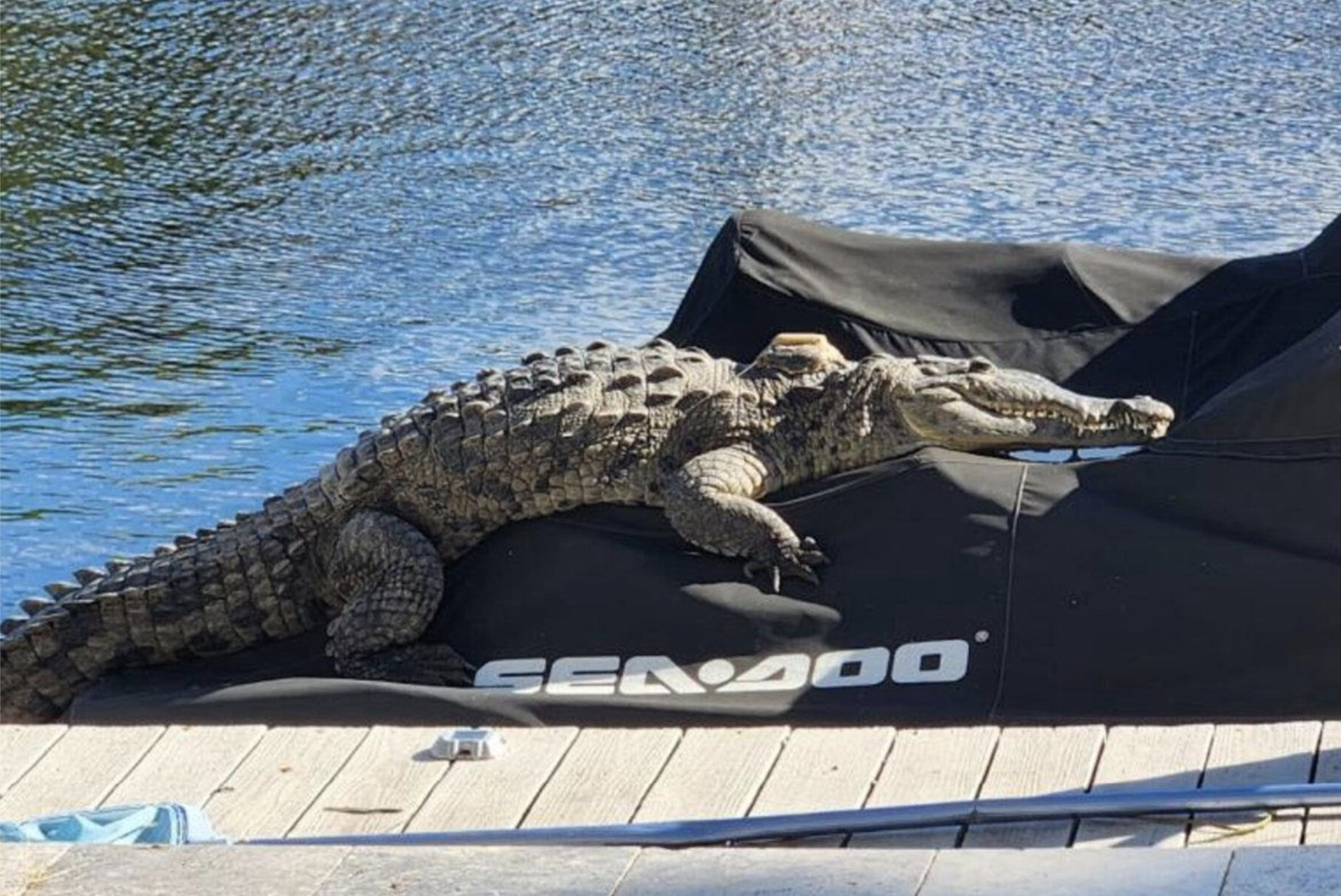
The population has since rebounded to approximately 2,000 individuals, most of whom dwell in protected areas like the Everglades. But the reptiles' historic South Florida homeland has been transformed from swampy creeks to a heavily developed landscape. The shores where crocodiles once hauled out to bask have been barricaded with sea walls intended to limit erosion. But some heavily developed areas have unintentionally offered the reptiles a very modern refuge for basking: jet skis, paddleboards, and kayaks, according to a paper recently published in the Wildlife Society Bulletin. These vessels don't just offer crocs a spot to nap, but a lifeline to meet their basic physiological needs in a heavily altered environment, as well as a way of looking super chill and cool.
As cold-blooded animals, crocodiles rely on external heat sources to regulate body temperature. Basking in the sun helps the creatures warm up, and gaping (holding their mouth open) helps them release heat during the day and night. And as southern Florida's creeks have vanished to make way for human development, recreational watersports equipment has become the next best thing for the job. It's a sign that crocodiles are adapting to us; the least we can do is adapt to them.
Presumably the owners of the jet skis in question see the crocodiles as a nuisance, if not an outright threat. (At least the crocs do not appear to be defecating significantly on them, as other boat-enjoyers are wont to do.) When the Florida crocodile population rebounded, so too did conflict between people and crocodiles. People were unaccustomed to the predators' presence because the population had become so endangered.
But it is unrealistic to expect crocodiles to stay away from the suburbs. The reptiles are famous commuters, although they can slither through South Florida's many canals and waterways without attracting any human attention, according to The Guardian. In 2013, one 700-pound crocodile made a 350-mile trek from Miami to Tampa for reasons that remain, intriguingly, unknown. They can swim dozens of miles in just a few days, jetsetting from the Everglades to an idyllic suburb, where people perceive them as threats and conflict ensues. Relocating a crocodile can help resolve conflict but is no easy feat. If you move a crocodile under 60 miles away from their home range, the creature will find their way back in a matter of weeks. (To be clear: If you move a crocodile more than 60 miles away from their home range, there is no guarantee they will stay away, but at least it will take them longer to swim back.)
The new paper may come as no surprise to any Floridian who owns a jet ski or is a crocodile. But the researchers argue that the frequency of crocodiles basking on recreational boats suggests that the reptiles may have no other way to bask in these heavily populated areas riddled with concrete. The researchers also suggest alternatives, such as adding basking platforms to sea walls or creating artificial structures for basking crocodiles. Around 25 miles south of Miami, the Turkey Point Nuclear Power Plant has created artificial structures for the resident crocodiles to bask and deposit their eggs.
If you have the strange fortune of living in Florida, consider that allowing a croc or two to lounge on your paddleboard is not just being a good neighbor, but also helping a once imperiled population continue to thrive. Maybe you'll even feel moved to teach them how to ride.