
On the cover of Slam magazine's October 1998 issue, Chamique Holdsclaw wore a New York Knicks jersey, NBA basketball in hand. Right next to the forward from Queens was a sneaky inversion of the more common question: "Is The NBA Ready For Chamique Holdsclaw?" She was the first female athlete to appear on the magazine's cover, and as former Slam editor-in-chief Tony Gervino would recall in a 2024 essay, the editors were intentionally being a little provocative. Reader reception was not as negative as expected, although Pat Summitt, Holdsclaw's college coach at the University of Tennessee, called Gervino to chew him out about how her player could have lost her NCAA eligibility if she had accepted the Knicks jersey she was wearing for the shoot.
Growing up in Astoria Houses, Holdsclaw said she had to have her friends advocate for her to be able to play basketball at the local Boys and Girls Club. She went on to have a terrific high school career at Christ the King in Queens, followed by more of the same at the collegiate level. Holdsclaw was entering her fourth season with the Lady Volunteers at the time of the Slam cover, and had dominated the college game as the program won three consecutive championships. She remains the all-time leading scorer and rebounder in NCAA women's tournament history, recording totals of 470 points and 197 rebounds.
For Holdsclaw, who was part of the 2026 class inducted into the Naismith Basketball Hall of Fame this past weekend, the Slam cover wasn’t actually asking if she would go play against the men. It didn’t really matter what the boys were doing. The WNBA was two years old and was looking for more star power. Slam, among others, predicted she would be the one to fill those shoes, calling her "the future of women's basketball."
We're actually in that future now. Two decades later, the WNBA is thriving after a long-term TV rights deal worth billions of dollars. The league's players accrue millions of online followers, and their presence on Slam covers has become commonplace, even if the second woman didn't appear on it until Maya Moore in 2018. Despite the exhausting culture wars, the stars are abundant and the arenas are packed.
This was not the case when Holdsclaw was drafted first overall in the 1999 draft. Women's pro basketball was still finding its footing, to put it generously. The American Basketball League, the other women’s league at the time, had folded the year prior, sputtering into bankruptcy by that Christmas. League iterations before then included the Liberty Basketball Association, which intended to have the players wear unitards and lasted one game. The idea that the WNBA was going to stick around felt shaky. A breakout star like Holdsclaw could make a real difference.
That’s where Holdsclaw intersected with my life, when I was a basketball-playing teenager who needed a pro team to root for. Admittedly, I didn’t love her from the start. I didn’t have the appreciation I do now for Holdsclaw's ability to take over a game on both ends of the court, or her ability to fly up in transition, ball in hand, without waiting for a guard. How she could lose the defender with her pull-up, or spin into a mid-range jumper. If my understanding of basketball as a kid was that you could have height or you could have handles, Holdsclaw blew that mistaken principle out of the water. At 6-foot-2, the two-time Naismith College Player of the Year still had the quick hands to record 305 steals in college, ranking fourth all-time for the Lady Vols.
I had fallen in love with UConn because of Rebecca Lobo’s run a few years earlier—she was personable and that team was everywhere, looking like they had the most fun on the court. As someone who grew to be just a little taller than my teammates (but not advantageously tall), I played at the 3 or 4, but I admired Lobo’s similar skills to slice through the paint for a rebound and then turn around to shoot a three.
So I drifted more toward UConn. In the acrimonious rivalry between the two schools, there was no room to root for the Lady Vols star.
This month, I spoke to Samantha Williams, who was a four-year starter at Auburn in 1992-96. She went on to be a longtime assistant coach at the college level, and is currently chief of basketball strategy at Mississippi State. Williams argued that if Holdsclaw’s era had come with the type of social media and NIL opportunities available now, every little girl would have rooted for her earlier. It probably wouldn’t have mattered as much to me, a young basketball fan, that she played for a different team than the one I first supported. Rivalry be damned, more of us would have bought in.
“They won three national championships in a row,” Williams said of the Lady Vols, “and she was dominant. She would have been a household name—not that she wasn’t. I just think her market, media presence—more little girls would have known who she was because she is also a really good person.”
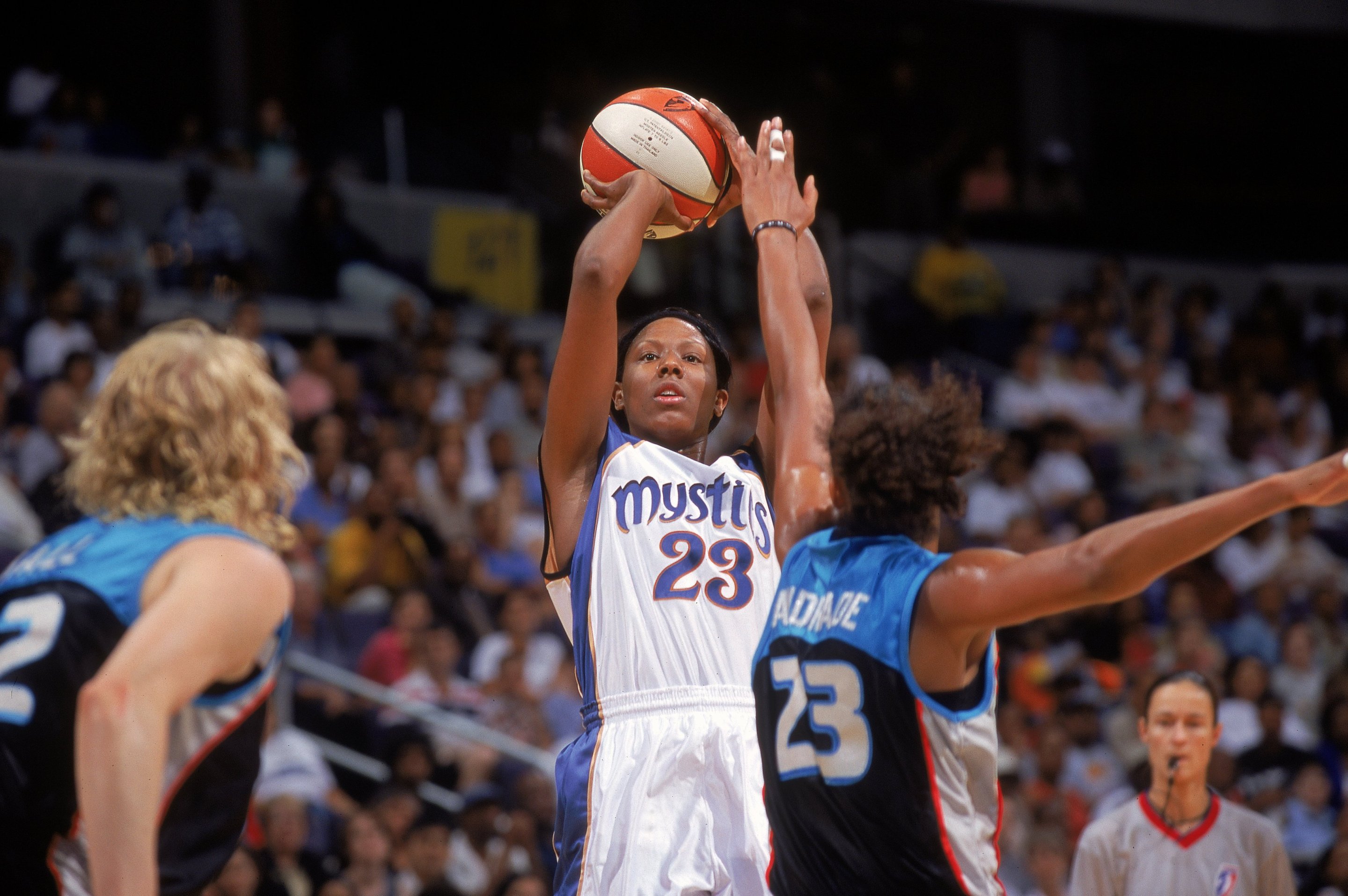
Still, I came around to rooting for Holdsclaw. As a Maryland kid, I was thrilled when the Washington Mystics drafted her first overall. She was all that was advertised. By 2002, Holdsclaw led the WNBA in scoring, and the excitement around the Mystics followed suit. The team led the league in attendance and set a record at the time for the largest crowd to watch a women’s pro basketball game in the United States, when more than 20,000 poured in for the season opener.
As someone who grew up for most of my childhood without a women’s pro league, I understood that this was a big deal. Sports media put Holdsclaw in places normally reserved for men’s stars. She was in Sports Illustrated. She was on ESPN. She meant that women’s basketball had made it to a level of security where it wasn’t going to disappear again—at least in my mind.
As happy a story as this might sound, it never was that simple for Holdsclaw. The Mystics never fully capitalized on the court. The furthest they made it with her was the 2002 Eastern Conference Finals, where they lost in three games to the New York Liberty. Holdsclaw stepped away from the Mystics in the middle of the 2004 season for "undisclosed medical reasons," later revealing that the cause was depression stemming from her grandparents' deaths. Years later, Holdsclaw revealed in her book that she attempted suicide in 2006, waking up in a hospital bed, unsure how she’d landed there.
In those days, mental health was not regularly entering the conversation in the world of sports. It was considered unique when, shortly after winning the 2010 NBA Finals with the Lakers, Holdclaw's longtime friend Metta Sandiford-Artest thanked his psychologist. Years later, Kevin Love would disclose that he suffered a panic attack during halftime of a game. But before that, there was Holdsclaw, wondering if she'd ever get back on a basketball court.
By the time I met Holdsclaw in 2016, at a nondescript coffee shop in suburban Virginia, I hadn’t played basketball in years. The truth is I was a barely decent high school player for the Catonsville Comets, so I never had serious dreams of making the WNBA. After my hoops career ended, I went into sports journalism and was by then a reporter for USA Today. I kept glancing around to see if anyone in the cafe recognized Holdsclaw—after all, she was at one point the greatest college basketball player on the planet. (No one did.)
We weren’t really meeting to talk much about Holdsclaw's basketball career. Things continued to go south after she retired from the WNBA. Four years before our meeting, in November 2012, she attacked her ex-girlfriend Jennifer Lacy's car in Atlanta with a baseball bat, then fired a gun into it. Holdsclaw would later say she was in a blackout state. Miraculously, no one was physically injured. Holdsclaw pleaded guilty to the charges in June 2013 and received three years' probation, along with a $3,000 fine.
That incident was what got Holdsclaw to a place where she was diagnosed with bipolar disorder. It got her on the path to the right treatment. Instead of hiding from it, she was ready to tell her story. She participated in Mind/Game, a 2015 documentary about mental health starring her and Sandiford-Artest, and that was the first time she told the full story of what happened that night in Atlanta—as well as what happened every time she was away from basketball, starting in college. She would leave the court, and darkness would creep in. Even as the accolades were piling up, she was struggling.
In my interview with her, we talked about her journey through those dark times and how she had picked up the pieces. She told me how she went to visit Summitt, her old coach, who at the time had been diagnosed with early-onset Alzheimer’s. "Everything is going to be fine," Summitt said, according to Holdsclaw. "People close to you know what type of person you are, this is just something that happened."
Holdsclaw took part of Summitt’s advice: She kept going. But instead of making it just something that happened and trying to move past it, she looked beyond herself. Once she realized why and how to fix it, she wanted to tell the world what happened. She felt like it was the best way to help others. After all, so much had already rested on her shoulders. What was one more thing?
In recent years, Holdsclaw has traveled the country following the release of the documentary, speaking out about her struggles with mental health and working as an advocate. She was married in 2018 to Cara Wright, whom she met while working at a basketball camp in 2015. They have two children together. Holdsclaw has also found her way back to the forefront of basketball, joining USA Network’s WNBA studio coverage this year.
I saw her before the Hall of Fame ceremony in Springfield, Mass., this past weekend. Looking at how much she had poured into speaking out about mental health and how much she had changed the game of basketball, I asked her: What did she want her legacy to be?
“Everybody has ebbs and flows,” Holdsclaw said. “Just being a person that's able to go through those challenging things to rise to the top. And right now, I feel like I'm hand in hand with the basketball and mental health.
“So I feel really great because I believed in myself just when I was a kid. I put the work in, in both areas. And so now I feel like I'm winning. I feel really good right now.”
Holdsclaw ended her acceptance speech Saturday by addressing the entirety of her life, rather than just what she did on the court. “I want to speak to anyone who may be fighting a battle that others cannot see,” she said. She looked around and let out a breath. “Anyone carrying a weight that never shows up in the box score: I see you. Your struggle does not disqualify you. Your story is not over. And your greatness is still within you. Every chapter matters. Every scar matters. Every comeback matters.”
Holdsclaw then recited some of her milestones, with one more addition to the list: a Naismith Hall of Famer. With those last four words, she broke out into the biggest smile. Knowing what she went through to get there, it was impossible not to smile with her.