

There’s a type of public relations exercise that unfolds like a joke. In it, a notable figure who has chosen to sit for a longform profile, declined to answer a sensitive question through her representative, posed for a corresponding photoshoot, and recently "hopscotched across the country" to engage in "a slew" of "business opportunities and brand activations" insists she doesn't care what other people think of her.
Sophie Cunningham sure doesn't. As Hallie Grossman, the author of an ESPN profile published Tuesday, writes:
You might delight in her, or you might decry her; either way, she draws you in. So whether you call Cunningham an enforcer or a dirty player, a role model or a culture warrior, fearless or shameless, brave or brazen -- you will keep calling her. And she won't mind. Which, perhaps, as much as anything, is the key to her ascension.
"People love me or they really frickin' hate me," she says.
"I just don't care."
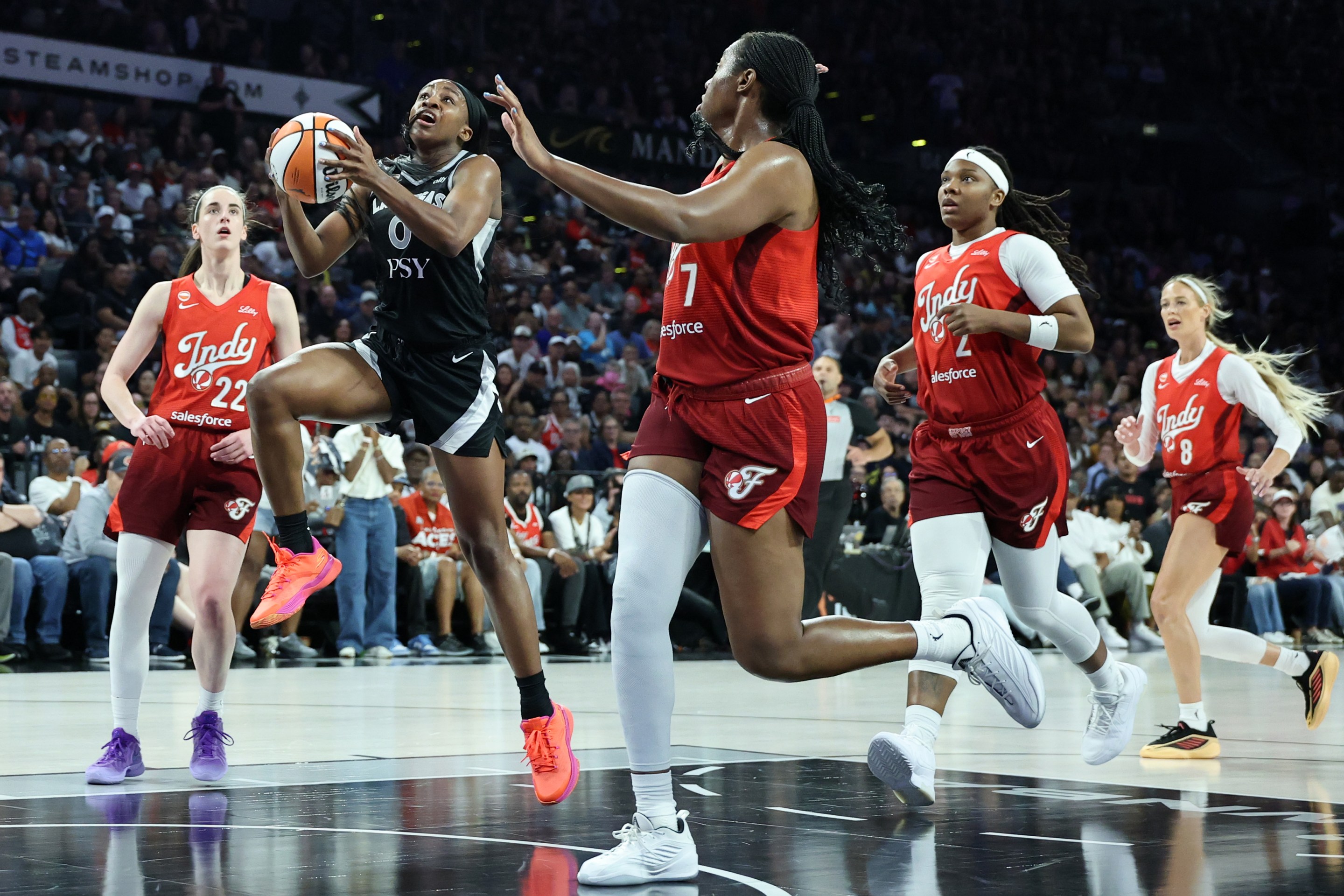
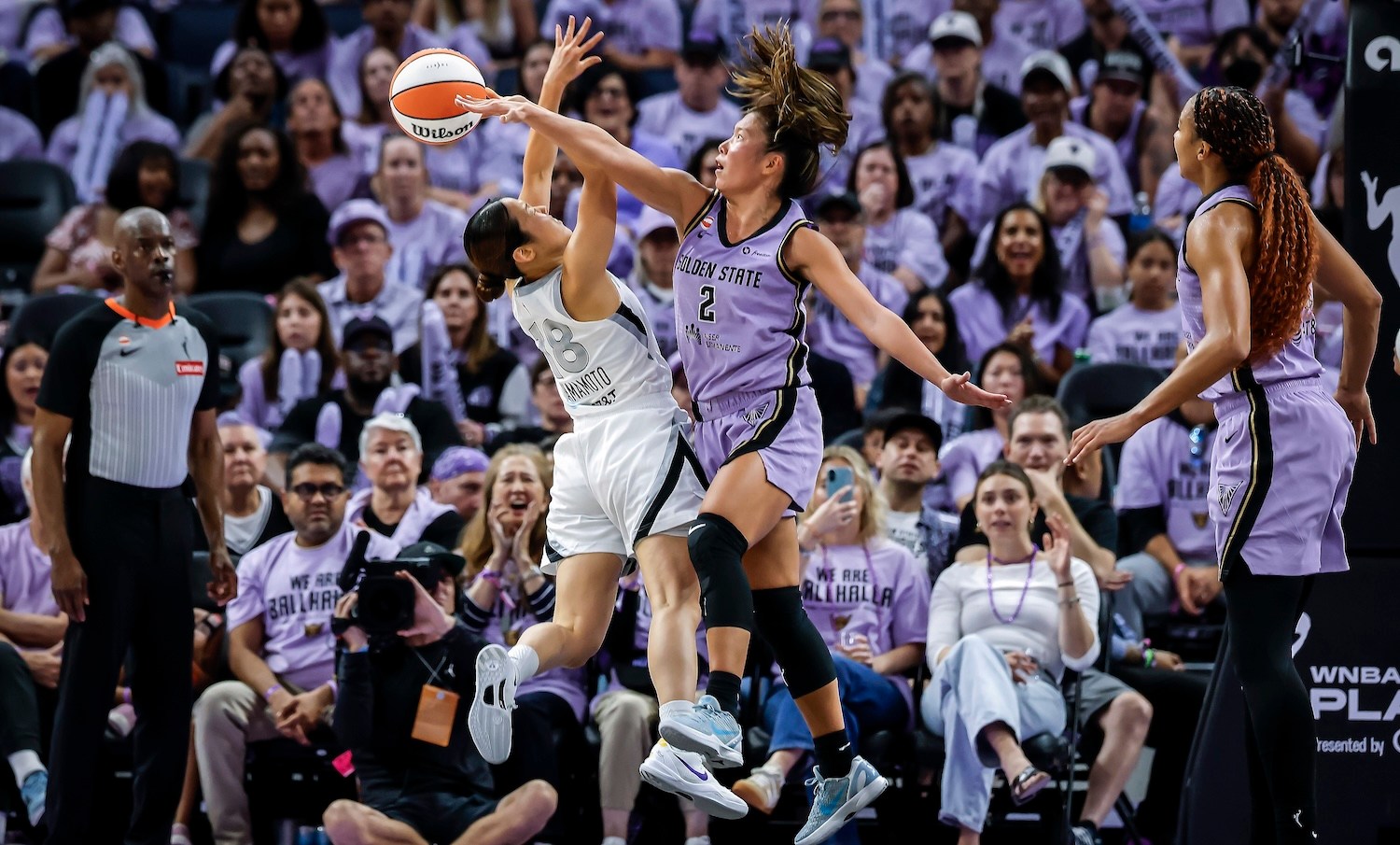
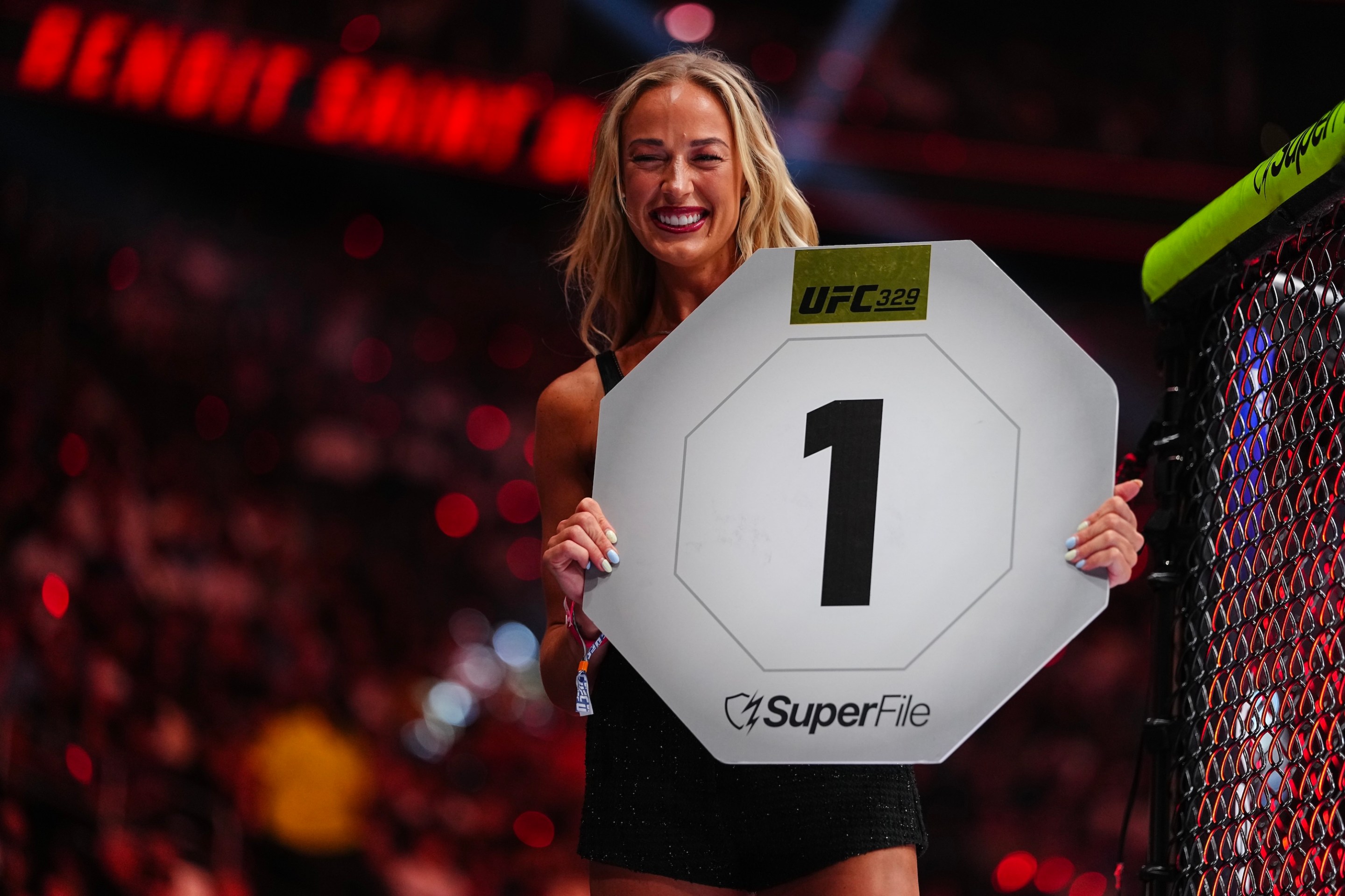
Pretty frickin' epic, right? Cunningham, a wing in her eighth WNBA season who now comes off the bench for the Indiana Fever, is certainly ripe for profile treatment. Since the incident the ESPN article identifies as her star turn—being ejected from a Sun-Fever game last year after flagrantly fouling Jacy Sheldon then putting her in a retaliatory quasi-headlock—her celebrity has skyrocketed. She now has 2.6 million followers on Instagram and more than 3 million followers on TikTok. If you didn't think it could get more epic than that, she recently pointed at another WNBA player for an extended period of time. In the least funny corners of the world, the pointing was a big hit. The White House posted about it, the U.S. Department of Education posted another image of it on Wednesday, and Cunningham recreated it a few weeks ago when she cameoed as a ring girl at a UFC fight.
Whatever interesting story there might be here basically dies in ESPN's view-from-nowhere style. A hallmark of much current writing about the WNBA is what could be called the To be sure, race is a factor section, where the plain text of whiteness becomes "difficult to grapple with" subtext cordoned off from the rest of the story by line breaks. Asked to do the grappling on behalf of Grossman is a University of Michigan sports management professor, Ketra Armstrong, who explains that black players who show aggression on the court are met with far less fanfare than Cunningham was. Poor Jonquel Jones, who has spoken about what it takes to "sit at the endorsement table" in women's basketball, is also enlisted here to say, "Our league has really been about fairness for everybody. I think it's kind of sad to see race infiltrate our league, because that's never what it's been about." Cunningham, "through her representative," declined to comment on the relationship between her race and her celebrity. We get the sense that this was a followup question.
The criticism Cunningham does respond to in this piece is only ever hypothetically voiced. Why might I delight in Sophie Cunningham? Why might I decry her? Why might people love her or really frickin' hate her? What is actually there, at the center of all this, once you get past the noise? A profile owes its reader that grounding, and this one can't provide it. Unmentioned are Cunningham's reposts of anti-trans activist Riley Gaines, or her genuinely fascinating history with former Mercury teammate (and Zohran Mamdani fan) Natasha Cloud, who has said she "tried to have hard dialogue" with Cunningham about her politics.
By withholding all specifics, Grossman ends up reproducing Cunningham's own strategic coyness, to gross effect:
You say she's a "MAGA Barbie," as some corners of the internet have taken to calling her? Projection, she says, because of what she looks like and where she's from. She'll weigh in on how to "protect women's sports," she says, because she's in that world and feels qualified to speak to that world. "I got a lot of negative feedback about me hating trans. And I'm like, 'I never once said that,'" she says. "I think that I am here to extend love. But I also think with that love is truth, being honest. And I want to protect young girls in a locker room, or young girls in sport who shouldn't have to go against biological men."
[…]
"I'm very much in the middle. I agree with things on both sides, disagree with things on both sides. And that's all I've ever said about my political beliefs. But people love to assume."
People are assuming louder now. So loud that for Cunningham, it's background noise. There, but hazy. There, but indecipherable. There, but she has already forgotten it's there at all.
Much earlier in the article, we've learned that parents on other teams once looked at Cunningham with suspicion: "Wasn't that Cunningham girl too old? Wasn't she too big? Wasn't she too much?" Her parents brought her birth certificate to games. When the mother of a boy on her soccer team asked Cunningham’s dad to stop his daughter from playing so physically, he told the woman that wasn't going to happen.
Hypocrisy, maybe, but it's hardly a surprise ending. In the long run, people tend to retreat to the comfort of structures that reward them. Cunningham is heartened by the fans who look up to her, those who watch the Sheldon fight or the taunting point and see in them a model of bravery and loyalty to teammates. "'In a world of bullies, be a Sophie'" is a message she's heard, she tells Grossman. "You know what? Heck yeah."
What Cunningham has bravely chosen to be is a straight blonde woman with tenuous political commitments; if this constitutes courage, some congratulations are in order at my Pilates class tonight. The cross she bears for being Sophie, for refusing to "fit in a box," is a Sports Illustrated Swimsuit Issue spread, an Adidas sneaker colorway, and work as an analyst on league rightsholder USA Network. The box must be pretty big. Forget its contemporary trappings—memes, the "attention economy," judgments hastened by the internet—and this story is an old one: A woman responds straightforwardly to incentives, then applauds herself for doing so. It's a world of bullies, and a world of Sophies, too.