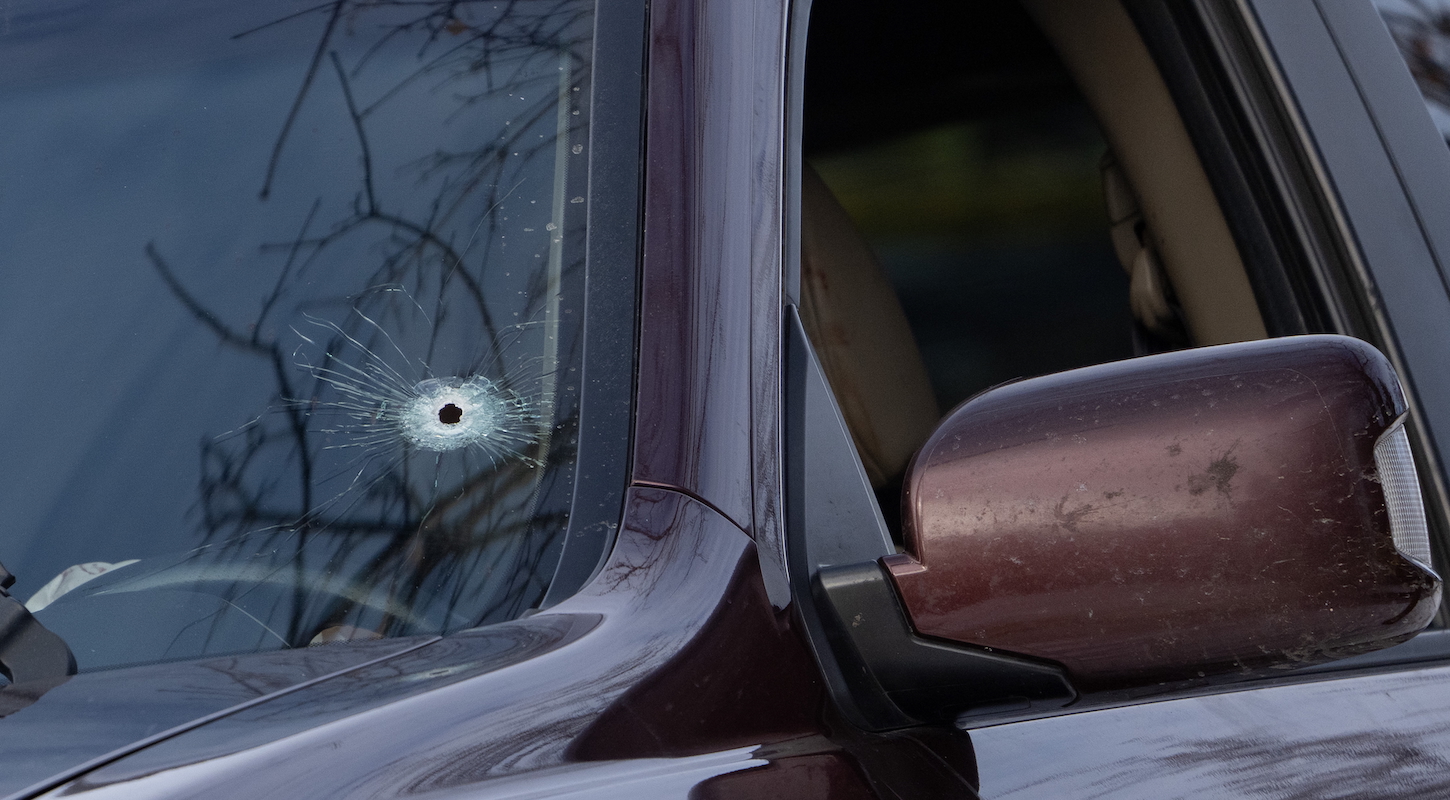
Back in December, CBS News chief Bari Weiss intervened to spike a deeply reported and extensively documented 60 Minutes story about conditions faced by captives sent by the Trump administration to El Salvador's CECOT concentration camp. Her rationale, as proffered in memos to CBS staff, was that without on-record comment from a member of the administration—which had declined several requests for exactly that—the story lacked necessary balance; without participation from the administration, 60 Minutes was not prepared to give viewers "the full context they need to assess the story."
In case anyone on the face of the Earth was silly enough to buy that Weiss's decision had anything to do with some commitment to balanced and rigorous reporting, this ought to clarify things:
BREAKING: The ICE agent who fatally shot Renee Good last week in Minneapolis, Jonathan Ross, suffered internal bleeding to the torso following the incident, according to two U.S. officials briefed on his medical condition.
— CBS News (@cbsnews.com) 2026-01-14T16:23:32.094Z
The link in that Bluesky post takes you to a story published on the CBS News website Wednesday. That story cites unnamed "U.S. officials briefed on his medical condition," who claim that ICE agent Jonathan Ross somehow managed to suffer "internal bleeding to the torso" after stepping out of the path of a slow-moving vehicle and shooting its driver, Renee Good, in the face from point-blank range on Jan. 7 in Minneapolis. The story credits the Department of Homeland Security with having "confirmed Ross' injury," but gives no detail on who exactly did so, or how they did it, or why anyone should believe them.
The story, bearing the bylines of Nicole Sganga and Jennifer Jacobs, is careful to avoid directly attributing the unsubstantiated bleeding to anything that happened during the Jan. 7 incident—a canny decision, since anyone with eyes can see, in the multiple publicly available videos of the murder, that contact between Ross's torso and Good's vehicle, if any, was minimal and inconsequential. But the implication is clear, as is the administration's intent in disclosing this supposed bleeding to reporters.
The news peg here is not general public curiosity about what Ross's torso has been up to since last Wednesday. Readers are meant to take the ostensible bleeding as support for the administration's version of events (such as there really even is one, rather than a shifting and nakedly disingenuous rope-a-dope act angled toward running out the clock on the public's attention span). The reported bleeding is meant to affirm that Ross, who'd stepped in front of Good's vehicle in violation of basic law enforcement training, and who was recording the interaction with his phone right up until he whipped out his gun and shot someone to death with it, was struck by Good's vehicle hard enough to justify fear for his life, and thus that his choice to shoot Good in the head was justifiable, or at any rate not worth fighting over.
To illustrate that, here's Vice President JD Vance, completing the circuit that carried the administration's unverifiable, unattributed claim out to the public and brought it back, bearing the imprimatur of CBS News and costumed as journalism:
Notice what Weiss's shop didn't need in this case. CBS News ran this story without any evidence whatsoever to support its only claim—one that the "two U.S. officials" tasked with finding a friendly distributor would not even put their names to. Nor does the story engage at all with how awkwardly its insinuation fits against what any viewer of the videos can see with their eyes. It does include quotes from Trump administration figures, Homeland Security Secretary Kristi Noem and Border Patrol honcho Gregory Bovino, both pushing the administration's preferred narrative. It does not include any contradicting or complicating information, which the reporters themselves could supply simply by describing in bland factual detail the very clear video of the incident. The story does not differ in any substantial way from how the administration would deliver its claims via press release. There is, one might point out, no balance to this piece, nor anything like "the full context [readers] need to assess the story."
Flaccid deference to law enforcement and the state, disguised as a rigorous commitment to journalism principles, is nothing new in the American press, of course. On the contrary, it's the default position in basically all establishment reporting around crime and policing, even now. Bari Weiss is neither an innovator nor an innovation, in this or any space. Through sheer ham-handed clumsiness, though, she's made apparent—and embarrassing—what smoother operators coolly slip past the public mostly unnoticed. (I suppose in that sense, she is making good on Tony Dokoupil's boasts about transparency.)
In any event, this pair of stories neatly illustrates the symbiosis between Weiss's shop and the Trump regime. CBS News tidies up the administration's raw copy from spiral-eyed raving or sneering, undisguised bullshit, and delivers it in the mannerisms and cadences of respectable journalism. The administration, by simply electing or declining to provide on-the-record comment, can assign CBS News its stories or spike any drafts. Each, that is to say, is the other's editor.