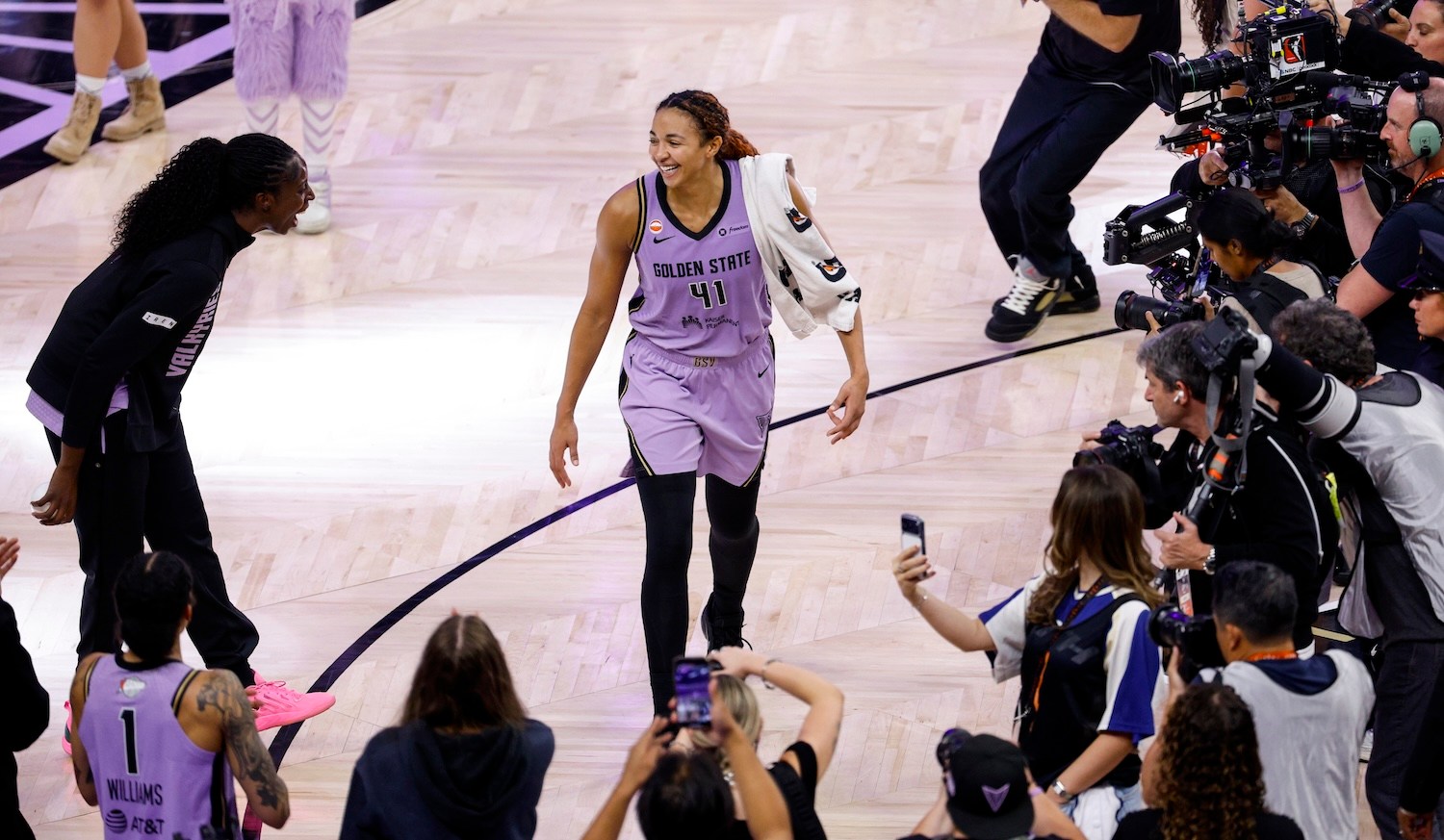
Cameron Brink came back to a very different team than the one she left in June of 2024, when she tore the ACL in her left knee in a game against the Connecticut Sun. That year's Los Angeles Sparks were firmly rebuilding—or, as veteran guard Lexie Brown described the young roster in training camp that year, "We're like little babies." Brink was one of the Sparks' two lottery picks; they'd used the other to select three-level scorer Rickea Jackson out of Tennessee. ACL recoveries are long, but the Sparks' front office didn’t exactly seem short on time. All spring, they had used telling words like "process" and "foundation." When Brink was injured, the Sparks were 4-11.
She returned, in the middle of last season, to a new head coach and a new star teammate, on a team with some strange new ambitions. (Gone this year is Jackson, who was traded in the offseason to Chicago for 29-year-old guard Ariel Atkins.) These circumstances might explain a rough preseason and season opener this past weekend for the former No. 2 overall pick. The Sparks are in an awkward place: a "win-now" team that has yet to do any winning. So is Brink, an ostensible franchise cornerstone now coming off the bench, caught in the middle of her team’s pivot and her league's officiating shift.
Fouls have been an issue for Brink since she was a freshman in college. Her Stanford career ended with few signs of progress in this department. (Literally: She fouled out of her final collegiate game, Stanford's Sweet Sixteen loss to NC State.) The transition to pro basketball granted her one more foul to work with each game, and she has happily made use of it: She averaged around seven fouls per 36 minutes in each of her first two WNBA seasons.
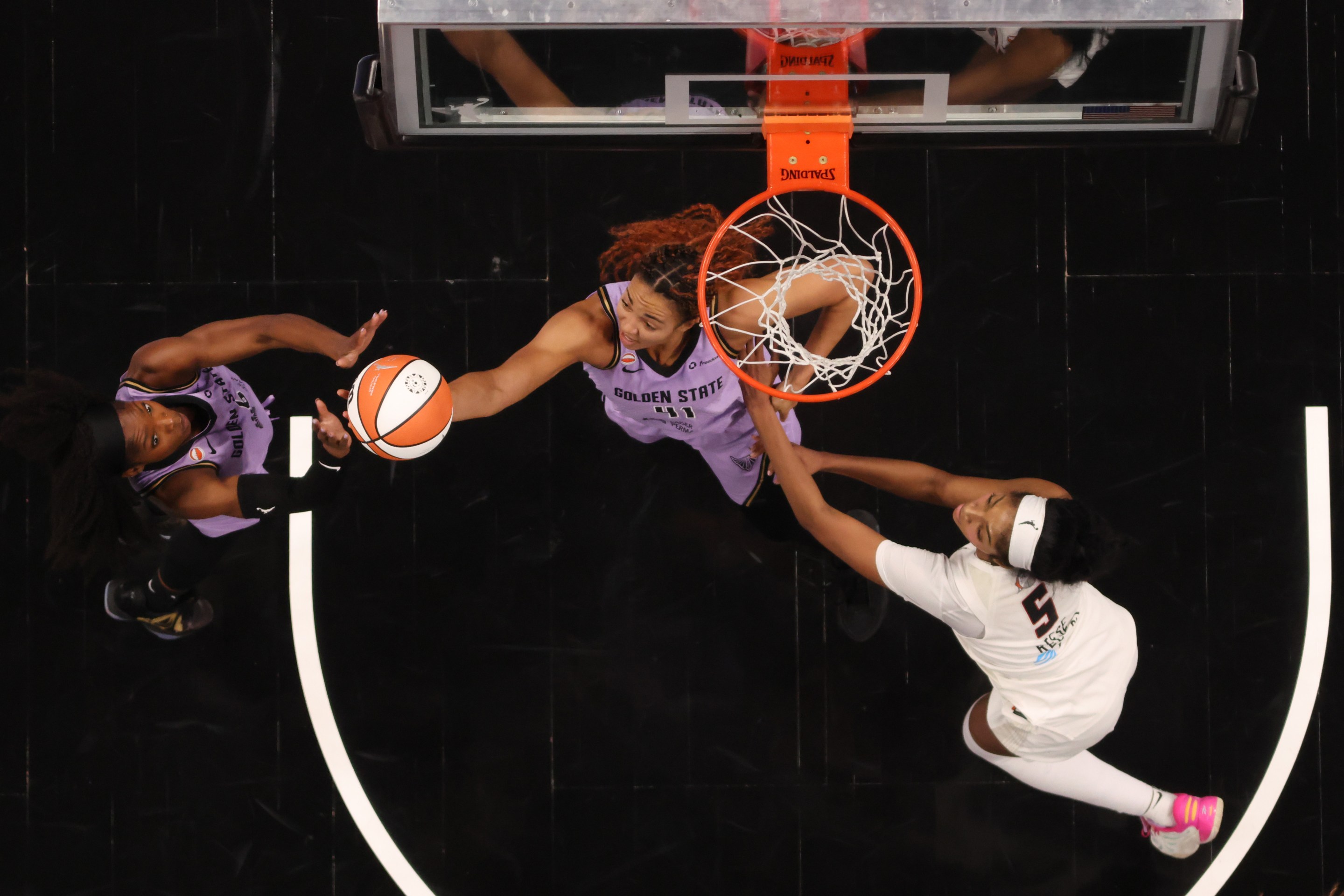
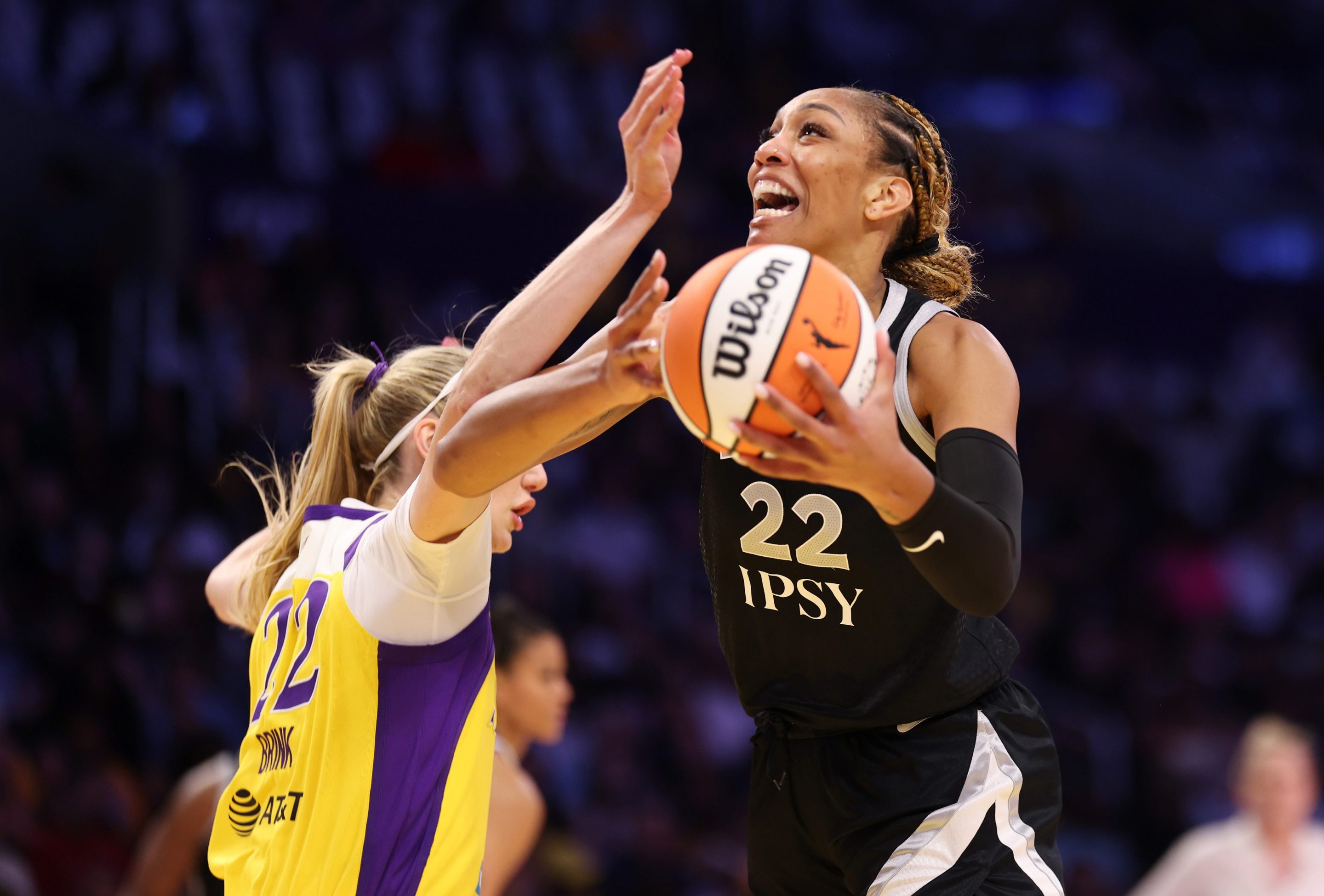
Imagine the quintessential Cam Brink foul, and the botched block might come to mind—she's a great help-side defender who likes to play aggressive. But those are rarer than the plain silly fouls, like tie-ups away from the basket, moving screens, or reaches long after there's any chance of disrupting a play. Brink's second foul in the Sparks' season opener against the Las Vegas Aces on Sunday was a classic example: She swatted at a rebound well after NaLyssa Smith had secured it, and ended up sending Smith to the free-throw line in the final minute of the first quarter.
So you can count Brink among the players likely to be squeezed by the WNBA's new officiating trends. Describing this season's "points of emphasis"—rules that the league has told teams will be tightened or more strictly enforced this year—Aces head coach Becky Hammon mentioned off-ball movement: "Off-ball fouling, grabbing, holding, freedom of movement. There’s supposed to be an emphasis on offensive and defensive three-seconds [violations]. But just trying to clean up the game, make it more of a fluid game," she told reporters. "I think they’re going to be calling it really tight this year." Other foul-prone players around the league struggled on opening weekend; Alanna Smith, for one, spent much of her Dallas Wings debut on the bench after picking up her third foul in the first half. The New York Liberty and Washington Mystics combined for 58 fouls in an overtime game that ran two hours and 41 minutes. (Per Her Hoop Stats, teams averaged 17.5 fouls each in 2025.)
In Sunday's game, Brink picked up a foul less than 30 seconds after she checked in. She finished the game scoreless on zero field goal attempts with three rebounds, three turnovers, and three fouls. The Sparks were a minus-19 in her eight minutes of the 105-78 loss.
"We need Cam to produce," Sparks head coach Lynne Roberts said after the game, by way of explanation for the limited minutes. "We need Cam to bring that defensive energy. We have so much confidence and belief in her. She’s got to get out on the floor with some confidence and do what she's capable of doing."
Naturally, this ends up being a bit of a self-fulfilling issue. A player who has trouble staying on the court isn't likely to earn her coach's trust. A player struggling to earn her coach's trust (and rusty from an injury) is likely to be more aggressive when she gets opportunities on the court. A player who is more aggressive … you get the point.
Roberts has said before that she still sees Brink as a key member of the team. "She's finally fully healthy. She wasn't fully healthy last year. She had a great offseason. She's gonna play a ton and she's gonna be a huge piece for us," she told reporters before the Sparks' final preseason game earlier in May. But this is a weird team, and especially a weird team on which to be Cameron Brink. The Sparks re-rebuilt themselves around Kelsey Plum last offseason, giving up the No. 2 pick in last year's draft to do so. (Seattle used it to draft Dominique Malonga.) Plum is plenty fun, but she asks a lot of her teammates defensively, and the Sparks weren't built to compensate last year. They finished 10th in defensive rating.
The Jackson trade and Nneka Ogwumike signing seemed to signal that the Sparks were ready to take the other side of the ball seriously this year. But giving up 100-plus points in the first game of the season doesn't portend well for this year's defense, either. On this Sparks team, Brink may just keep finding herself a bit overextended.