

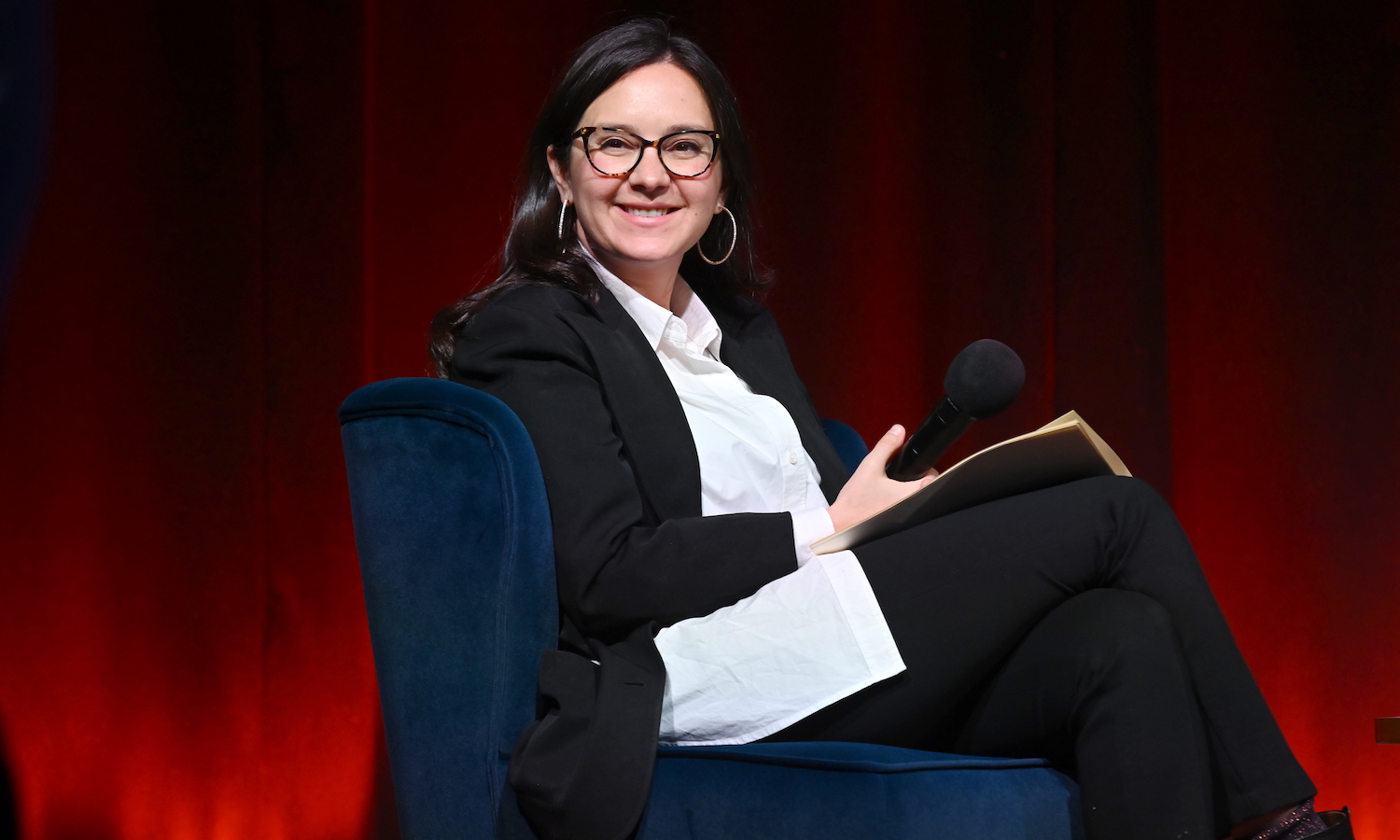
Who says Bari Weiss doesn't know how to run a newsroom? "My general view here," the CBS News editor-in-chief wrote in a memo before shelving the now-infamous 60 Minutes report on El Salvador's CECOT concentration camp, "is that we do our viewers the best service by presenting them with the full context they need to assess the story. In other words, I believe we need to do more reporting here." Expediency, personal prerogative, servility to power, all smuggled under the cover of journalistic scruple: Shit yeah, she's a masthead editor all right.
The truth is that prestige journalism is lousy with Bari Weisses, up and down the line. Ask any journalist trying to cover the genocide in Gaza or the social death of gender nonconformists. Ask any reporter who has spent time in one corner or another of the racism beat. Ask Ismail Ibrahim or Felicia Sonmez or Sandhya Dirks. Right this moment, in newsrooms all across the country, there are untold Bari Weisses preaching the doctrines of high journalism while quietly going about the work of making the actual journalism suck. They are softening claims, torturing the prose within an inch of its life, deferring to the cops, abetting a fascist incursion, introducing epistemic uncertainty where there is none, publishing Dylan Byers. If challenged on any of it, they will protest that they are merely upholding a standard, assuming the proud, martyred air of some lone sentry at the parapets of our besieged profession, after which they'll do a panel with Andrew Schulz or something.
Over here we find one of our many Bari Weisses "attempting to eliminate bias" by sidelining a Black reporter from covering an antiracist uprising because of a pungently apposite tweet. Over there we see them convening an internal review that will cluck at a story for not adequately establishing that the Trump administration, which twice gained the White House on the promise of overturning the civil rights of some people, is actually "intent on overturning civil rights." They are the tone worriers, the stet unstetters, the high priests of the "critics say" clause. They are the bosses at the Washington Post who kept Sonmez, a survivor of sexual violence, from covering stories involving sexual assault because they worried about "the appearance of a conflict of interest."
The appearance—a brand manager's concern. And yet, while they may often approach the job as if it were a species of marketing, little the Bari Weisses demand will appear unreasonable or nonjournalistic on its face, because they are also fluent in the idiom of social responsibility. In a different memo, this one to the whole staff, Weiss noted that "the majority of Americans say they do not trust the press" and ruminated over how the audience might be won back.
Sometimes that means doing more legwork. Sometimes it means telling unexpected stories. Sometimes it means training our attention on topics that have been overlooked or misconstrued. And sometimes it means holding a piece about an important subject to make sure it is comprehensive and fair.
Comprehensive and fair—who but a scoundrel could ever object?
I worry some of my colleagues in the industry are getting the Bari Weiss phenomenon exactly wrong. She isn't a saboteur brought in to destroy one of the last remaining citadels of high journalism. She is one of high journalism's purest products, a perfect symptom of its old, unresolved contradictions. Her disingenuousness about motive is the industry's in miniature.
Victor Pickard, the excellent media studies scholar, has written of the "postwar settlement"—that's the bargain whereby a highly concentrated commercial media, afflicted with a legitimacy crisis in the 1940s, fought off the specter of a social democratic reconfiguring of the business in exchange for a little-exercised ethic of social responsibility. Here, in this compact, not in some timeless model of inquiry, the sniffy if occasionally useful norms of modern journalism crystallized. The settlement begat a business that could talk grandly of its obligations to the public while profiting enormously—for a time—off the antidemocratic dispensations it had dickered out of the government. When Weiss, in killing a story of immense public interest, speaks of how CBS might "do our viewers the best service," she speaks in the essential cynicism of her industry.
Too often of late, though, Weiss has been treated as some great honking exception to the normal order of things. Writing in The Nation about the "Counter-Journalistic Crusade" that occasioned the spiking of the CECOT story, Elizabeth Spiers cited a 2023 speech Weiss gave to the Federalist Society that offered up one Islamophobic canard after another. "In any normal newsroom," Spiers wrote, "anyone presenting as fact Islamophobic urban legends like these would be disqualified from newsgathering, and possibly referred to a good therapist." Really? I ask, as I look up from my copy of the New York Times. Any?
(Did you see the report in the Times about how "fraud took root in pockets of Minnesota's Somali diaspora," one of a passel of stories produced by many normal newsrooms that helped bring about Trump's blitz on Minneapolis? Be sure to check out the part where the reporter uses a source to ventriloquize the story's howlingly racist premise and then tell me who should get the therapy. Is it the professor, himself a Somali, who said that Somalis come from a culture of corruption? The journalist who quoted it approvingly? The editor who let it all happen?)
If Weiss is exceptional, it's only in her knack for making a spectacle of the sort of things that slicker operators in media say and do all the time without causing too much of a fuss. When her CBS Evening News released "five simple principles" guiding its coverage, among them "We Love America," I thought back to the equally fatuous declaration by Weiss's old patron on the New York Times opinion desk, James Bennet, that the editorial page is "pro-capitalism." Bennet said this in a private meeting, a video of which was later leaked. CBS Evening News announced that it loved America in a thread on the Nazified shell of Twitter.
Or compare Weiss's handling of the CECOT story to the description provided by a former New York Times editor, Billie Jean Sweeney, of how the newspaper's transgender scare campaign is waged. It is a top-down affair, executed quietly through existing institutional channels via "directive from above," Sweeney said in an interview with the Trans News Network, taking care to note that this is always done in conversation, never via email or internal decree. In her telling, the editorial line originated at the desk of the publisher himself, A.G. Sulzberger, who saw the fight to restrict the autonomy of young trans people "as a political project, that he could take a stance that the hard right would like, that the Trump campaign might like."
As an example, Sweeney, one of the paper's only trans staffers, cited the coverage of the English National Health Service's notorious Cass Review, a key document in the effort to gain some sort of scientific authorization for rolling back gender-affirming care for kids. An initial story on the report was bounced from the international desk to the science desk, where apparently it could be counted on to receive all the proper narrative coloring. And it did: "Youth Gender Medications Limited in England, Part of Big Shift in Europe," the April 9, 2024, headline read.
The story framed the Cass Review as part of a kind of continental awakening, backing up the larger premise, not just of the Times's coverage but of the overall trans-eliminationist project, that the medical system in the United States defers too readily to young people who object to their assigned place in the gender binary. When reports from other European countries later challenged the Cass Review and thus challenged the notion that the United States is out of step with the rest of the world, the "directive from above" at the Times was to ignore those, Sweeney said. (Critics say the journalists of the Times are “dedicated toward one aim: fair-minded, fact-based reporting.”)
What Sweeney was describing was the routine stuff of mainstream journalism, the unremarkable, everyday work of determining what is and isn't salient, of identifying patterns and shaping a narrative around them, with pressure applied from on high but responsibility distributed across the newsroom. What she was also describing, though she didn't put it in these terms, was the promulgation of a regime-friendly editorial line. The Times let its bureaucracy do the work that Weiss, in scuttling the CECOT story, arrogated to herself. The result in either case was an approach to journalism that could reasonably be said to have abided by professional standards of fairness and comprehensiveness and that was also, on some basic level, utterly sociopathic. Normal newsrooms doing normal things.
Nostalgia for some older, bolder time is useless. Journalistic bravery is structurally produced. Cowardice, too. The romantic view of journalism, in which gutsy reporters and editors hang their asses on the line to reveal dangerous truths about the world, obscures the ways that the work of any moment is circumscribed by how much and what kind of truth-telling the business will bear. High journalism made Bari Weiss, and it continues to make Bari Weisses, and until the last cent has been squeezed from the old postwar indulgences it will go on making Bari Weisses, cultivating them in the dank gap between what the industry says it is and what it really is.