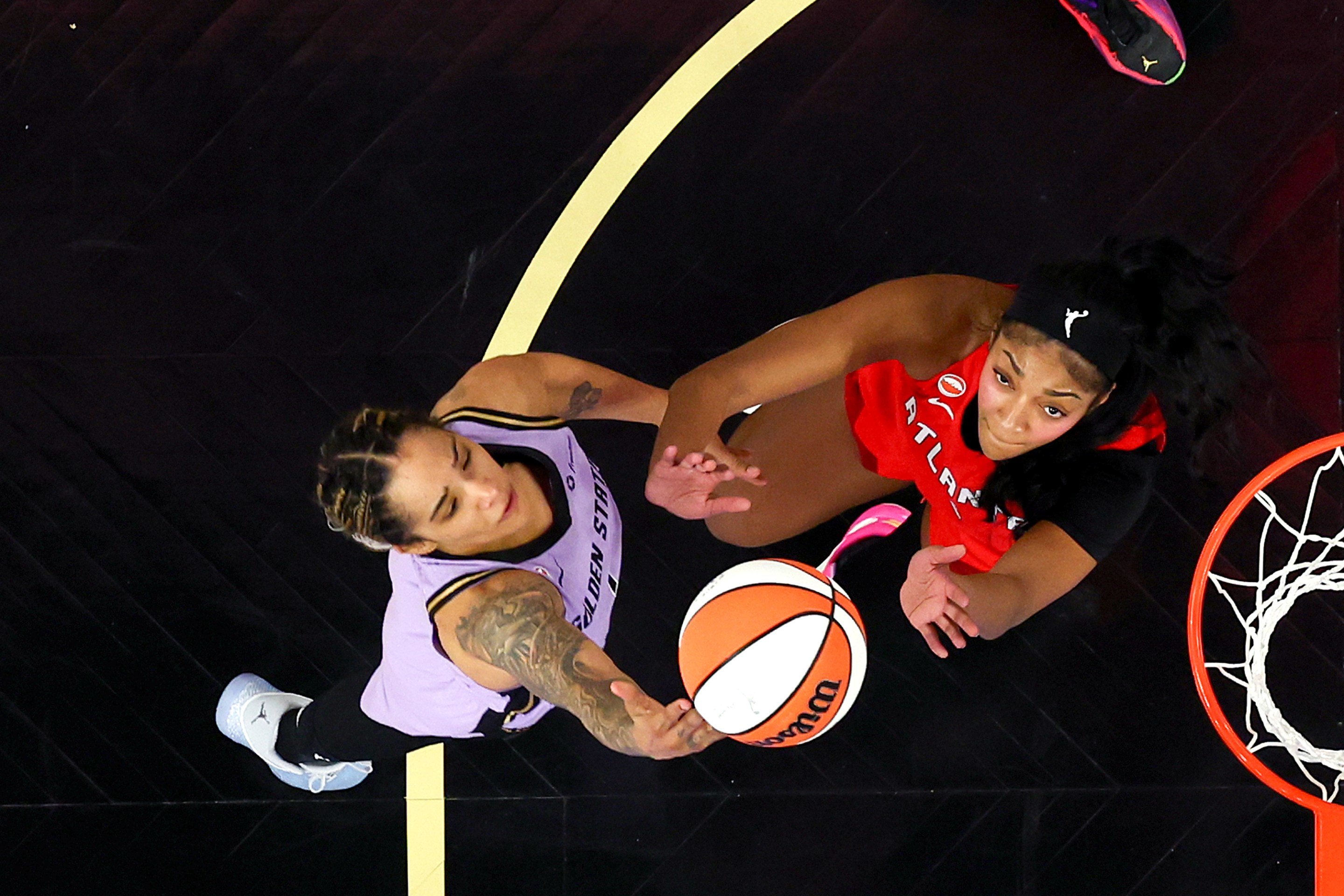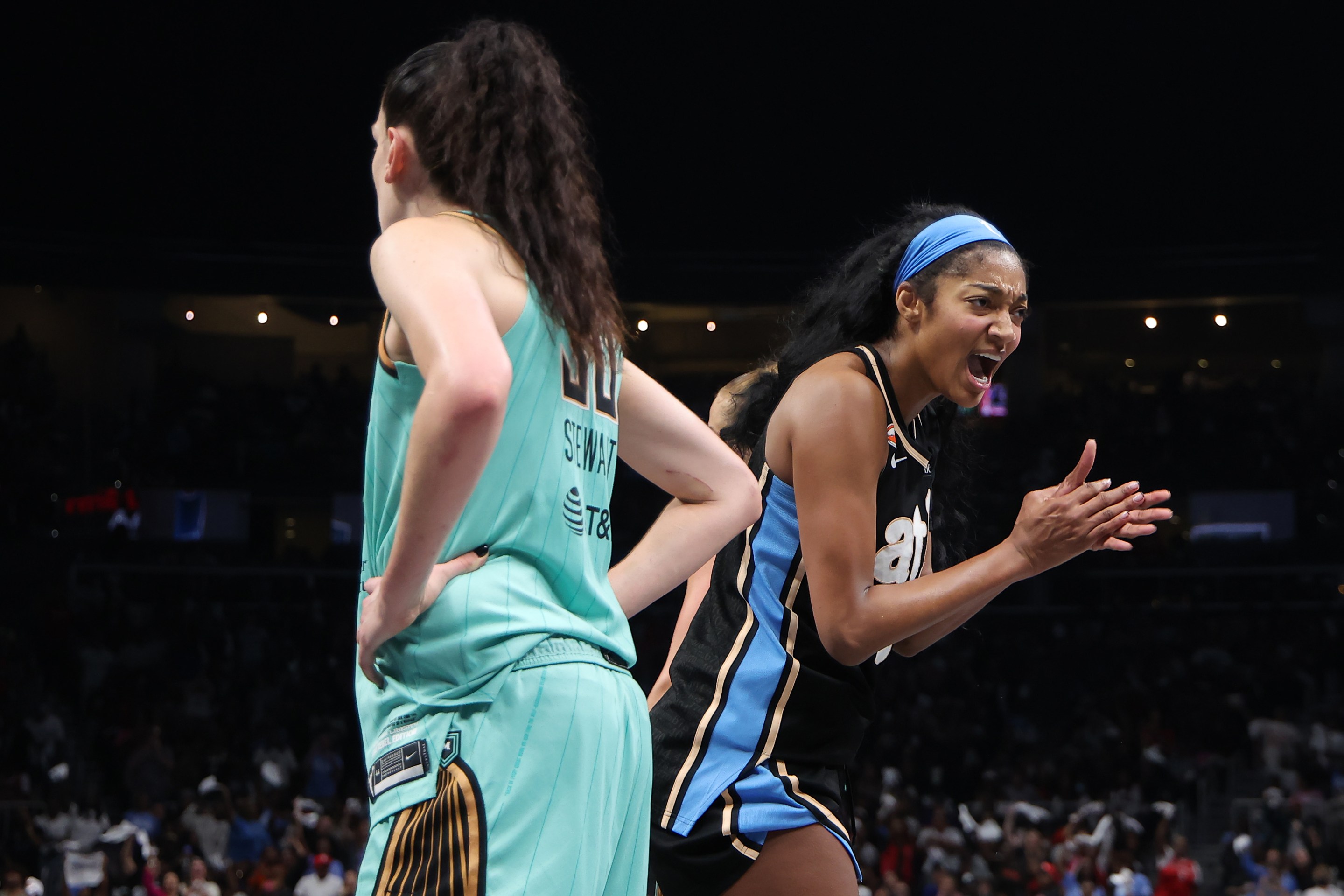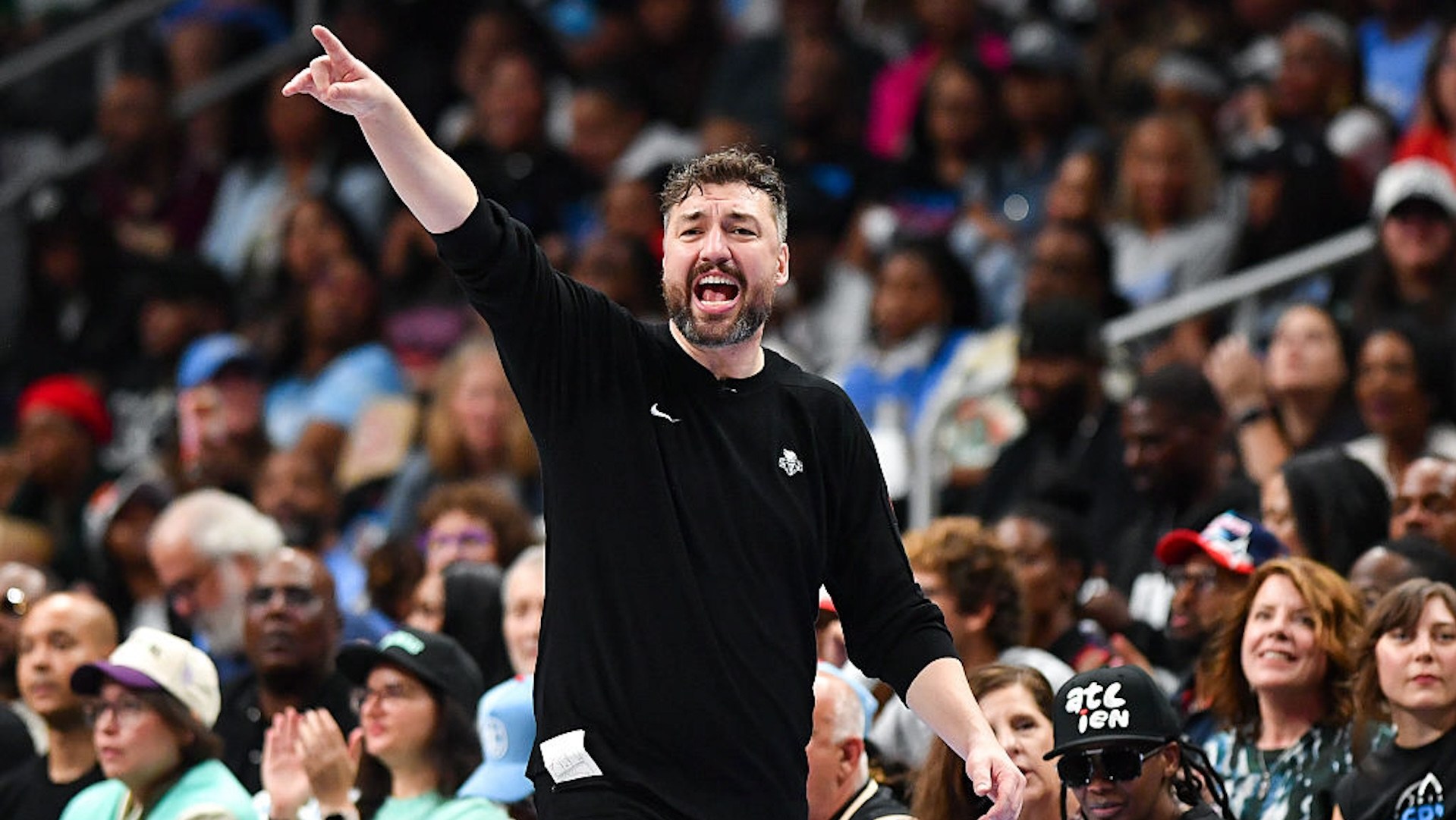
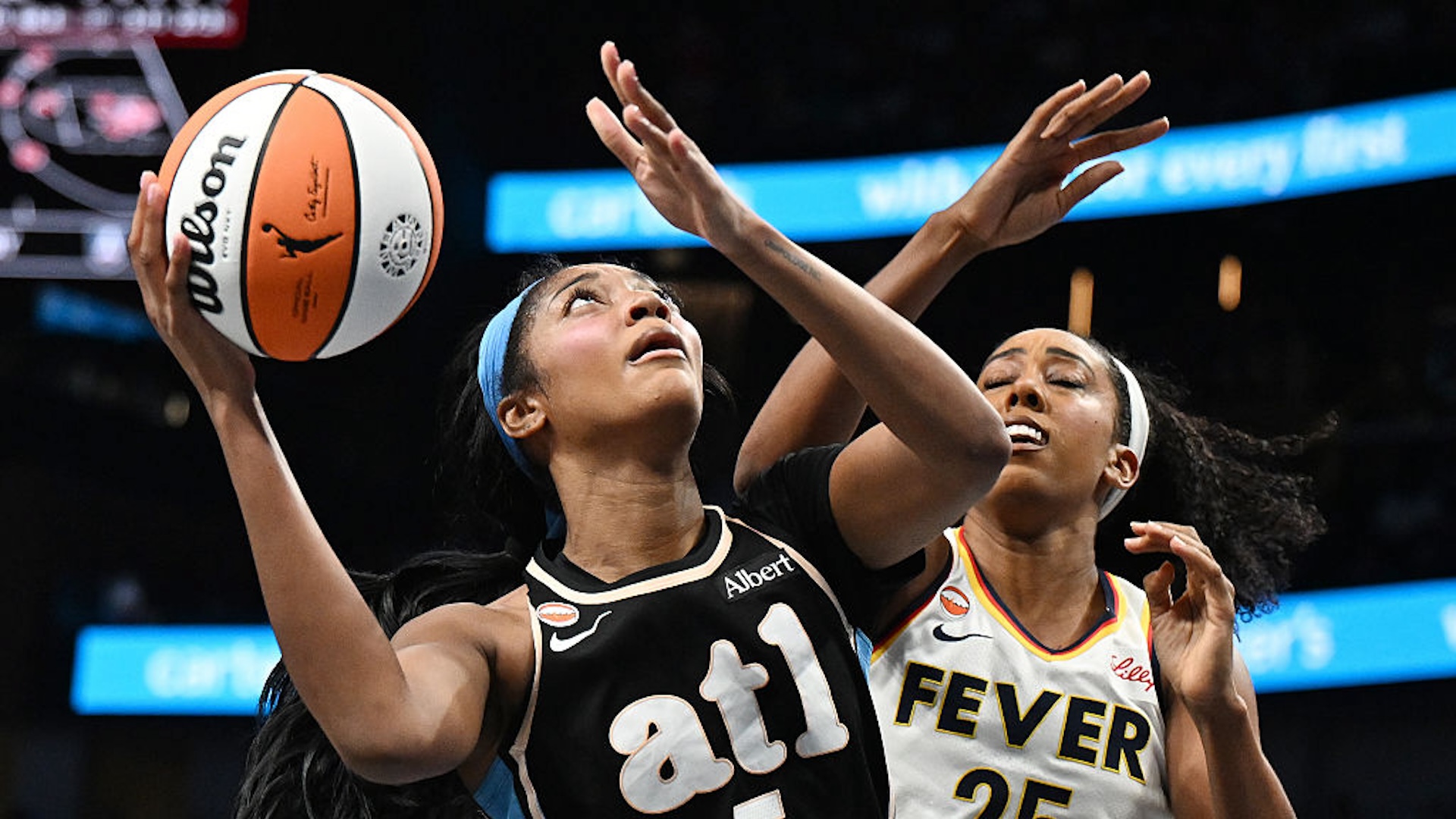
Social media is a terrible place to learn about anything, but there is perhaps no phrase more ill-suited for the Twitter or YouTube search bar than "Angel Reese." The reasons for this are obvious and not worth getting into here—there are a bunch of racist losers on there who have made Reese a target in their increasingly toxic culture war—but even under better circumstances, Reese's game would be a tough fit for 15-second, vertical video highlights. This is a player whose unique, maddening, and persistently effective style was built for a pre-internet age, in which her bewildering box scores could be spoken about in properly mythic tones.
We don't live in that age, though. We live in one in which Reese's performances are regularly reduced to short, derisive clips showing her smoking wide-open layups and missed shots following her own offensive rebounds. Today is no different: Following the Fever's 95-91 win over the Dream on Sunday, the internet is awash in clips of Reese bricking a fast-break layup and missing a putback that would have won the game in regulation.
Such lowlights are typical of someone who is shooting 41 percent from the field, but they in fact only serve to make her an even more fascinating figure within the league. For example, Reese shot 5-of-16 from the floor in Sunday's game, but finished with 15 points, 14 rebounds (five on the offensive glass) and six assists in 38 minutes and was a plus-1 for the game. Reese's misses are too loud and too common, but what intrigues me is how often she is able to shoot as poorly as she did on Sunday and still be a positive force for the Dream.
Among players who play at least 20 minutes per game, Reese has the third-worst effective field goal percentage in the league, trailing only Georgia Amoore and Saniya Rivers. The big difference between Reese and those two players is that her net rating is +7.8 for the season, whereas Amoore's is -2.1 and Rivers's is -13.2. You have to go 10 more spots down the ranking before running into a player with a positive net rating, and that's Arike Ogunbowale's +0.6.
How Reese manages to be one of the more efficient players in the league while also being one of its most inefficient shooters is a story that of course starts with her rebounding. Her genius on the glass, previously detailed here and more recently by ESPN's Katie Barnes, has put her in rarefied company. Reese leads the league in offensive rebounds and total rebounds per game, and as Barnes points out, she is on pace to both set the WNBA single-season record for rebounds and become the first player to gobble up 500 boards in a season.
Scoff all you want at rebounding's place in the hierarchy of important basketball skills, and the number of boards Reese gets off her own misses, but you'll only be depriving yourself of a deeper understanding of basketball's layers and contours. The most fascinating players are the ones who reveal things about the game by pushing it to various extremes. If you want to understand why so many WNBA and NBA coaches are currently fixated on winning the possession battle, look no further than what Reese is doing for the Dream, who are in the bottom four as a team in effective field goal percentage but have a 21-13 record and are currently third in net rating.
Obviously it would be nice if Reese could find more touch around the rim, but she is also more than just a historically great rebounder. Watch her across a whole game and you'll notice what a good connective passer she is, how deceptively slick her handle is, and how disruptive she's become as a defender. Anyone who denies themselves the full Angel Reese experience in favor of short video clips is missing out on one of the rarest gifts sports can offer us: a true oddity at work.