I’m sure I’m telling on myself by revealing this, but Western astrological readings are a staple of my social feeds. (To tell on myself further: Scorpio sun, Gemini rising, Cancer moon.) I don't necessarily believe in it, but I don’t not believe in it either, and when I’m served a video that begins with a person saying, “Stop scrolling! This week is important,” I will stop scrolling and pay attention to find out how and why this week is important. Please tell me how the stars have foretold the argument I’ll have with a family member this week. Yes, I will take a warm bath with herbs and essential oils to cleanse my system before eclipse season. Thank you so much for the recommendation.
Every January and February, I’m served a sprinkling of Chinese Zodiac astrology in the weeks leading up to Lunar New Year; this is because my algorithms all know I’m Korean. It’s never as ubiquitous in my feed as Western astrology content, but there’s reliably a steady trickle of videos explaining the energy of the new year.
This year is completely different, though. The trickle is a flood, because it seems the whites have discovered Lunar New Year, big time.
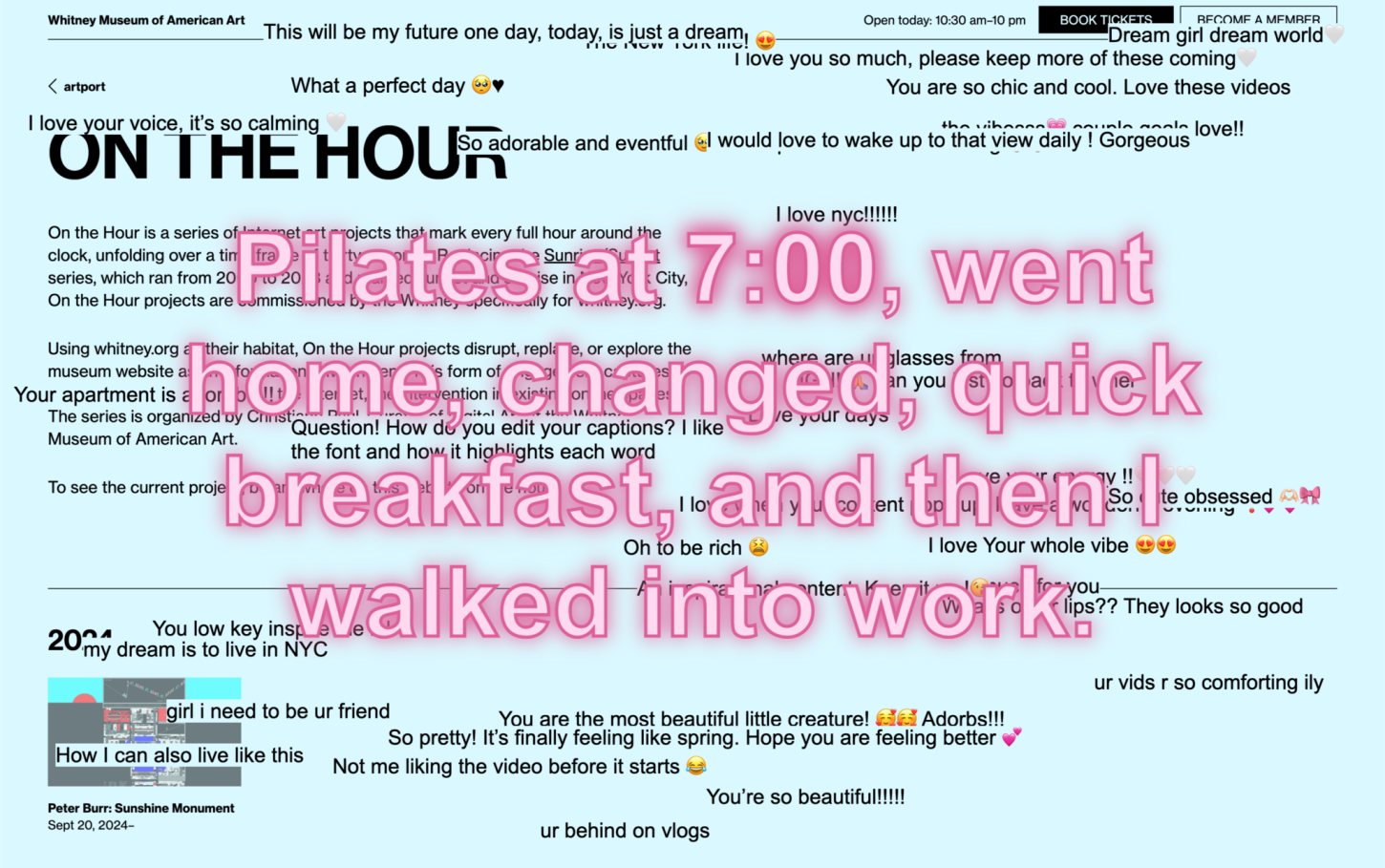
“I’m really leaning into the lunar new year bc January always feels like a slower month,” the travel nurse and influencer Chloe Montoya wrote in a TikTok caption. In the video, she goes on to explain that we are entering the year of the fire horse (true), which is all about “running in the direction of your dreams” (sure). The suggested search below her video is “lunar new year explained,” which led me to more videos of (white) people explaining what to expect from the year of the fire horse, how to “step into fire horse energy,” and recommendations about when to bathe or wash your hair. The comments are overwhelmingly supportive, and overwhelmingly from fellow outsiders enthusiastically adopting Lunar New Year. “First time being asian,” one writes. “Kind of nervous.”
It makes sense. 2026 has sucked so far, so thank goodness there’s a new new year to celebrate. It’s easy to see the appeal of a fresh slate six weeks into a year that already desperately cries out to be wiped clean. But it’s also bizarre to see such wide and unself-conscious adoption of another culture so soon after the cultural appropriation wars of the 2010s. The phrase “my culture is not your costume” is a meme itself now, but when it originally emerged in 2011, it was as a response to traditional garments being sold and worn as Halloween costumes.
This boomlet of enthusiasm for East Asian culture broadly, and Chinese culture more specifically, is part of a larger online trend of Chinamaxxing among people who are … not Asian. The phrase “I’m at a very Chinese time in my life” has become a meme, shorthand for anti-American shitposting at a time when anxiety about Chinese cultural influence over the West has spiked particularly high. Videos like this one, from creator missmazza, document days in the lives of the newly converted “Chinese,” their Chinese-ness being defined by wearing slippers indoors, drinking warm tea, doing auntie-style calisthenics, and gua sha massage.
It’s a continuation of the half-reasoned Sinophilic sentiments that led to the adoption last year of Red Note, or Xiaohongshu, the Chinese social media app that momentarily emerged as an alternative when TikTok was banned in January 2025. It’s hard to tell whether the people jumping on Red Note were joking or serious or just deeply desperate, but videos proliferated of Americans studying Mandarin so they could learn to navigate the app.
I should be clear that it’s not just white people who are getting into all this. Lunar New Year, and Chinese culture more broadly, is the site of equal opportunity appropriation; I’ve seen plenty of people of other races getting in on it, too. Whether it’s a joke, sincere, or, more likely, something in between, this sudden, fervent affection for East Asian culture reflects a sense of grasping for something better, or just different, during a time when everything feels uniquely bad and helpless. “At a moment when America’s infrastructure is crumbling and once-unthinkable forms of state violence are being normalized,” Zeyi Yang wrote in Wired, “China is starting to look pretty good in contrast.”
Whether or not the trend triggers 2012-style cultural alarm bells to ring, it is undeniably some classic-style cultural appropriation. In one video, Kathy Pham said, “At first it’s empowering … to see that the mainstream white American population loves their food, their fashion, cultural practices, but that doesn’t necessarily mean that mainstream white audience sees Asians or Chinese people as equals, as human beings.” Pham cites bell hooks’s writing on cultural appropriation: “Cultural appropriation of the Other assuages feelings of deprivation and lack that assault the psyches of radical white youth who choose to be disloyal to western civilization.”
Given the homicidal creepiness of its most ardent defenders and its shameful current state, this feels like an especially bad time to be loyal to Western civilization, and so it makes sense that young people, joking, half-joking, or dead serious, are flirting with other cultures that might seem to have things together a bit more. I have a hard time imagining that this trend will be anything more than a passing social media joke among those whose screentimes are high enough to get it, but it’s a fascinating moment all the same—one that reflects the lengths that deeply unhappy people will go to as they grasp for a sense of meaning and direction while American hegemony crumbles and burns around them. If this is your first Lunar New Year, welcome. I’m sure you don’t need advice from me, an actual Asian, on how to celebrate. TikTok’s got you covered, there.