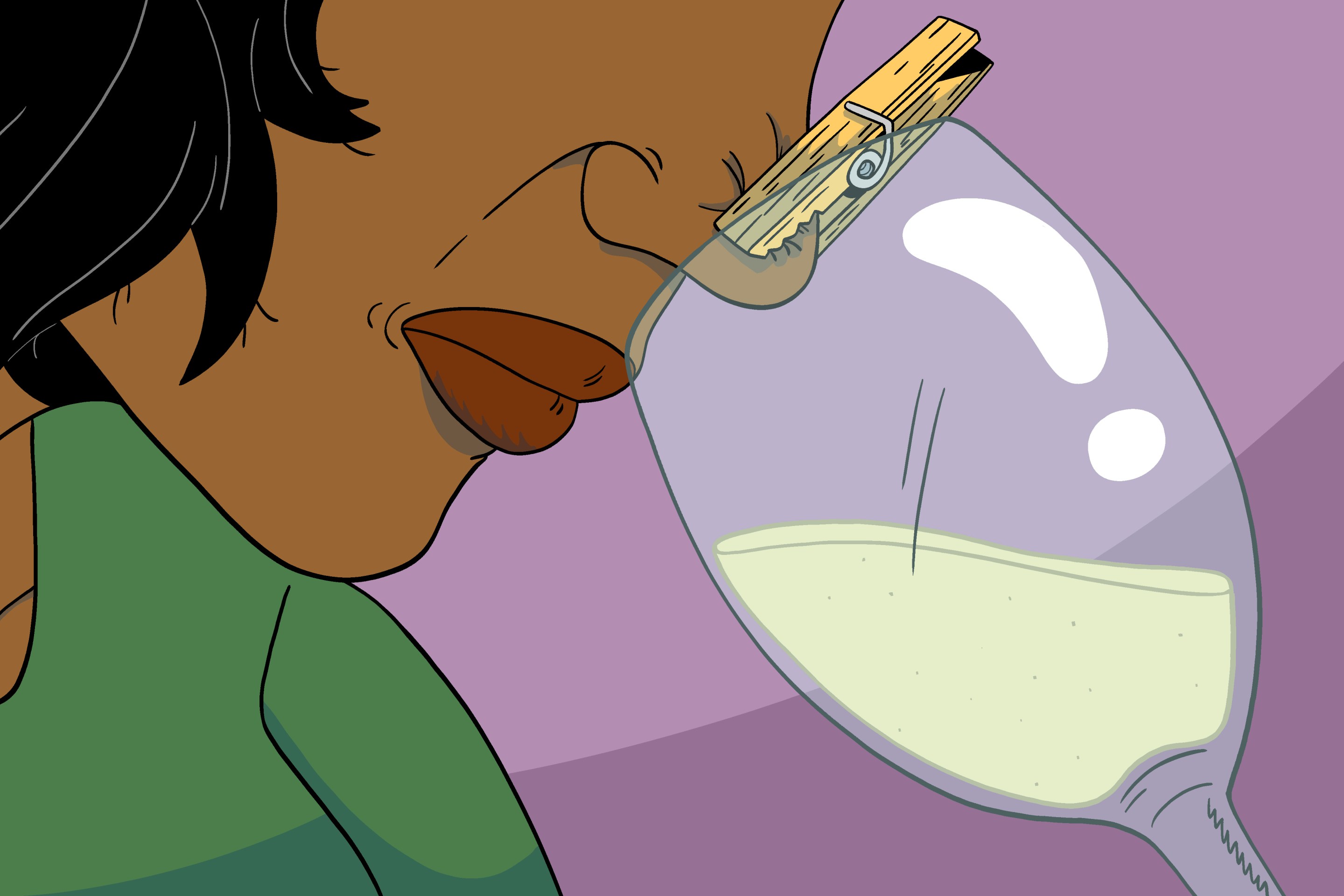
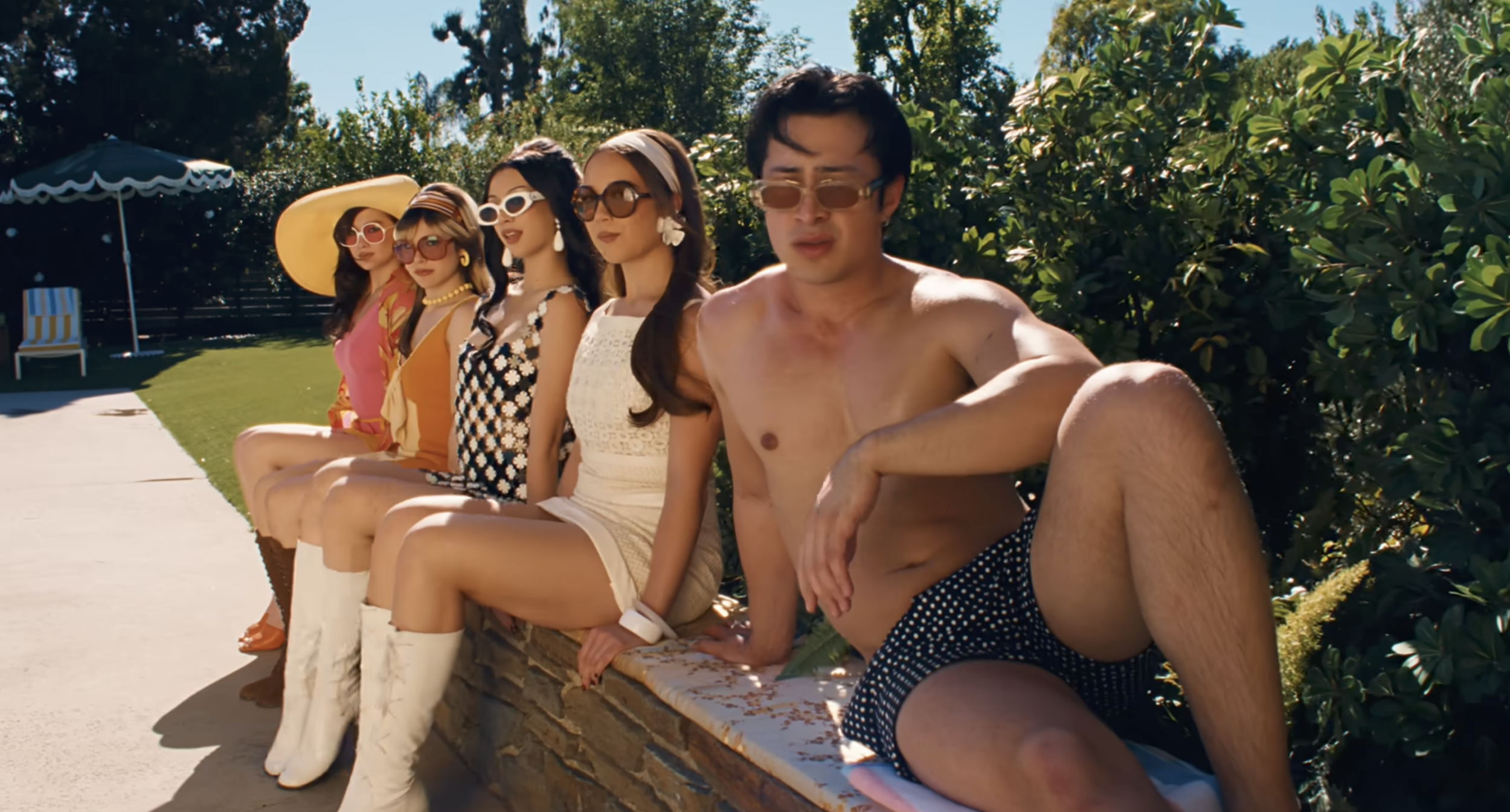
When I was 24, a stranger on the internet called me a white man, and it sent me into such a tailspin that I changed my byline. Before then, I was going by “Alex Laughlin,” just my first and last name. I had started writing about race, and I’d made a podcast about multiracial identity called Other, but if my name was to represent me on its own, there was no way for a stranger to know that very special fact that seemed like it defined me exclusively: I was Wasian.
My Korean name is 수정, which is most often romanized as Soo-Jeong or Soo-Jung. No one has ever called me this. But in 2017, I decided to adopt it as part of my professional identity, as a way to signal my mixed ethnicity to strangers. However, when I tried to add my name to my Twitter account, I found that the standard spelling was too lengthy to fit with my long-ass last name. In order to squeeze my name into my Twitter header, I took some liberties, and for the last decade, my byline has essentially been a misspelling of my own name. It was more intolerable to be perceived imprecisely by a stranger than it was for me to commit to being perceived as what I imagine is the “Ashleigh” of Korean name spellings.
It was these awkward attempts at self-expression that defined my long path to moderately well-adjusted Wasian adult, and I recognize my younger self with a bit of affectionate cringe when I see fellow Wasians insisting on their identities in loud, public ways. I used to make a big deal out of every time someone asked me “What are you?” I used to have my feelings hurt when the servers in Korean restaurants brought my food with a fork. Now, however, I am more preoccupied with simply living a good life—I went to a Korean restaurant last night and smiled while the server explained tteokbokki to me. I want to offer my elder wisdom to this younger generation of Wasians. But I cannot and should not interfere. As they say on the internet: It’s a canon event.
It’s been a huge year for the Republic of Wasia. Alysa Liu dominated the Winter Olympics, Hudson Williams arched his back in Heated Rivalry, and Laufey released her “Madwoman” music video, which featured Williams and Liu as well as Katseye’s Megan Skiendiel and actress Lola Tung in a sort of Wasiafied Stepford Wives alternate universe. Last week, more than 3,000 Wasians met up in Central Park, and in the days after, my feeds filled with talking heads debating the ethics of such a meetup—whether it centered whiteness to focus specifically on white and Asian mixed people, rather than all mixed Asians. I recognized a version of myself in the shining eyes of the younger Wasians who defended the meetup as a way to take pride in a shared culture defined by a communal experience of exclusion. They saw the meetup as a radical celebration of an underrepresented community; I saw it as a way that people like me have repeatedly insisted on being perceived. I don’t necessarily think it was wrong for 3,000 Wasians to meet up and look at each other in a park, but what feels crucial to me is that an event like this be the beginning of a journey of self-validation, rather than the end of it.
From the moment I was aware of myself as a racialized body, I defined myself in parts: perpetually, perplexingly, contradictorily other. Korean and white, Asian and American, both and neither. For most of my adolescence and much of my twenties, my mind replayed the painful formative memories that told me who I was and how I didn’t fit. There was the time my first crush, a white boy, told me he wanted to marry someone of the same race. (I had thought we were the same race). There were the many times strangers asked if I spoke English. There was the way my best friend and I were bullied in elementary school by the native Hawaiian girls in our class.
I first put language to this experience of alienation when I discovered the word “hapa.” As a college student, I reconnected with that childhood best friend in Hawaii, who was half-Mexican and half-white, and she used the word to describe both of us. I was reminded of the word when a Bay Area Wasian used it to describe me, years later. Even though the word “hapa” literally means “half,” it felt delicious at the time to use a single, whole word to describe myself. I went so far in my enthusiasm as to write an essay for NPR’s Code Switch blog celebrating my embrace of the word, a decision I frankly regret, 12 years later.
I embraced the identity of “hapa” wholeheartedly despite knowing the history of its use as a derogatory term for mixed Native Hawaiian and white people, and the ongoing efforts to reclaim the word by that same community. Years later, after reading more about the Kānaka fight for sovereignty and stewardship of the Hawaiian Islands, I dropped the word. The reclamation of hapa identity is inextricable from the fight for Hawaiian indigeneity and the ongoing cultural scars left by American occupation on those islands. My tenuous connection to Hawaiian culture was only made possible by the heavy presence of the U.S. military on the islands, anyway. Once again, in pursuit of connection, I’d inserted myself into a context where I didn’t quite make sense.
A few years later, I hosted and produced a podcast series that aimed to tell the stories of multiracial people in the United States. It was nominally pegged to the 50th anniversary of Loving v. Virginia, the Supreme Court case that made interracial marriage legal in this country. It was my first big podcast project, and it allowed me to wallow deeply in all the ways I felt I didn’t belong. In one episode script, I wrote something about “the pain of not fitting in” and my editor, a white woman, commented “a bit dramatic??” I felt so insulted in the moment, but looking back on the incident now, I’m relieved we ended up changing the phrase. It was dramatic.
In the months after Other was released, friends and strangers emailed to thank me for providing much-needed representation. They cried while listening to it, they assigned it to their students, they played it for their children. A decade later, part of me is proud of the show, but a larger part is embarrassed about the awkward audio cuts, my amateur hosting, and the overall concept of a podcast about multiracial identity that completely centered mixed folks who were half-white. In trying to tell my own story, I had contributed to the ongoing fallacy that to be mixed is to be mixed with whiteness.
The problem with Other is the same as the problem with me using the word “hapa,” which is the same problem with the Wasian meetups. During the years I made the podcast, my identity was rooted in mixedness, but when I connected with people over that, I realized the conversations could only go so far beyond “I never feel Asian/white enough for my family” or “No one thinks I look like what I am.” Even though I was connecting with more people than ever and talking about this issue professionally, I continued to feel lonely and out of place.
When I looked for validation of my identity in other people, there was always a way for me to come up short. Around this time, I went to a party where I got drunk and said offhand that I had “chinky” eyes. This was a word I’d always heard used to describe my eyes by my white family members, and it had never registered to me as anything other than a neutrally descriptive word. The room full of white people went silent, and then my friend’s dad came up to me with tears in his eyes and said “Alex … your eyes are BEAUTIFUL. BEAUTIFUL.” Once again, I’d found myself in the strange position of having a room of (white) people tell me something about myself—this time that I’d been using a slur to describe my face. It was a bizarre experience, but I did stop using that word after that incident.
It didn’t help my sense of rootlessness to connect over the broadness of communal rejection. What did help: going deeper. I spent a year reading only books by Asian-American authors. My partner and I started celebrating traditional Korean holidays. I took Korean lessons and traveled to Korea twice, both times surprising myself at my comfort with the language and with how much I felt like a foreigner. I also learned about my white family’s history in this country. I tracked down tombstones and farmsteads and looked at old photos of their faces. I found the records of their transits across the Atlantic from Ireland, hundreds of years ago. Even though I was pretty sure both sets of ancestors would be horrified, or at least confused, that their bloodlines culminated in miscegenation, I began to feel ownership of both lineages. I keep a photo of my extended Korean family at my grandparents’ wedding on my wall next to portraits of my great-grandparents, Beryl and Olen Laughlin.
Recently, I was hanging with fellow Wasian Sabrina Imbler when the conversation topic turned, as it often does between Wasians, to the word “Wasian.” Sabs said they liked the specificity of the word, the way it foregrounds whiteness as an active part of the identity, rather than an unnamed default. I like it because it sounds awkward, and that feels like a proper penance for the amount of space I personally took up with my own anxieties about where I fit. It’s a simple, slightly ugly word that encapsulates the despair, the searching, the desperation that defined my younger years.
When I see Wasians eager to make a spectacle of their magnitude, I am reminded of how many years I spent in pursuit of validation that I was someone whole and unique—not an aberration or an asterisk, but simply me. I looked for it in people who looked exactly like me. But it turned out the only person with the power to validate me was myself.
I still use my misspelled Korean name, by the way. It's fine.