
I like to think of myself as quite the optimist, which explains a career-long, pan-sport fascination with prospects, prodigies, and up-and-comers of all sorts. The future of every sport is out there materializing, in the form of legions of children rising to displace and cast aside their elders. The passage of time guarantees this, though that certainty of outcome is not matched by certainty of identity. Oftentimes, the pressure on a young athlete of being touted as the Next Big Thing is enough to guarantee that ascension never happens, putting the press in the curious position of simultaneously lauding a prospects' accomplishments and cautioning the public against drawing subsequent conclusions.
Usually, anyway. Sometimes an athlete comes along with such undeniable talent and spark that any observer is forced to feel the inevitable gravity of a star being born. Which brings us to Paul Seixas, who is making it impossible to use the future tense.
When we last checked in on Seixas six weeks ago, he was posting an impressive slew of results in the shoulder seasons of the cycling calendar. It is nice to win the Faun-Ardeche Classic and a stage at the Volta Ao Algarve, but nobody is targeting those races; while performing well there and in the preceding autumn classics is impressive prospect stuff, it's not necessarily world-bestriding mega-talent stuff. In other words, checking in then was a hedge of sorts: a preliminary survey of Seixas's situation before he started contesting (and potentially losing) races that mattered. Though I hoped otherwise, I thought there would be little to report until July.
Instead, Seixas has been on a rampage. It began at Strade Bianche. Though Tadej Pogacar won the demi-classic with a long solo move, Seixas demonstrated remarkable strength, first as the only rider who could follow and stick with Pogacar's explosive attacks, then by comfortably being strongest of the elite second group. Seixas rode into Siena in second place ahead of a strong field and the notably fresher Isaac Del Toro, who did not work with Seixas whatsoever.
Strade Bianche does not tend to be a race for teenagers. The white gravel is jagged and unpredictable, and the parcours are punishingly difficult, requiring both strength and tactical savvy. Which is to say, Seixas's physical performance was as impressive as his mental performance.
His next big target was last week's Itzulia Basque Country, a six-stage tour through the punishingly difficult roads of the Basque region. Even before the crash that derailed the entire 2024 season, Itzulia had a reputation for ferocity. Chris Horner, who won the 2009 edition, told me once that it was the hardest one-week race on the calendar. Its parcours are topographically demanding, in the sense that there are big climbs, yes, but more in the race's startling lack of flatness. Itzulia is almost entirely lumpy, with stage profiles resembling volatile stock tickers, meaning that anyone who wins will have been aggressive, tactically flexible, and well-rounded. Itzulia's winners tend to be rugged climbers, not teenagers, and certainly not French guys.
But from the moment Seixas rolled out of the starting gate in Bilbao, he dominated the race. Seixas won the opening-day time trial by 23 seconds, then backed it up with an even more impressive performance on Stage 2. With roughly 25 kilometers before the line, Seixas attacked a select group of contenders at the hardest point of the San Miguel de Aralar. He ripped away as his competitors looked around waited for someone else to do the hard work of trying and failing to reel him in. Seixas put more than a minute into the chase on the climb, never looking back once and pounding down the descent to extend his advantage to 1:25.
This was a statement win, an announcement of hostilities. Itzulia featured half of the 2025 Tour de France's top 10, the presumed other Next Big Thing in cycling, and an otherwise strong field (eventually thinned as Juan Ayuso and Isaac Del Toro crashed out), and Seixas obliterated them.
His Stage 2 performance drew a response from Red Bull, the strongest team in the race. Primoz Roglic and Florian Lipowitz tried to 1-2 Seixas on Stage 4, a tactic he not only dealt with but capably countered by going on the attack himself and gapping both riders. The remnants of the day's breakaway shook in fear, though Seixas visibly sat up, content to fillet his rivals. "I took a few guys on my wheel to the foot of the last little climb, after which they could fight for the win," Seixas said. "The stage win didn't matter to me today; I just wanted to make up time to deal them a mental blow and let them know it won't be that easy."
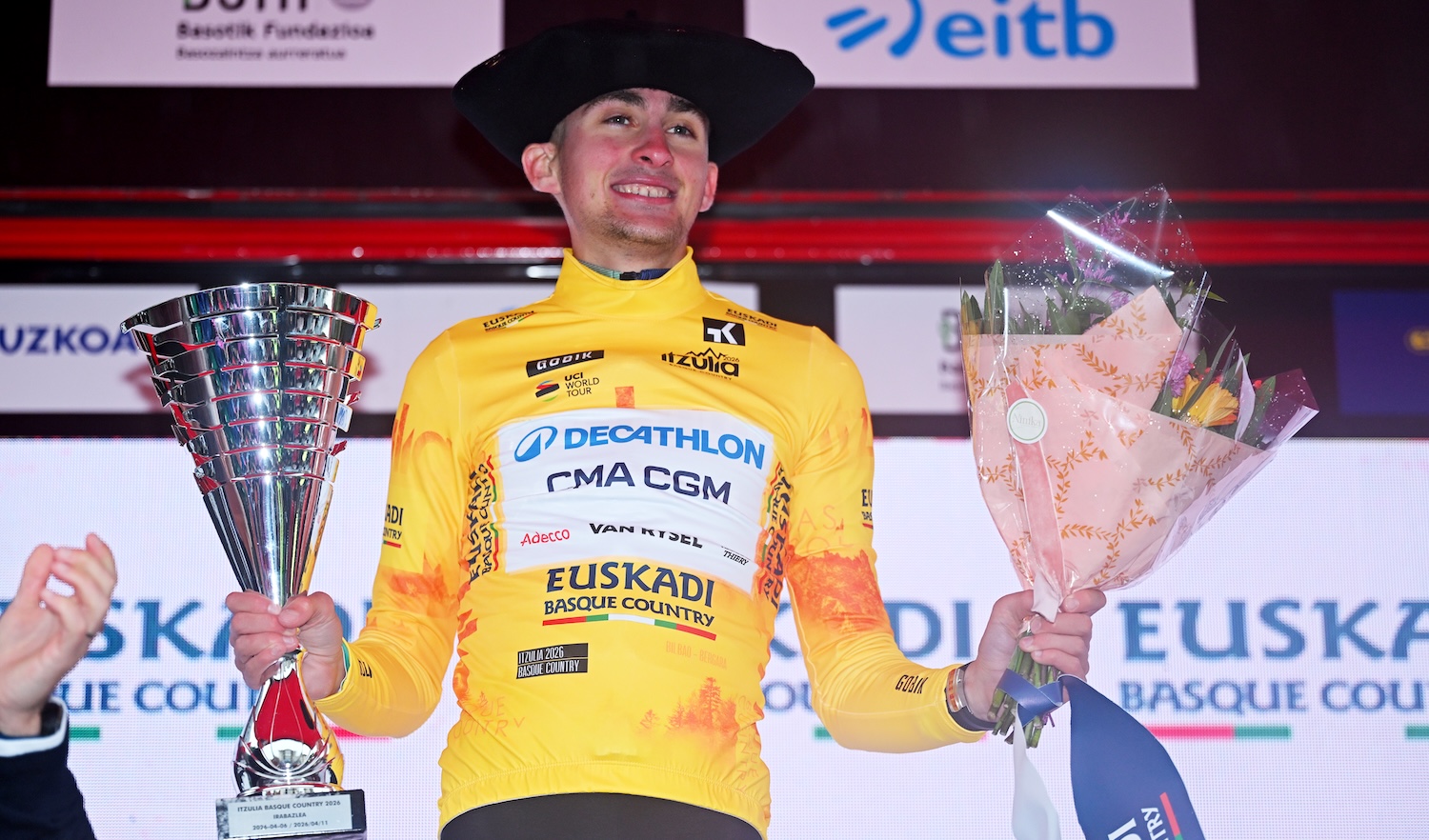
The next day, Seixas got away on the final climb with Lipowitz and smoked him in an uphill sprint. As the dust settled, Seixas left the Basque Country with several records, becoming the youngest-ever rider to win a WorldTour stage race, the first French rider to do so since 2007, and the owner of the largest winning margin at Itzulia in 25 years.
What I like about Seixas is his cockiness. He is not running from the pressure, but rather embracing it, forcing the cycling press to use the present tense. "Can I rival the best in the world?" he mused following the final stage. "Certainly, although some have had to withdraw. But I am certainly allowed to harbor ambitions against them."
Naturally, the Itzulia performance will only accelerate the expectation cycle. Seixas is a huge deal in France, already having appeared on the cover of L'Equipe. There is so much worry about his French team's potential inability to afford his next contract and keep him from getting swallowed up by UAE that the team has switched its national license to save money via tax dodging. Emmanuel Macron is even getting involved in the effort to keep Seixas on a nominally French team and away from the clutches of the world's biggest team.
With Wout van Aert taking a stunning Paris-Roubaix, the cycling's world's attention will shift north to the Ardennes. This part of the calendar tends to belong to Tadej Pogacar, and though Remco Evenepoel has put in several strong performances thus far in the spring, the focus will be on Seixas. Can the world's greatest teenager do something against the world's greatest rider? He's definitely not afraid to try.