

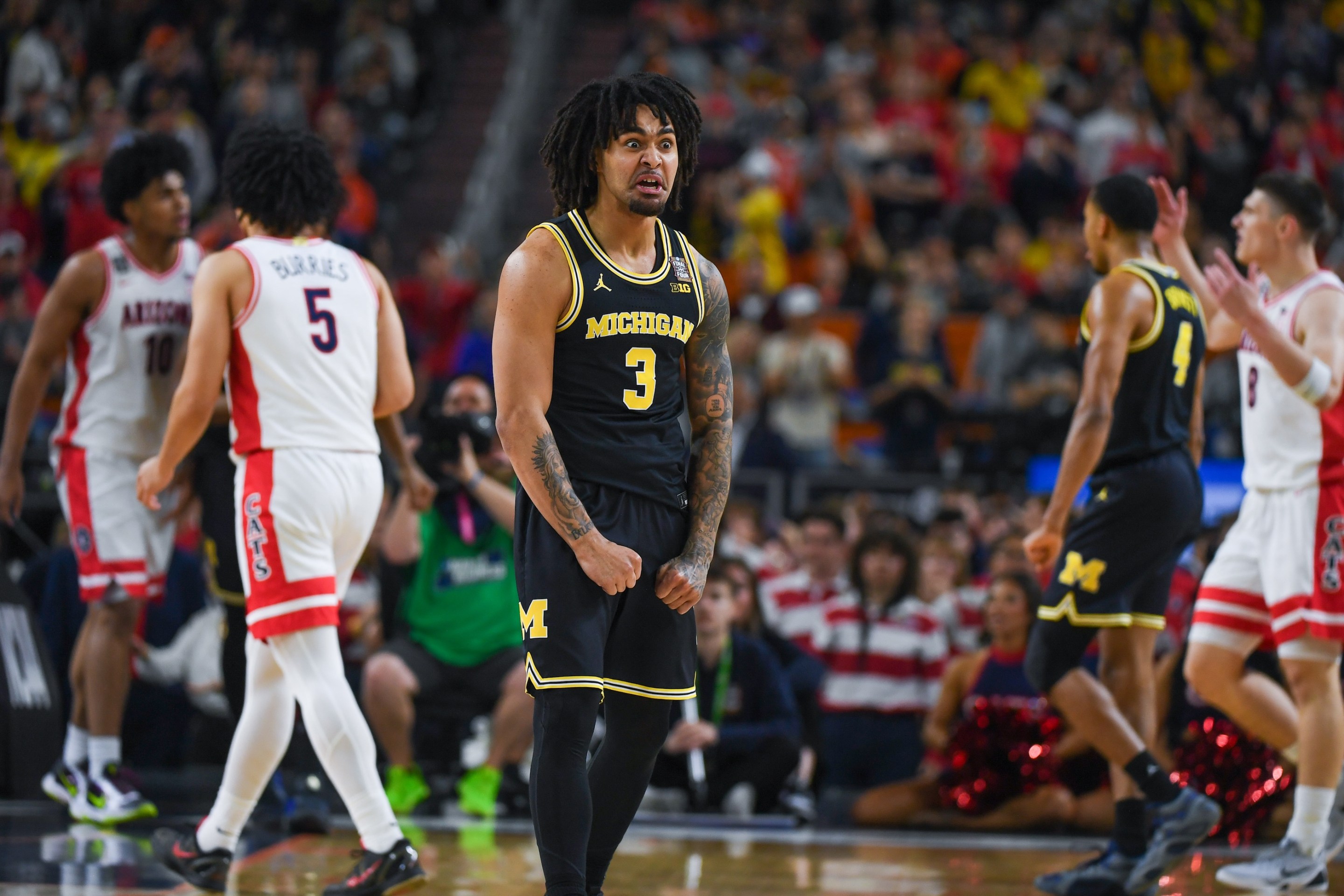
As the Final Four game between Michigan and Arizona wound down on Saturday night, the TBS broadcasting crew said a bunch of demonstrably true and contextually confusing things about Arizona. The Wildcats really had entered the game as hot as any program in college basketball, carrying a nine-game winning streak that included a convincing march through the Big 12 Tournament into the NCAA Tournament, then rolling through their first four games there. Before but most strikingly after dropping two games in Big 12 conference play, their only losses on the season, Arizona really had been both consistent and consistently dominant, running up one of the most lopsided point differentials in Division I, an average of 17.3 points per game. They really did spend 10 straight weeks atop the AP Poll during the winter. All of these things were true. And then the horn sounded and Michigan put in a four-man crew of deep-cut bench players that included head coach Dusty May's son, Charlie, and Howard Eisley Jr.
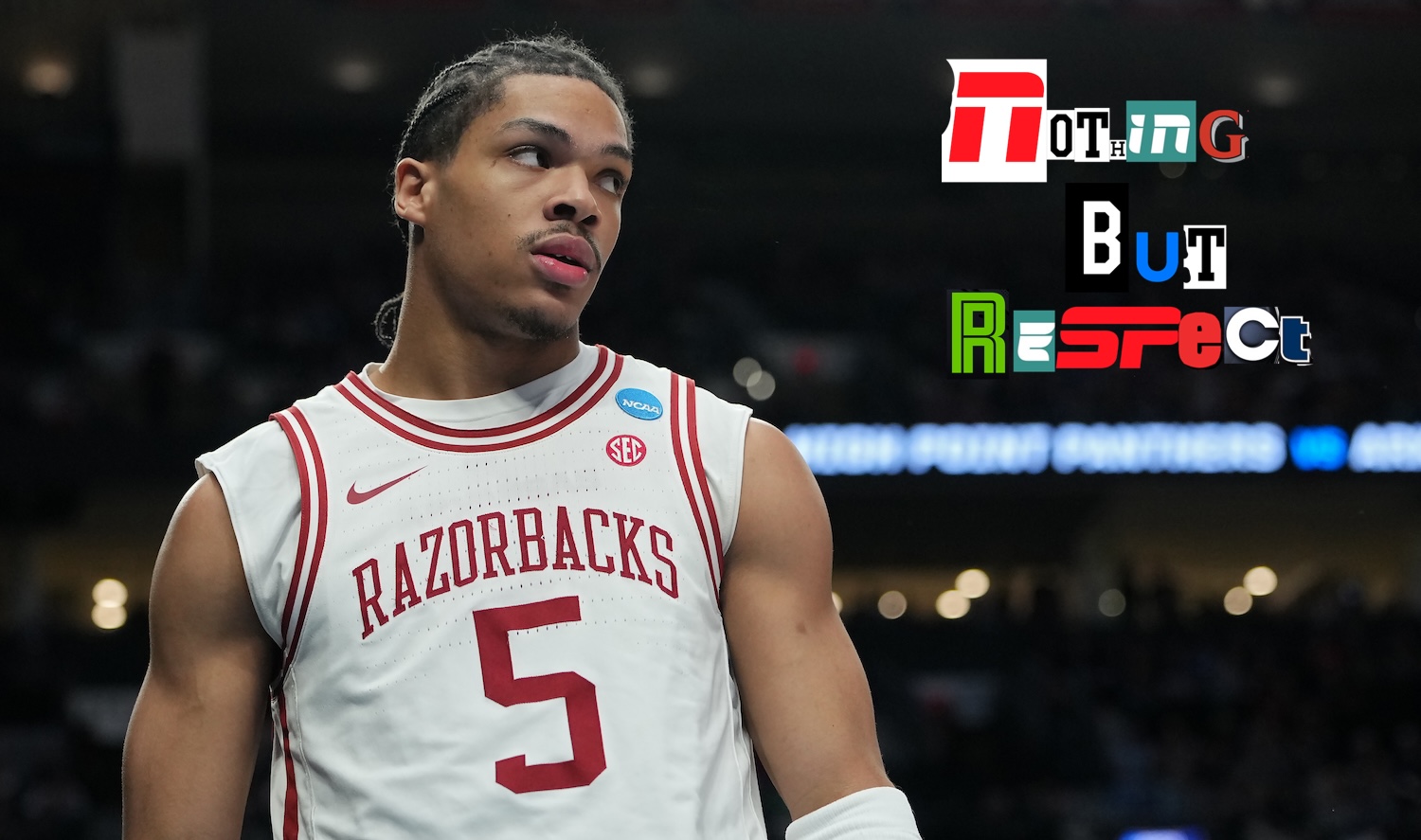
How long the game had been decided by that point is both debatable and academic. Arizona, which had never trailed by more than a dozen points all season long, was down 10-1 before three minutes of clock had elapsed, by 16 halfway through the first half, and trailed by as many as 30 in the second half. The most anticipated game of the tournament, between two top seeds that had ranked at or near the top of every metric, advanced and otherwise, all season long, was instead a walkover more or less from the jump. Michigan got whatever it wanted on offense and crowded, overwhelmed, and denied Arizona on the other end; a too-late outbreak of shotmaking pulled Arizona's shooting percentage up to 37 percent and the margin of victory down to 91-73, but those numbers barely do justice to how thoroughly Michigan controlled both ends of the floor.
A shorter way to describe all this is that even this game, against one of the best and most balanced teams in college basketball, swiftly revealed itself to be Just Another Michigan Game. That is, it fit with the historic dominance that Michigan has displayed both this March—the win made them the first team ever to score 90 or more points and win by double digits in five straight NCAA Tournament games—and throughout a year in which they were instantly and undeniably much better than even the most optimistic preseason assessment suggested. Michigan blasted some impressive early-season competition back before the calendar turned to 2026, and remained dominant in Big Ten play thanks to one of the best defenses in college basketball, an offense that was both metronomic and electric, and by serving up some hearty helpings of cheerfully brutal physicality. That the same could have been and frequently was said about Arizona coming into Saturday's game only made the gap between the two more startling to behold as it opened and then widened further.
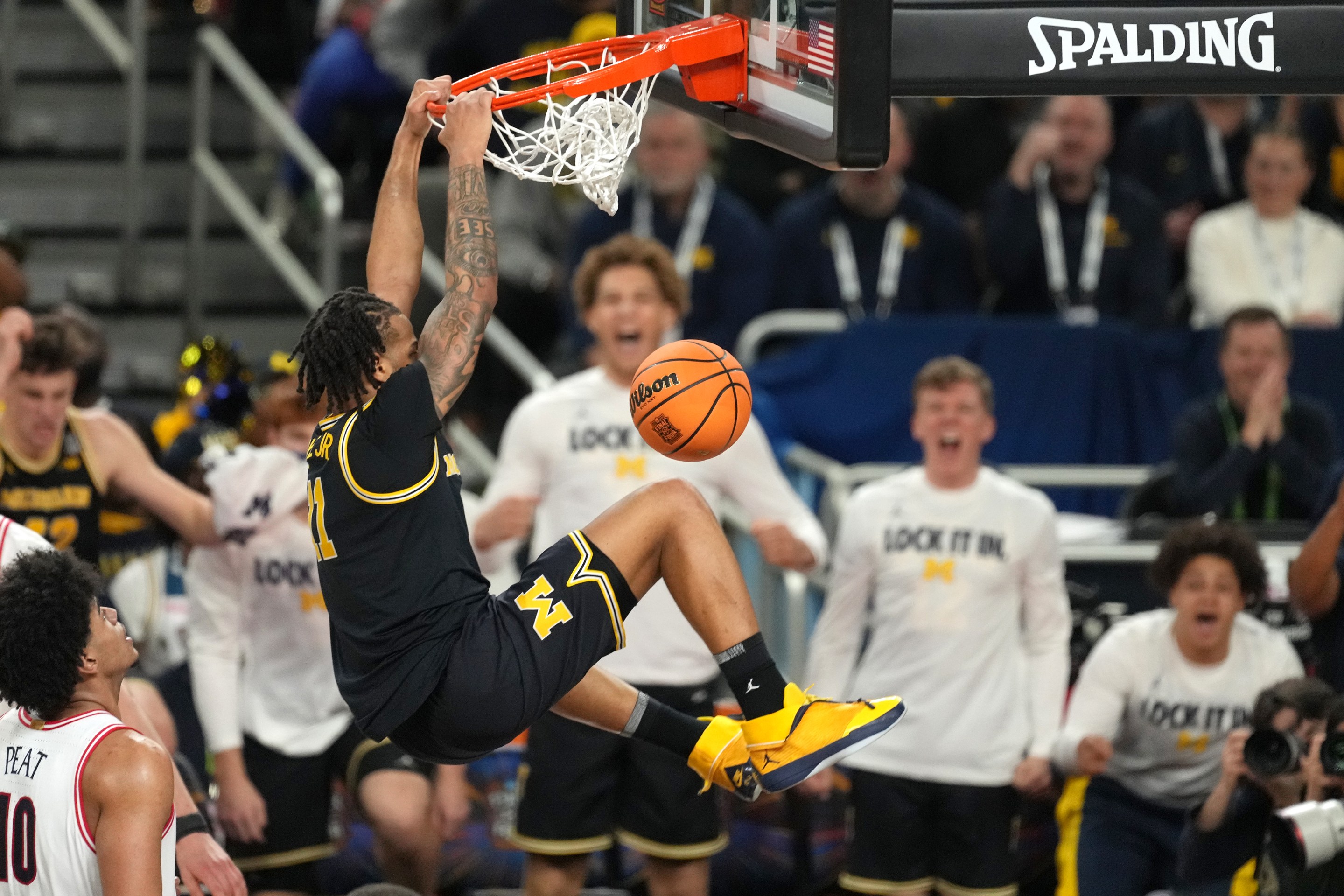
It is significant that Arizona, which relies on three-point shooting less than not only any good team but virtually any other program in Division I, was underpowered when it came to closing that deficit. But the thrill of the game was in how Michigan made and maintained that deficit in the first place. The open, high-percentage shots that powered Arizona's offense in lieu of significant long-distance shooting just were not there to find; the physical defense that pushed teams out of their concepts all year instead spent a lot of time stumbling backward before collecting the ball from an official. Michigan's centerpiece star Yaxel Lendeborg spent much of the game going back and forth to the locker room for treatment on a knee and ankle injury he sustained in the first half, and while he was effective and efficient in his 14 minutes, the Wolverines barely needed him. They had everyone else.
Big man Aday Mara stood out, there, scoring 26 points on 11-of-16 shooting, grabbing nine rebounds, blocking two shots and changing countless others. But Michigan's offense runs through more than one channel, and arrived in this game as it did for most of the season as one churning and insistent tidal surge after another. From one moment to the next it can be startlingly creative; after the game, Michigan revealed that several of point guard Elliot Cadeau's misses in the game had in fact been designed as off-the-backboard lobs to Mara in lieu of having Cadeau try to loft passes over Arizona's 7-foot-2 center Motiejus Krivas. Cumulatively, though, it was obliterating and comprehensively seamless. There was just no place to go where Michigan already wasn't.
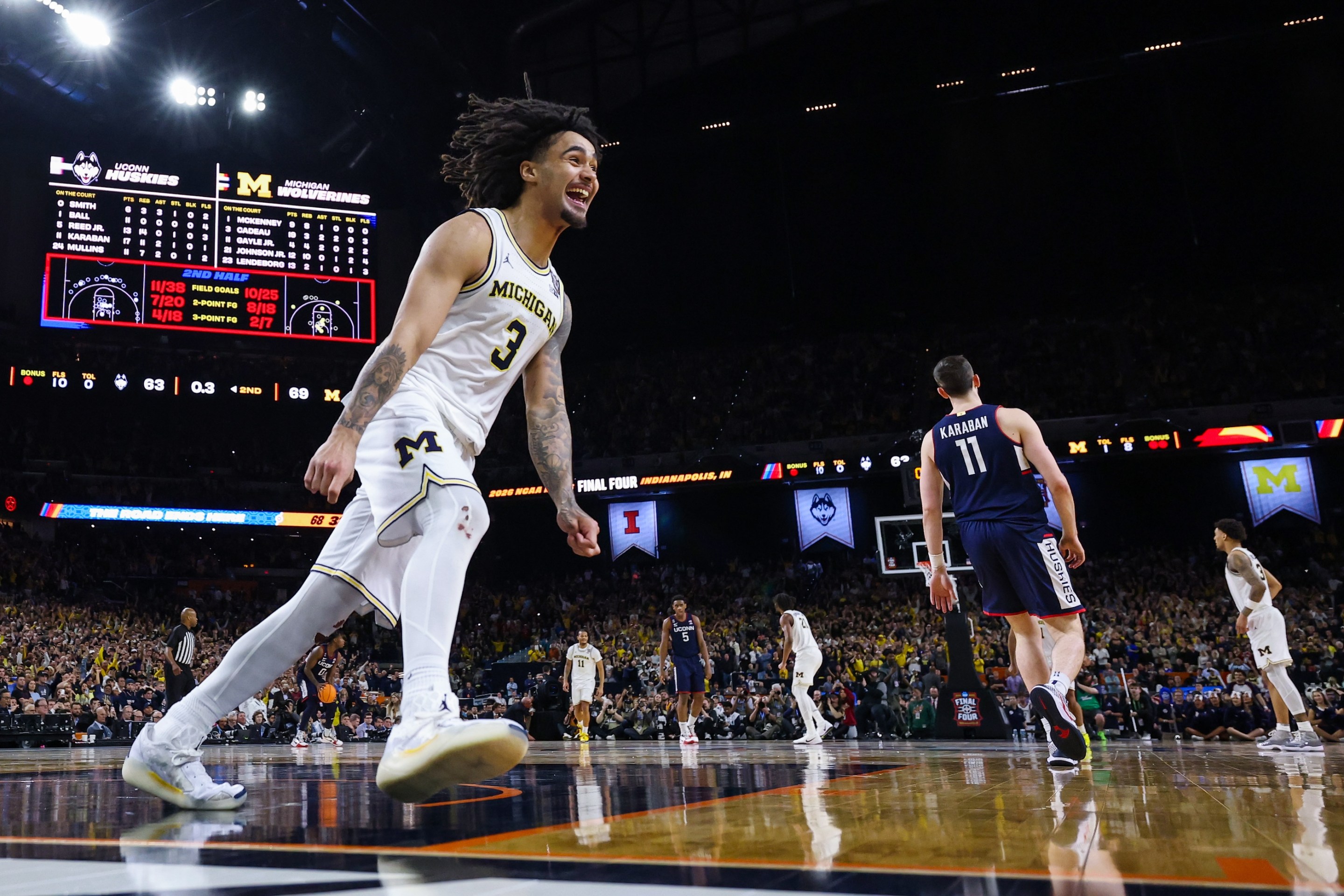
There was nothing grim about any of that, to be clear, although it's hard to imagine Arizona fans enjoyed it much. If anything, it is difficult to remember a team that dominated quite as cheerfully as Michigan has this season, a coaching achievement that's all the more striking given how many of the roster's most important players, Mara and Lendeborg among them, arrived via the transfer portal before this season. How much they can expect from Lendeborg in Monday's championship game is hard to know, and will be important; as good as Michigan was without him against Arizona, they will need him against a UConn team that won convincingly against Illinois earlier on Saturday and will be playing in its third NCAA Championship Game in four years. "To have the pain that I’m having right now, [I] never experienced it before," Lendeborg said after the game. He also said that he planned to play through it; the game stories noted that Lendeborg was smiling when he said it.
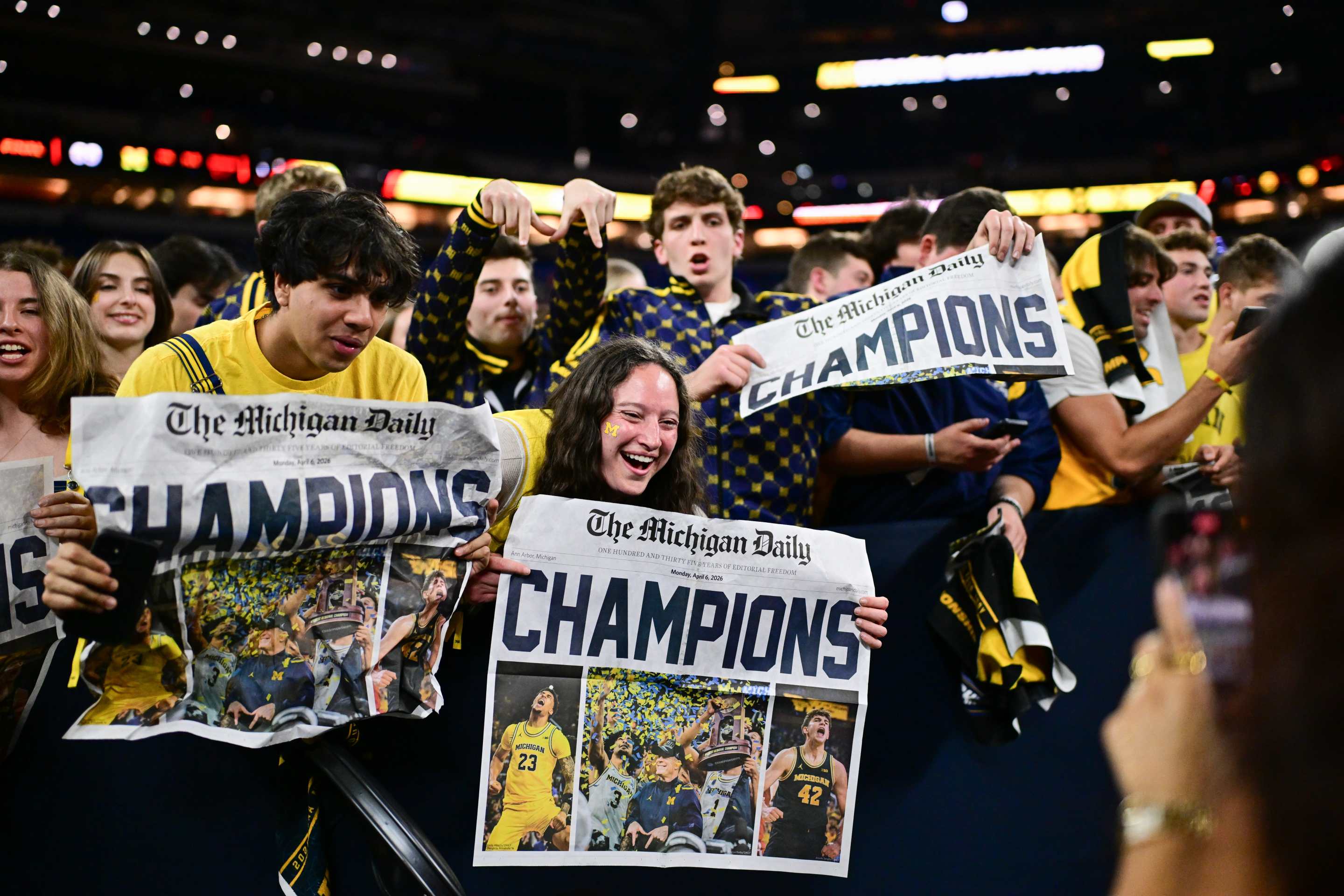
Arizona is the best team Michigan has beaten this season, and this was their most important win. It was impressive in every facet, none more so than how non-negotiable it all felt. Michigan simply threw its kind of party and refused to let Arizona in. "When we have fun," Mara said after the game, "it's hard to beat us." It feels foolish to single any one bit of awe out from the rest, here, and it would be premature to crown Michigan before the crowning is done. But what was most striking about Saturday's win was how much it felt like every other Michigan game—one wave after another pulling the tide up the beach, all perfectly natural and seemingly as close to inexorable as any of this gets.