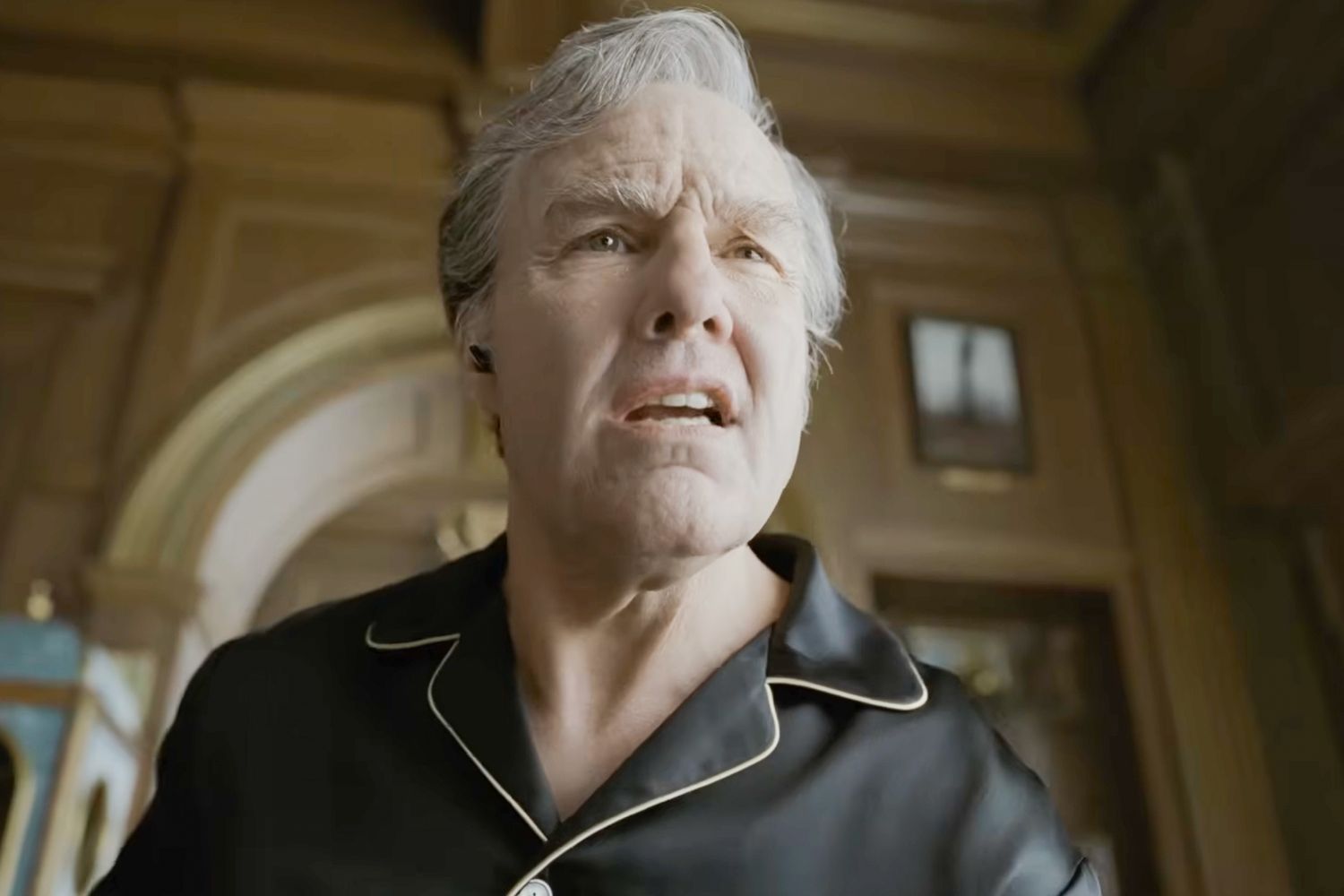

In Hal Hartley’s new film Where to Land, a 58-year-old director of romantic comedies applies to become a groundskeeper at a graveyard. The director, played by frequent Hartley collaborator Bill Sage, is putting together his last will and testament, taking stock of his life in both the material and metaphysical sense. Joe, Sage’s character, must make a list of his belongings—his kitchen table, the china from his first marriage, the rights to his films—while looking to contribute something more “useful and perennial” to the world.
Hartley burst onto the independent film scene in the early 1990s with films like The Unbelievable Truth, Trust, Simple Men, and Amateur. Those films contain many conventional Hollywood narrative techniques, but they are full to the point of bursting with philosophical discussions of love, politics, family, and religion, all addressed at a pace and in ways that rarely appear in traditional studio films. Hartley’s status as a filmmaker springs from those abrupt changes of pace and his uncommon, uncanny comfort with contradiction.
The narrative motion of Hartley’s films are driven by characters who are defined by their ironic contradictions—a former nun who writes pornography, a garbageman poet, a distant father who played shortstop for the Dodgers and later bombed the Pentagon. When I spoke to Hartley over the phone, he told me these characters allow him to explore his own thoughts, “making dialogue between characters is a manner for me to think things through myself.”
While many directors use character tropes to more easily move the narrative, Hartley inverts the concept to express and explore his own ideas. No one is quite who or what they look like. “I've always been intrigued by how the philosophical gets treated in the quotidian, the everydayness of things,” Hartley said. “Just trying to shine a light on the everyday, the mundane course of our lives, that there has to be a place for philosophy.” The cop in Simple Men, to take one of many examples, is not a donut-eater off the set of NYPD Blue; he is not identifiable as any other cop previously seen on film or anywhere else. Instead he is a haggard, heartbroken romantic, played hilariously in two brief scenes by Damian Young, wondering what the point of life even is after his breakup.
Hartley says his films begin with a feeling, and grow into an investigation of that feeling. For Hartley, any sufficiently rigorous investigation of a feeling naturally leads to a philosophical analysis of everything else. In Where to Land, Joe talks to his building superintendent about his failed relationships, which were disrupted by his need to possess the woman he loved. Joe’s super, who is running for city council on an anarchist platform, declares that Joe’s “emotional life was disrupted by the profit motive.” The scene ends with Joe giving his super a copy of a volume by the seminal French anarchist Pierre-Joseph Proudhon. Hartley’s characters are actively working through and discussing their alienation with each other; the audience gets to watch.
The inherent irony of that relationship between the film and its viewers is a Hartley trademark. A man in his late fifties thinking about his mortality and wondering if he can change careers is not altogether a rare thing—it is closer to universal, really—but by foregrounding and underlining what is stilted about it and having the characters work through that, Hartley is able to create a sort of sardonic bond with the audience. “Characters who are being philosophical or patently political and insightful without knowing what they're doing,” he told me, were a constant in his films. But “we do [know], the audience does. We see it, but the character doesn't. So that's a manner of irony I’ve used a lot since the beginning of my career.”
Hartley acknowledges that he writes “talkie movies” that are “dialogue-built, performer-driven.” But his instinct, he went on, “immediately was to—if they're going to have this long conversation—these two people, I've got to invent a way of keeping the frame alive. It's going to change.” The conversation of a Hartley film may be long on the page—there are a lot of ideas to work through, and no one ever seems to have anything more pressing to do—but the cinematography remains engaging and dynamic. The films are never as stuck as the characters can seem to be; Hartley’s camera often starts in a tight or medium shot, and he eschews wide shots in his films as a general rule. This may be a result of his disdain for establishing shots, but it also creates an intimacy between the audience and the characters. The audience is at an ironic remove, but is also always and already in the conversation.
Yasujiro Ozu, Carl Dreyer, and Robert Bresson, the masters of what Paul Schrader called “transcendental cinema,” disarmed viewers and changed the art form by breaking film’s standard rules of time. In traditional film, the cut happens when the actor walks out of the room and closes the door; for the transcendentalists, the camera may linger on the door for any amount of time. This is always legible as a choice, but also breaks the traditional relationship between audience and film. As Schrader sees it, it also forces the audience to lean toward the film, as opposed to the film leaning toward the audience. Hartley, whose choices are always equally legible, creates a dynamic all his own by thrusting the audience into the intimate space of his characters.
Take the opening scene of Trust, a film that Quentin Tarantino told Hartley he watched 10 times before he made Reservoir Dogs. The film begins with an extreme close-up of the late Adrienne Shelly’s character putting on lipstick with her mother slightly out of focus over her shoulder. It then cuts to a close-up of the mother, with Shelly, out of focus, arguing with her father in the background. Another cut to alternating close-up shots of Shelly and her father, and then a medium shot of the dad on the ground with his wife and other daughter standing above him. It is jarring, wrong-footing, wildly intentional, a remarkable opening scene just in terms of the way it’s made. The dramatic action in those scenes, which I am leaving out, is part of what makes it so funny, brutal, and dark, but a great deal of the pathos is coming solely from the camera and the blocking of the actors. That, as much as the philosophical stuff and their uncanny intimacy, is The Hal Hartley Thing.
When I asked Hartley about the rhythm of his films, he mentioned that he thinks very musically about his work. (He has scored many of his films, and the soundtracks to his ‘90s films are great period-appropriate indie-rock mixtapes.) “I like the feel and the movement of a story well told,” he said. “Sometimes that is about stillness, but for me it's always been, and more confidently as I've moved along, more about the music of the dialogue, the music of physical activity, and the music of the plotting and the emotional pitch and all that. I use the word composing a lot when I'm talking about the filmmaking, composing a shot, composing the dialogue, composing the frame.” It is true that Hartley’s films are driven by dialogue and performance, but the composition is what makes them special. Form and function run together; the films bring you close, but never quite let you in.
I got into Hartley at a time when I was watching a lot of Rainer Werner Fassbinder movies; I sensed a kinship between their work. Fassbinder was one of the most prolific and influential filmmakers of the New German Cinema movement in the 1970s and 1980s, and directed over 40 films despite dying at the age of 37 in 1982. Fassbinder’s films are arch and astute and angry in the ways that Brechtian theater is, and powered by revolutionary politics, queer sexuality, hyperviolence, technological skepticism, and strong but tragic heroines. But perhaps the most radical and interesting aspects of Fassbinder’s work is his placement and movement of the camera, not just what he gets from his actors but where he puts them within the shot. This is something that can also be said about Hartley. The narrative may come from the actors and the dialogue, but the subtext exists in the movement (or lack thereof) of the actors and the camera; various big ideas express themselves less through the action than through the composition of the frame. For Fassbinder, this subtext was mostly political. For Hartley, it is philosophical.
It is a strange thing to interview an artist you admire a great deal, and I will admit here that I was gratified by his response when I asked what felt like a left-field question. It was, tonally, something like asking a grandparent about watching Willie Mays. “I followed [Fassbinder] very closely all these years, and I returned to it again and again,” Hartley said. “It's not one of the more obvious influences, but I liked his blocking, the eccentricity or the extremity of it sometimes, and certainly the way that not necessarily educated people can talk intelligently in these films on the subjects he dealt with.”
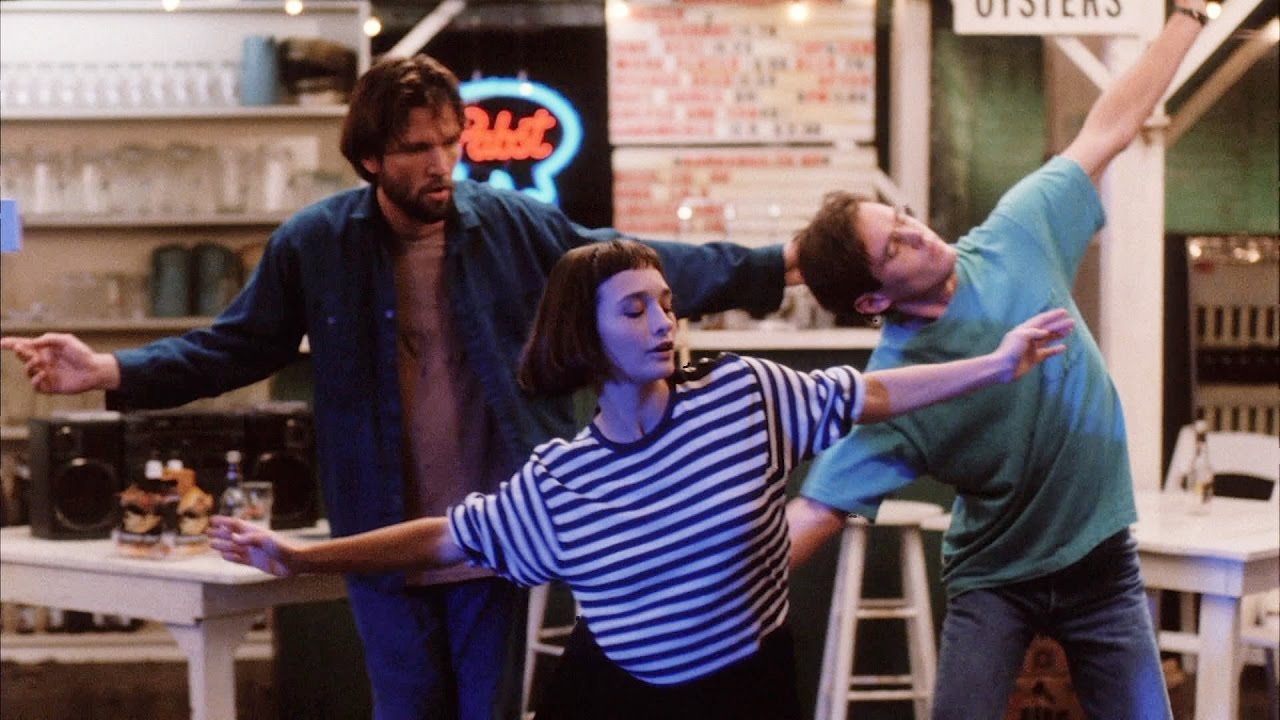
I see Hartley, who has spoken a lot in interviews about his love for Wim Wenders, as an extension of the New German filmmaking movement. From a technical standpoint, the eccentricity of Fassbinder’s blocking and the use of lighting in Wenders’ road movies can be seen very clearly in Hartley’s early work. “The way he would organize the actors in front of the lens coming in and out of frame panning was very smart and very strong, and not naturalistic, necessarily,” Hartley said of Fassbinder. “It was about reality, but he didn't worry overly much about whether it felt natural. There were clearly artificially organized movements, and it was like a kind of music, a staging, a choreography.” Hartley and Fassbinder both set out to have serious discussions about real life, but also are quick to let the audience know that they can have a little fun while doing it.
Fassbinder himself was a great admirer of Douglas Sirk, a prominent German director who fled Nazi Germany and went on to make some of Hollywood’s most iconic melodramas. Todd Haynes, another Sirk acolyte, basically made a Sirk film of his own in the 2002 classic Far from Heaven. Hartley mentioned a famous Fassbinder quote about Sirk’s women:
Women think in Sirk’s films. Something which has never struck me with other directors. None of them. Usually women are always reacting, doing what women are supposed to do, but in Sirk they think. It’s something that has to be seen. It’s great to see women think. It gives one hope. Honestly.
Sirk, Fassbinder, and Hartley are all devoted to such women. Fassbinder’s women tended to be tragic—drug addicts, sex workers, Nazi wives, far-left terrorists. They steer his films and, ultimately, themselves to their own destruction. Hartley’s women do not usually occupy quite the same precarious position, if only because Hartley’s stakes are not as high, but they drive his films in similar ways; they also are all, always, thinking. Whether it’s the dazzling Shelly in Trust and The Unbelievable Truth, Isabelle Huppert in Amateur, Parker Posey in Fay Grim, or Aubrey Plaza in Ned Rifle, Hartley’s films rely on these women to serve as the emotional center of the film.
Hartley, like Fassbinder, works with a tight-knit group of actors that he knew intimately on and off the screen, although he certainly does not have the same intense off-screen drama with his favorite actors that Fassbinder did; I’ll let you look that bit up for yourself. Hartley’s group of recurring actors includes Bill Sage, Parker Posey, Robert John Burke, Martin Donovan, Elina Löwensohn, Edie Falco, Karen Sillas, James Urbaniak, and Adrienne Shelly. Many of these people became some of the great character actors of their generation; all of them are performers whose presence you might register gladly in a Law & Order episode you’re not quite watching. Their presence provides a continuity to Hartley’s films that transcends the action of those movies. Sometimes, as in the Henry Fool trilogy, it works with the narrative. In others it is more aesthetic. I’m not sure if it’s intentional that Bill Sage wears the exact same outfit—a blazer over a T-shirt, jeans, and boots—in Simple Men that he does 33 years later in Where To Land. But it feels right.
I was born the year Simple Men was released, and in retrospect the early ‘90s American independent film scene seems like a special and unique era. Directors from very different backgrounds—compare Jim Jarmusch to, say, Richard Linklater—were making films on tight budgets that were interesting, sexy, unique, and cool, and those films found enough of an audience that the filmmakers involved were allowed to continue making more of them. If, to my generation, this seems like a renaissance, it is to Hartley just a brief hiccup in a business that has mostly always been a business. “I don't look back at the nineties as halcyon days,” he said.
This unusually productive blip began when Jarmusch’s Stranger Than Paradise came out, in Hartley's telling of it, “and it's this idiosyncratic, but not weird, not really experimental film—a good comedy made in a very particular way and on a shoestring budget, and did really good business. And that changed everything at the same time. Suddenly everybody would let me in the door with my little film. I benefited from that, but [only] for about five or six years, and then everything kind of got co-opted back into corporations again.”
American independent film has a very strained and complicated relationship to capital, even by the standards that traditionally apply to art and industry. Hartley’s films have an audience, and he knows how to make his films, his way, on a budget. But while the business has changed, Hartley has been able to change with it. His most recent films, including Where to Land, have been funded entirely by independent donors on Kickstarter. “Democracy is not very popular these days,” Hartley told me. But the audience that he brought into conversation with his characters—the people who listened in on all those existential crises, much more closely than they might have expected—are now the ones making those films possible.