

What will it take to be fulfilled by life? Love, perhaps, or community, power, or professional success. At different points in my life I believed that having my work published would make me happy, or leaving the country, going back to school, getting a literary agent. I thought a new girlfriend might do it, or a new apartment. Some of these I achieved; some I’ve yet to; one or two, thankfully, are long behind me. And you know what? They did, at one point or another, satisfy me. Yet there has always been another waypoint, another goalpost, somewhere further along the way.
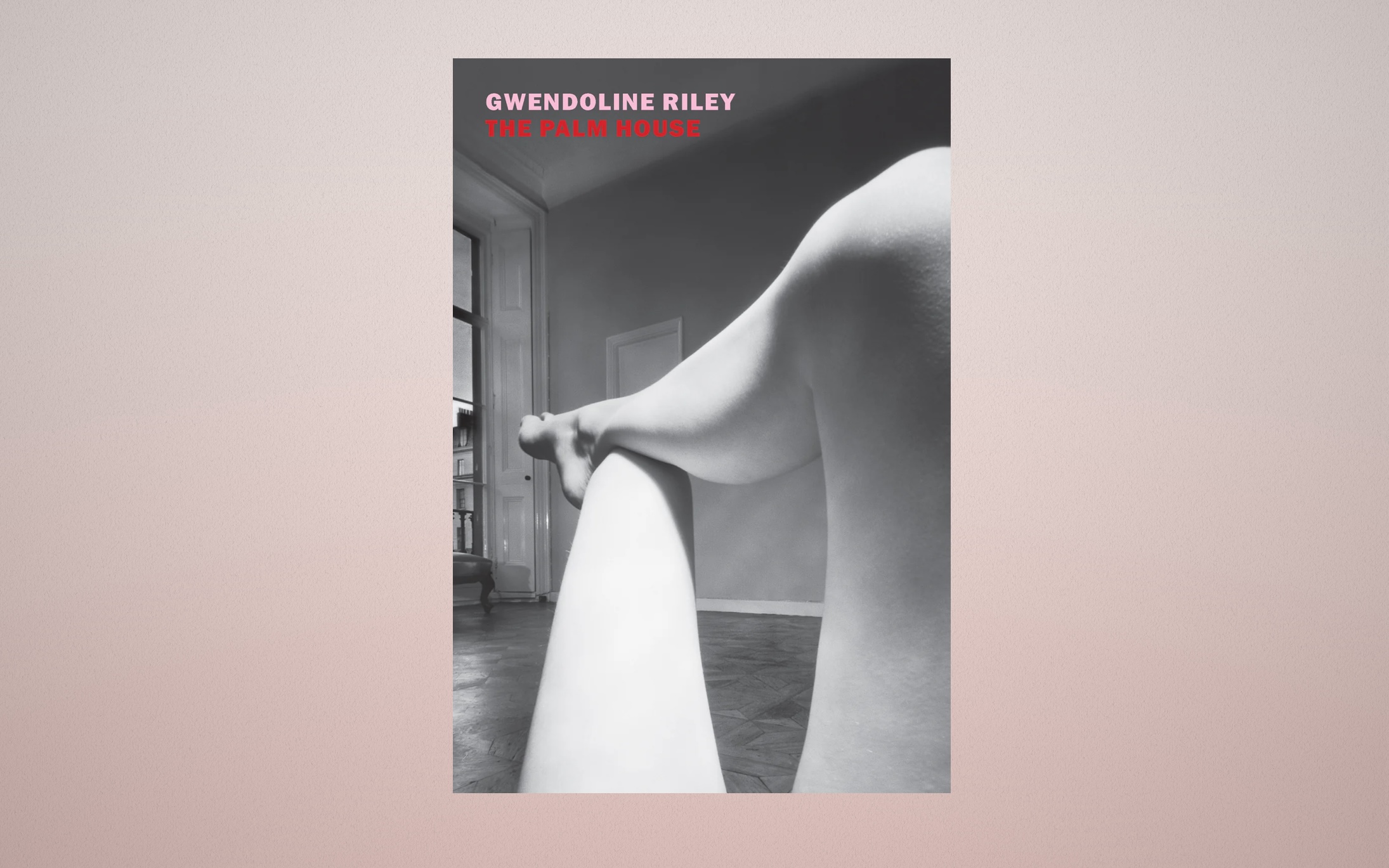
I think this is why I have always connected with the fiction of Gwendoline Riley. A keen chronicler of existential disappointment, the English novelist populates books like My Phantoms and Cold Water with those who sense that they have been stymied by life, cast away by shifting currents of both capital and culture, yet who do not, even cannot, allow themselves to acknowledge the fact. Her narrators are marginal women, hacking away in the crevices of the publishing and culture industries, or downwardly mobilized—back to working service jobs in North England hometowns. Their mothers are self-confident to a suspicious extreme, blundering through retirement with a stage grin and a deep well of contempt for the people around them. Meanwhile, the men in their lives—lovers, bosses, and the occasional absent father—have a bad habit of lashing out, inflicting their failed vision onto a world too superficial to accept it. In The Palm House, newly published by The New York Review of Books, this narrator is a writer named Laura, a freelancer bouncing around from support job to support job, and occasionally contributing to a highbrow intellectual magazine called Sequence. Unfortunately it is the late 2010s, Brexit has just slipped through, and the magazine’s parent company have appointed a new editor-in-chief at Sequence, a Will Lewis-type near-illiterate with vague ideas and powerful friends, a grown man who insists that everyone call him “Shove.” In his goal to turn the publication into “a sort of London version of the New Yorker,” he is pushing out Edmund Putnam, a high-ranking editor who gave Laura her first entrée into journalism, and a man for whom Sequence has been virtually his entire adult life. Putnam’s future, Laura’s future, the future of media and writing and perhaps even thought as a going concern: All seems suddenly up in the air.
Yet this crisis is only the initial spark of Riley’s idea. The Palm House is really the story of Laura’s precarious and sharply contingent life. Laura grew up in Liverpool, sharing a house with both her grandmother and mother. In this family, she recalls, there was “a terrific inhibition around substantive conversation,” and all forms of talk reverted ultimately to pat phrases and ready-made cliches. Her grandmother flips through “gadget catalogues” while her mother goes on and on in a strange and unplaceable foreign accent probably picked up from TV. Neither needs much input from Laura; as she drolly puts it, their “show ran regardless.”
Laura’s memory sweeps through her teenage obsession with a stand-up comic, an adult entanglement with a daffy actor named Lawrence, and her retired mother’s language lessons and dating travails, as well as a run of shared apartments and temporary jobs. Riley is asking us to sort through this workaday bric-a-brac, to recognize it as a life. There is no arc here, no sweep, no assemblage of a meaningful whole: just a wash of commonplace detritus, of pieces both pleasing and painful, accreted together by chance, and degrading with time. That Laura has kept her head up is accomplishment enough. Lord knows, she’s not going to do much better than that.
Though born in 1979, at the tail end of Gen X, Riley has become a premier chronicler of millennial disappointment. Her characters are gnawed down slowly by the sense that their lives, both private and professional, will never be fulfilled. Jobs cut off, relationships dissipate, parents linger on for years, but never grow any closer. Much is promised, and little delivered, and there’s just not much they can do about it. As in similar novels by Pip Adam (The New Animals) and Sayaka Murata (Convenience Store Woman), Riley’s characters assert themselves primarily through consumer choices: changing flats, rejecting meat, chipping away at the edges of that vast and ever-expanding polycrisis we call the 21st century.
Riley’s earlier novels have their share of dramatic encounters and sudden shifts. Her narrators fight, lash out, and flee home to Europe and America. But this sense for the histrionic has faded with time. Cold Water’s narrator comes upon her father’s corpse propped before the TV; Laura’s is dealt with off-handedly, his body found by an uncle. But rather than disarming her books, this dramatic decentralization makes room for moments of real suffering and survival.
In one early chapter, Laura recalls her infatuation with a popular stand-up comedian named Chris Patrick. Drawn to the way Chris moves “about the world in a state of near-ecstatic personal pain,” she tapes his picture on the wall, loyally watches his sitcom, even wakes up in the middle of the night to catch his old specials on TV. She begins mailing him cassette tapes, recordings in which she relates the events of her 15-year-old life to him, as she is now doing to us. After a live show in Manchester, he recognizes her voice, and begins inviting her backstage, and to his hotel room, and eventually to visit him in London, where he rapes her, records the whole thing, and puts her back on a train up north.
The contours of this memory only emerge in hindsight. On the day, she recalls lying perfectly still, allowing him to physically manipulate her like a doll. “I suppose it was obvious,” she recalls, “that I didn’t want to get anything wrong.” Riley writes movingly but clearly of Laura’s physical pain, exacerbated by a tear in her vaginal wall. Another novelist would make a whole book of such a scene, would make the narrator’s reckoning into the story’s spine. But Riley does not have to, because she understands that such abuse is fairly commonplace, enabled by all manner of mechanisms, from the impunity of fame to the indifference of hands-off Boomer parenting. When Laura’s mother sees her getting ready for the trip to London, she seems not only jealous but actually resentful of her daughter. Theirs is not a bond that would withstand a collision with the truth.
Yet such lives do go on, however incomplete they tend to be. Late in The Palm House, Laura returns to Putnam, who has not taken his forced retirement well. He, too, is living with a series of absences, chiefly the father he nursed through a final illness. One day he tells Laura a story about a woman his father fell in love with, a Polish waitress at a gussied-up sandwich place. This was late in the old man’s life, well on his way out the door, yet the widower crushes on her all the same, and the two grow close. So close, in fact, that the waitress begins to tell him about her life: her home, her marriage, her grown sons. Years later, Putnam asks his father what became of the woman, and the old man breaks down in tears. “Obviously I was a bit older,” he sobs, “but I had hopes.”
Even Riley knows that there’s something funny in all this talk of an old man pinning his brief future on feelings for a married woman. But she recognizes, too, that we all live with such hopes, at one point or another, and at one point or another we live to see them dashed, discredited, made into material for pub talk long after we’re gone. For there is nothing, no achievement, no position, no status marker which can fulfill us for good. One day or another, as Putnam notes, “the seesaw-of life just tips. And then it is down hill all the way.”
This makes The Palm House seem like a heavy lift, but Riley does not accept entirely Putnam’s understandable pessimism. She leavens her novels with barbed humor, as well as a pervasive, hard-won tenderness for all these fuck-ups and not-quites. If anything, The Palm House might be her most tender book to date. By the end, Putnam has returned to Sequence, and Laura has gotten her new apartment, and the story does not so much end as settle in time . The result is this exceptionally keen novel in all its shaky equanimity, its conviction that all manner of things might be lived through, and lived past, and only understood when it is too late. For if Riley’s project is to have an outlook, it might be this: To live is to endure great hardship, and then to keep going.