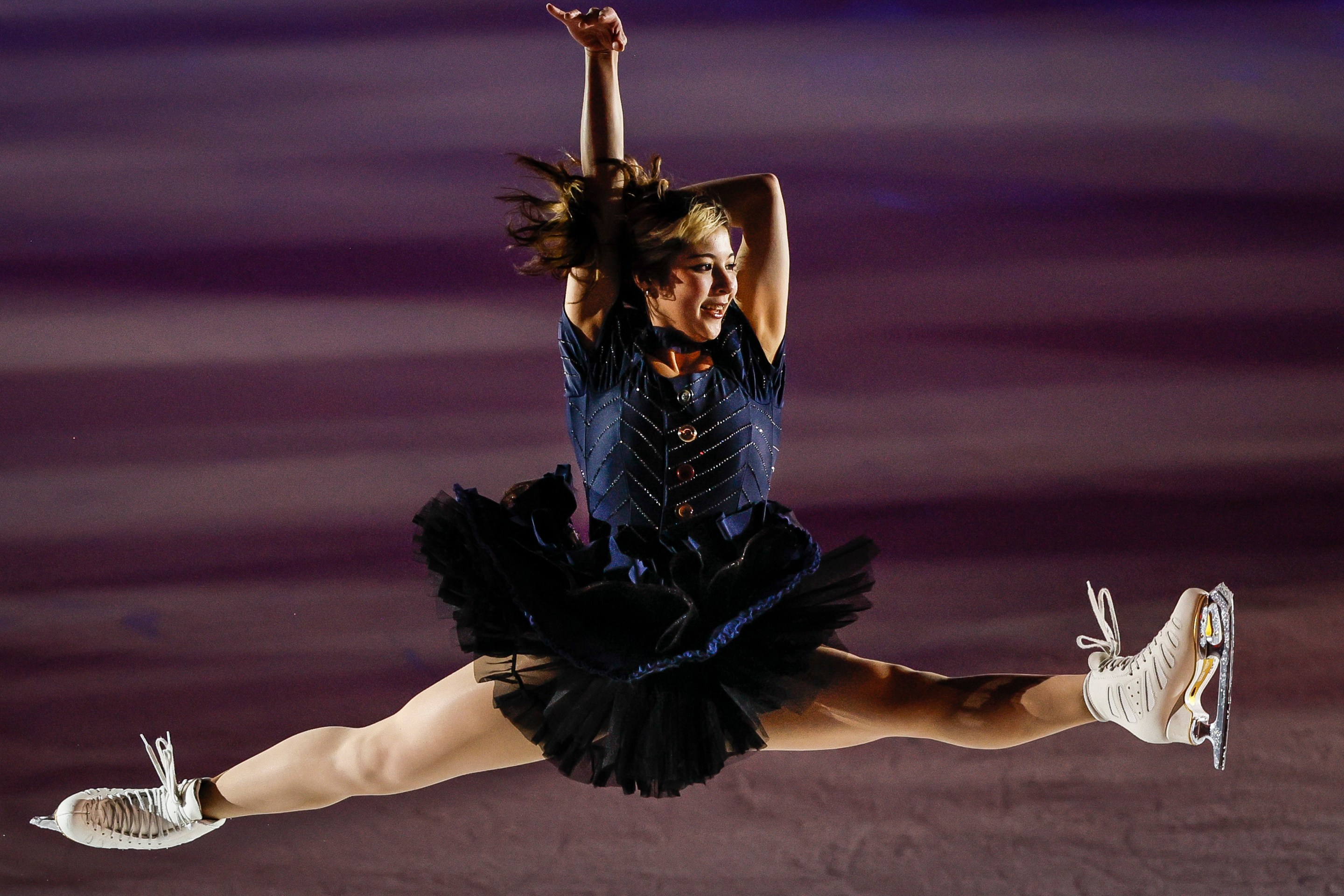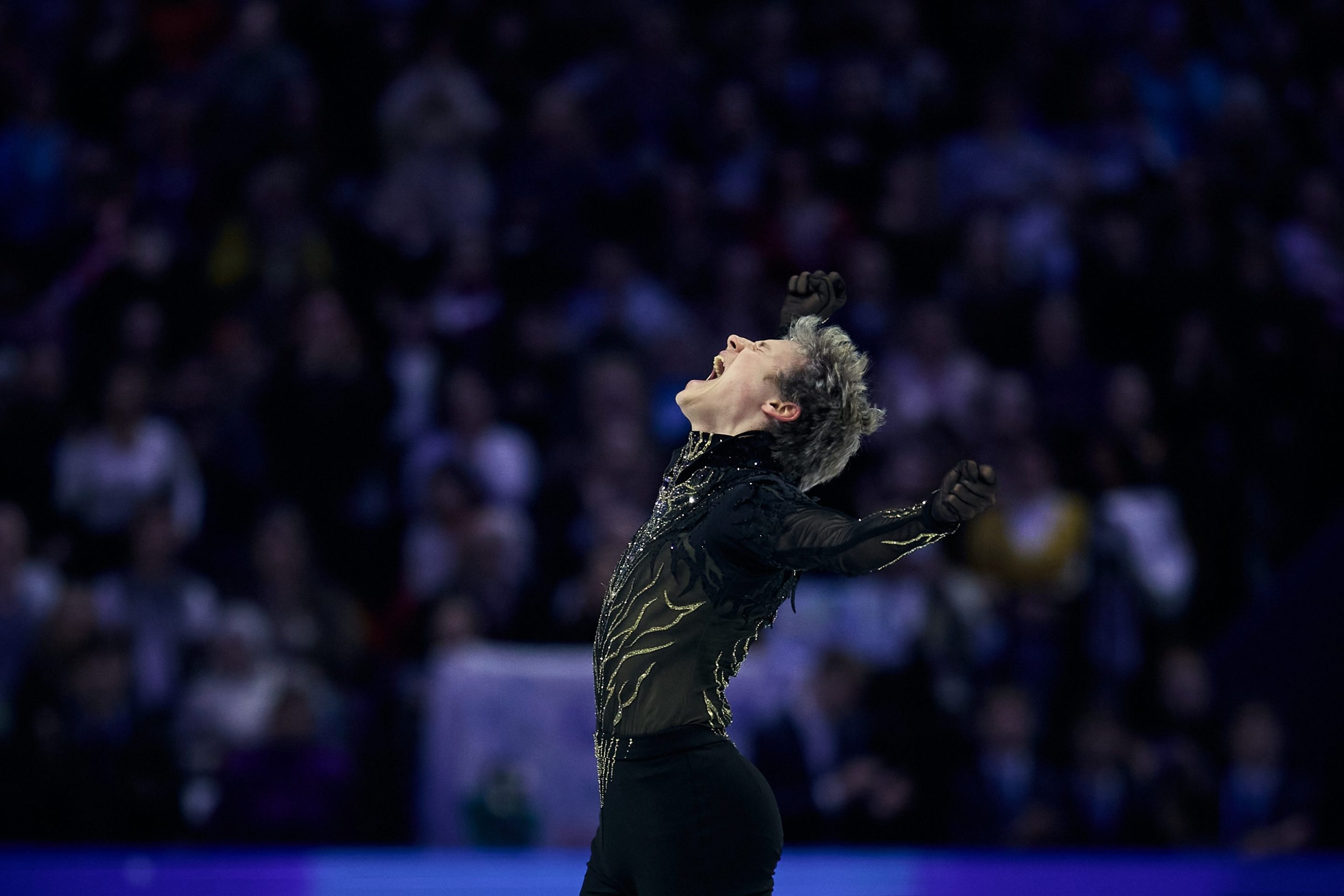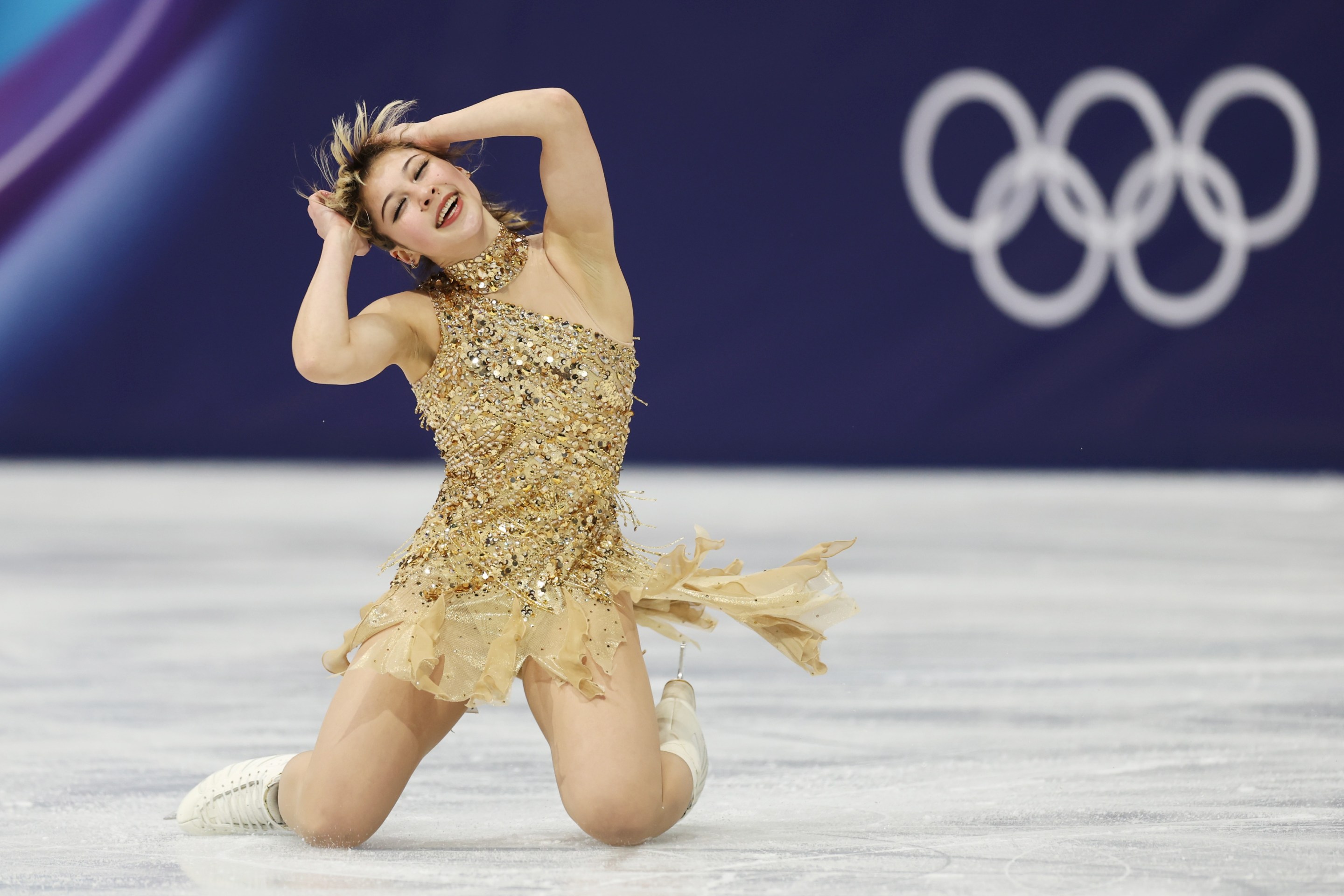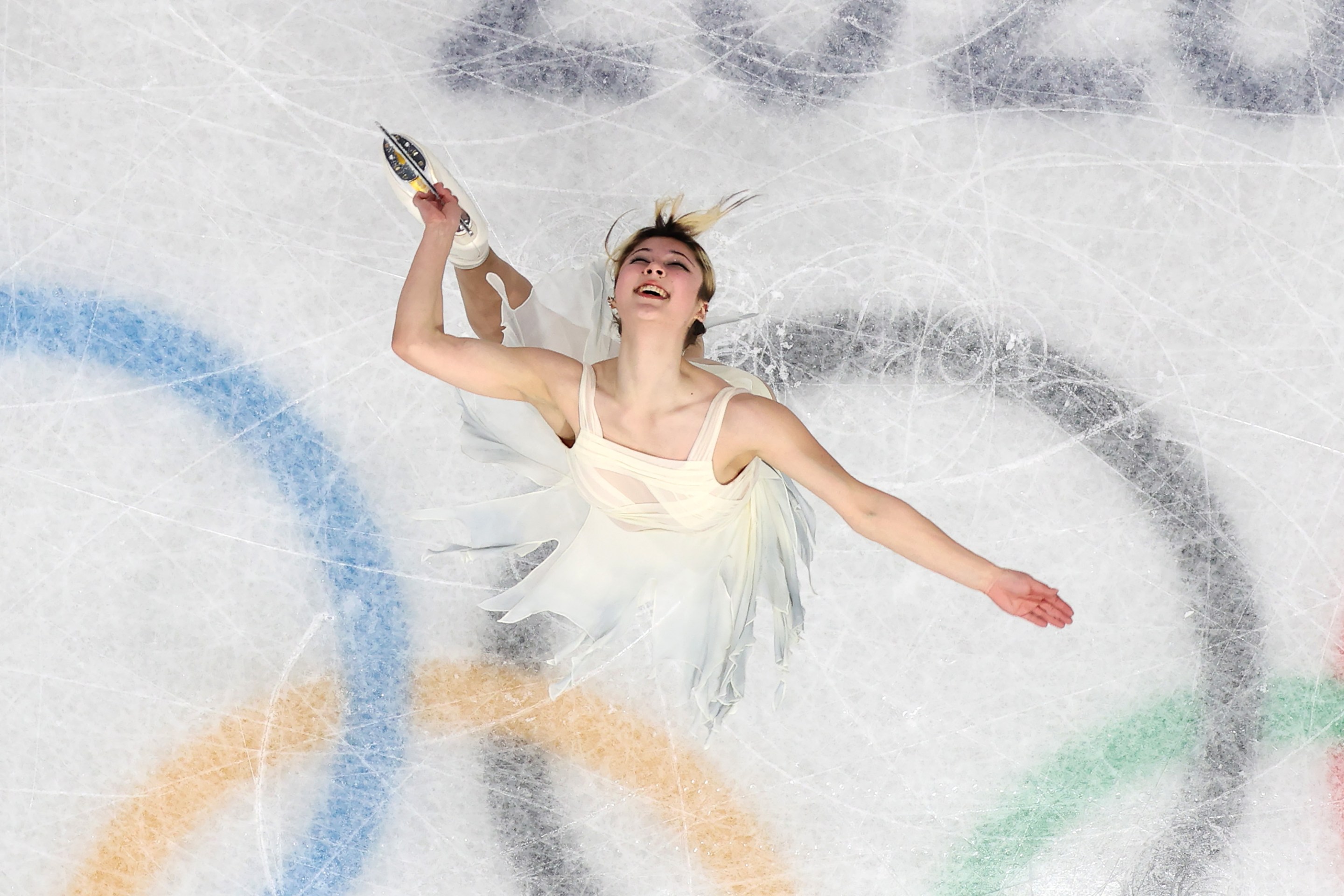
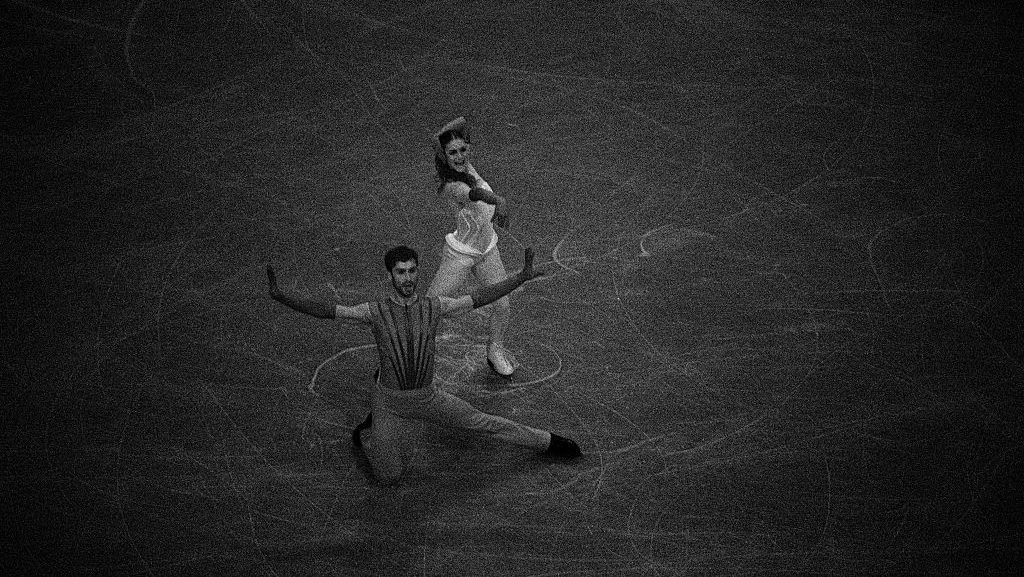
Blink and you might not have caught it. On Monday, Guillaume Cizeron and Laurence Fournier Beaudry took to the rink and staked their claim to the ice dancing gold medal. Dancing to Madonna's "Vogue," complete with Blond Ambition–inspired costumes and voguing arms, their routine already is popular online. But the performance isn't the thing you might have missed. It was the explanation beforehand, from NBC's Terry Gannon, about the formation of the new skating partnership that was notably brief for all it conveyed.
Cizeron and Fournier Beaudry are a relatively new duo, formed less than a year ago. Recently, Cizeron's former partner, Gabriella Papadakis, published a memoir in which she called him "controlling, demanding, and critical," Gannon said. As for Fournier Beaudry, her former partner, Nikolaj Sørensen, was "suspended in a sexual maltreatment case that is still not resolved," Gannon said. The broadcast then segued to the natural conclusion: They are the biggest challenge to the United States ice dancing team for first place.
These type of glancing summaries are typical of how, if at all, figure skating coverage has discussed what brought Cizeron and Fournier Beaudry together. They might or might not mention how Cizeron's former partner with whom he won gold, Papadakis, was dropped by NBC for what she said, or how the sexual misconduct case against Sørensen, Fournier Beaudry's longtime boyfriend and former partner, has been dragging on for more than two years, and how Fournier Beaudry has defended Sørensen through it all. The closest thing to a person with a big platform speaking out is retired U.S. figure skater Adam Rippon in the Netflix documentary Glitter & Gold: Ice Dancing—he tells us "there is some sinister energy around the partnership"—before the show has both skaters suggest to us that they are really victims.
Fournier Beaudry and Cizeron have the advantage. They have the global stage and the spotlight, all that time on the ice to skate for us, to charm, to fill the arena with glamour and make France proud. So it is unsurprising that it is their story—the story of the unlikely couple, thrust together by chance—that has dominated. That doesn't make the stories of those pushed into the shadows any less important or newsworthy.
In January of 2024, USA Today's Christine Brennan broke the news that a United States figure skating coach and former skater had gone to Canadian sports authorities and reported that Nikolaj Sørensen, then one of the top ice dancers in the world, had sexually assaulted her in 2012. As Sørensen skated for Canada, the woman reported it to the Canadian Office of the Sport Integrity Commissioner, which launched an investigation.
The woman told investigators that Sørensen sexually assaulted her when she was 22 and he was 23 at a party in a Connecticut condominium, USA Today reported. The woman stayed silent, she said, because she thought no one would believe her. She finally spoke up, the report said, after reading an interview in which Sørensen talked about "the importance of keeping women safe in ice dancing." She reported it that day. (She said she considered telling police, but did not once she discovered the statute of limitations had expired.)
Sørensen denied the allegations. Nine months later, COSIC announced that Sørensen would be suspended for six years. But he had the right to appeal, which he did. That appeal went to an arbitrator, who overturned the suspension—not because she found the assault didn't happen, but because, the CBC reported, the arbitrator in June of 2025 ruled that Sørensen "did not expressly consent to be retroactively bound" to Canada's anti-abuse in sports policy. As Broken Ice explains, there's confusion about Sørensen's national affiliation at the time, specifically if he was with Denmark or Canada.
This, still, was not the end. In December, Broken Ice reported that the Sport Dispute Resolution Centre of Canada had deemed the arbitrator's ruling "not reasonable." It asked for more documents from the woman and Sørensen before making a decision. That is, for now, where the case stands.
None of this is mentioned in any detail in Glitter & Gold, which doesn't add much beyond Rippon's words. From there, it is just Fournier Beaudry's story. We see her reading positive affirmations to herself—she makes sure to read one every morning—and she gets to tell the story of her relationship with her ex-partner (and still-boyfriend): how they met, how they fell in love, how they came so close to their Olympic dream only to have it taken away by a suspension, and why she is still standing by him and believes him.
Fournier Beaudry is correct when she points out that his suspension also meant that her career was also potentially over. She tells her story with much pathos and sincerity in her eyes, as you might expect from such an accomplished ice dancer, a sport in which the performance of emotion is as much a part of an athlete's final score as any blade work. She is selling it. If you don't know much else, you probably do feel pain for her, as tears well in her eyes and she cries to dramatic music. But it's hard to ignore how much power she has in telling her story: A beautiful woman sitting down with a documentary series, airing on one of the biggest streaming services in the world. Meanwhile, the woman who reported that she was sexually assaulted has to lurk in the shadows, anonymous.
Papadakis's memoir came out last month. The title, Pour ne pas disparaître, means "So as Not to Disappear." An excerpt came out in the French publication L'Équipe last month, and that's what Gannon referred to in the live broadcast on Monday. In the excerpt, Papadakis said her former partner Cizeron was "often controlling, demanding, and critical," and at one point she would not skate with him unless a coach was present. They tried to reunite for another run after their gold medal in Beijing, but even therapy didn't help, she wrote. By the end, Papadakis told Cizeron that she feared him.
Papadakis's book, as described in reports and in interviews she gives, is about more than just her career. She uses it to critique the entire figure skating system, and specifically the way it prioritizes men while pushing women to align as best they can with the male gaze. Men lead, women follow, and Papadakis talks about feeling as if her body was not her own. She writes that she was raped twice a teenager, once by a choreographer-coach when she was 18, but she never reported the attacks because that would have made her look weak. To be a champion, she had to keep going.
This led to NBC firing her. The network's official statement announcing her release said the comments in her memoir created a conflict of interest. Cizeron said what was written in the memoir about him was part of a smear campaign, and said he asked his lawyers "to formally put all parties involved on notice to immediately cease the dissemination of defamatory statements about me." Papadakis told L'Équipe, per the Associated Press, that she believed that notice was why she lost her NBC job. "I'm not dealing with it very well; I've cried a lot," she said. "I was super disappointed because I was just beginning that career as a commentator."
The Papadakis book doesn't come up much in Glitter & Gold, with, once again, Rippon left to tell us that "Guillaume's former partner is saying that she didn't leave on her own terms." From there, as with Fournier Beaudry, it is Cizeron who gets to tell his story: how they won gold, but it was only that "common goal" that kept them together. Once it had been fulfilled, what came after that is unsaid beyond some vague language about how closing that chapter, for him, was "hard."
For the most part, the new, unlikely ice dance pairing is portrayed as a wild card or a thrilling plot twist. Their first interview goes well. Afterward, they climb into a black car and watch the online love pour in. The other comments? Those are just "haters." Cizeron tells the Netflix cameras: "We're not really looking for approval anyways."
Fournier Beaudry was less forthcoming when pushed by Brennan during a press availability at the Olympics. Brennan had received a statement from the woman who reported Sørensen. The statement said: "The comments by the French team in the press and on a Netflix documentary create a dangerous environment for skaters who need to report abuse. The comments of the reigning Olympic champion and a team in contention for the upcoming Olympic title carry weight, and using their voices to publicly undermine a survivor's truth further enforces the culture of silence in figure skating."
Brennan asked Fournier Beaudry and Cizeron about the statement and shared a transcript of the exchange on Twitter. "What is the message you're sending to sexual assault survivors and abuse survivors in your sport when you defend Nikolaj Sorensen?" she asked. Fournier Beaudry, who had been so open in the Netflix documentary, answered with a short comment, "We said everything we needed to say about that subject," before insisting they would just focus on the Olympics. A follow-up from Brennan, noting the survivor had released her statement that day, received from Fournier Beaudry: "We have no thoughts." "You have no thoughts?" Brennan asked. Fournier Beaudry ended it with, "Is there another question? No. Thank you."
The pair have been much more talkative with other reporters, like in a La Presse feature in May of 2025 on the new competitive pair that never even considered the possibility that there might be some truth to the report of sexual assault. More recently, L'Équipe made sure to point out in its reporting that the questions about the sexual assault report and Papadakis's book were coming from Americans. It's not outright said that the reason Americans are asking these questions is to support of the United States team of Madison Chock and Evan Bates, another gold-medal favorite, but it is implied.
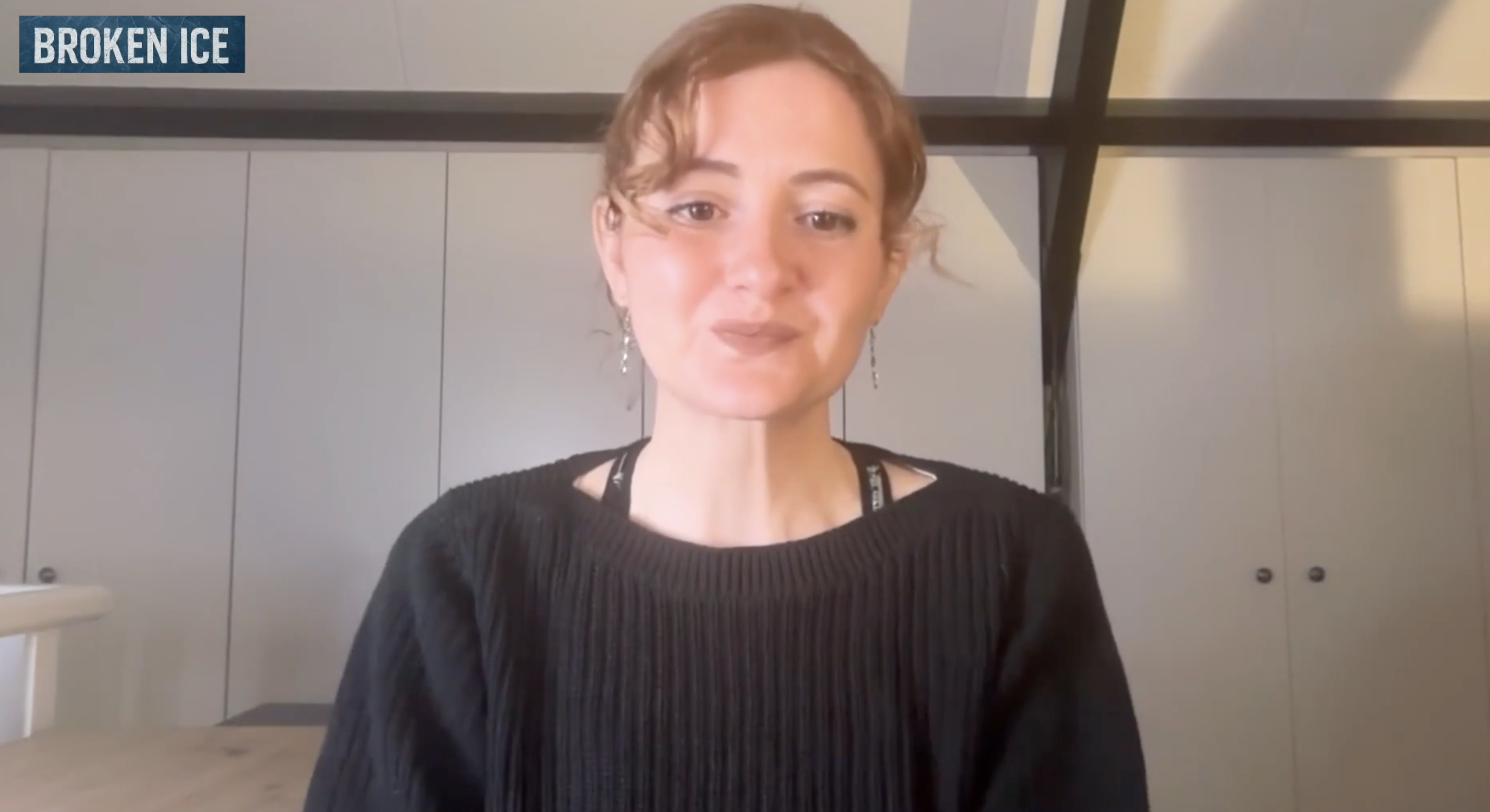
But Papadakis is not staying silent. Though dropped by NBC, she is still speaking. She recently posted a video to her social media accounts talking about the situation: how she was fired for writing about systemic abuse in figure skating, how she was accused of defamation and why that tactic works. Looking into the camera, she tells us, "With the Winter Olympics underway, it's really important to remember whose voices are excluded from the arena."