
Sometimes the best music is the most embarrassing music. That's part of the magic of art: the mystical properties that can make a work simultaneously vulnerable and uncomfortable and alluring and groovy. A desire to jam and to hide my face in my hands—that is Dashboard Confessional to me.
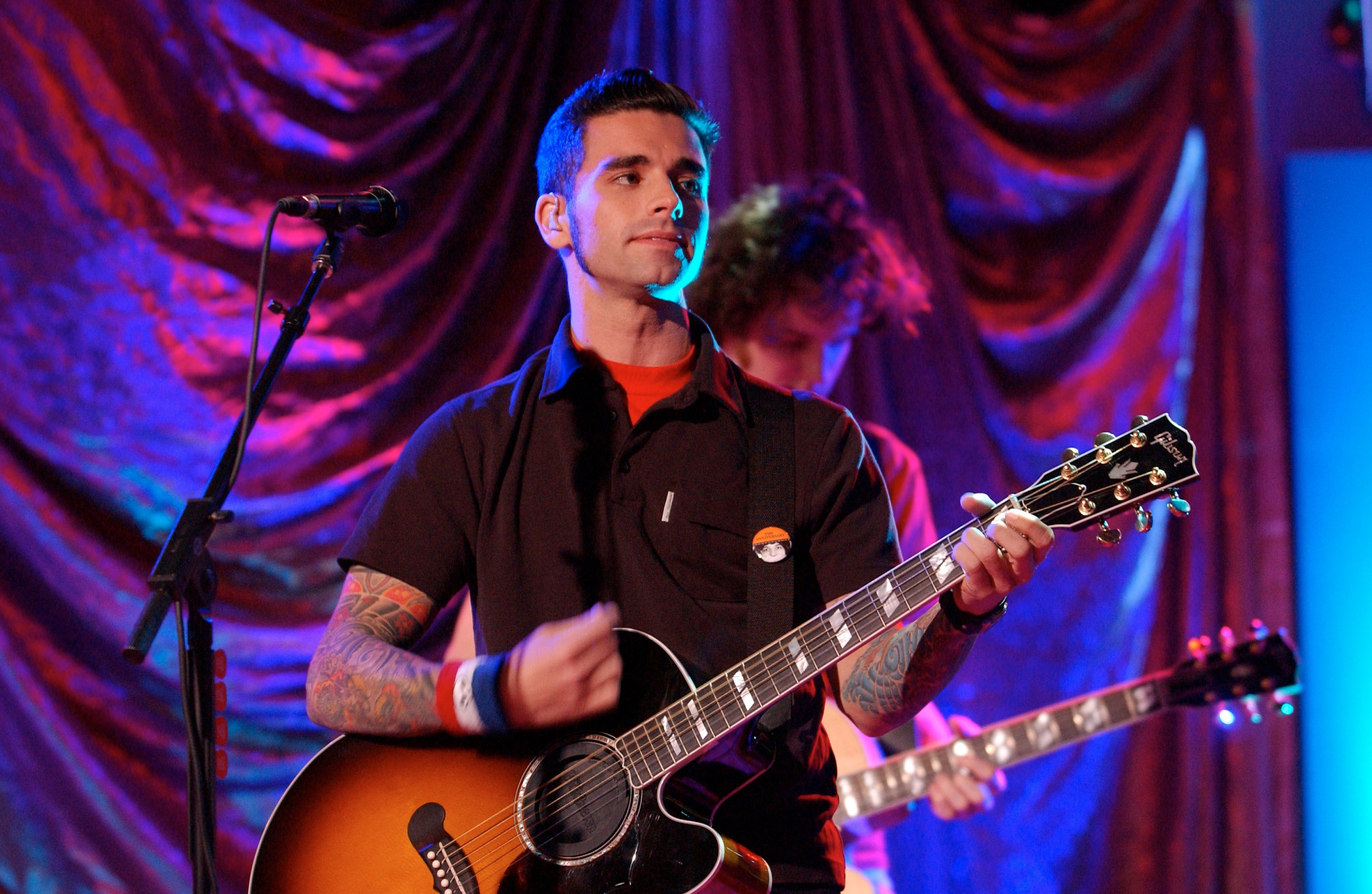
Dashboard Confessional, the final boss of 2000s emo pop, was the brainchild of Florida boy Chris Carrabba, the jet-black-haired (and sideburned) original tattooed sensitive guy, with his Abercrombie chic of tiny shirts, tight jeans, and a silly armband. Brooding with a sleeve of tats, you know he might be trouble, but in that irresistibly wounded, emotionally expressive way. "Yes," your brain tells you, "I can fix him."
Dashboard formed in 1999 and put out their first album the following year, but their breakthrough came with their sophomore effort, The Places You Have Come to Fear the Most, which turned 25 last month. The year is 2001, and Carrabba and Dashboard Confessional have become an MTV staple. "Screaming Infidelities," a year-old song that had already appeared on their first album, is suddenly a big hit. The band has begun to ride the line between teeny-bop twee punk for the TRL set and the go-to punchline of every derisive joke about the cloying excesses of the fake genre that is emo, while simultaneously being a quality band with great, karaoke-ready pop songs. For my part, I am a 12-year-old boy, and they are the band I don't want anyone to know I am listening to ... even as I listen to them all the time.
Along with Places, 2026 also marks the 25th anniversary of the So Impossible EP, my favorite DC project. So Impossible encapsulates the full Dashboard experience inside just four tracks: the mawkish neediness, the unrequited desire, the requited desire that you're nevertheless terrified of and are sure you will ruin. Pain, fantasy, embarrassment, yearning, and, above all, earnest hope and possibility. "I'm starting to panic/Remember she asked you, remember to breathe/And everything/Will be OK."
At their best, Carrabba's earnestness and emotional volatility allowed him to say the things you were thinking but didn't dare say, whether out of shame or self-protection. On "Standard Lines," from Places: "But your taste still lingers on my lips/Like I just placed them upon yours/And I starve, I starve for you." Imagine saying any of those words aloud together. DC also ran the risk of being all-caps WHINY, especially on the breakup tracks, which almost always involved Carrabba catching a partner cheating. "So kiss me hard 'cause this will be the last time that I let you/You will be back someday, and this awkward kiss that tells of other peoples' lips/Will be of service, to giving you away." Ugh! But also, I feel you.
A quarter-century later, it's tempting to reflect back on this period with nostalgic wistfulness for a moment in time when the sensitive guitar guy finally got to be king instead of just having his guitar smashed by the Blutos of the world. I listened to a bunch of those guys: Death Cab for Cutie, Bright Eyes, Something Corporate, Iron & Wine, Sufjan Stevens—lots of white guys with big feelings and soft instrumentation. The music was great, really. It still is. And when you watch the performative masculinity that pervades online right now, it's easy to rue that lost sensitivity. But the fantasy of the sensitive guitar guy was always just a fantasy. These boys may have been vulnerable and open with their feelings, but those feelings tended toward entitlement to the love of the women in their lives, and anger when those women didn't play the roles as written for them.
It's desire for companionship, but it's also a need for this companion to "save them" from their own selves. On Rob Harvilla's excellent podcast 60 Songs That Explain The '90s, in an episode about the Goo Goo Dolls' "Iris," Harvilla talks about power pop's obsession with "perfect" women who the singers could never hope to have. "The yearning may be the point, but so is the futility," he says. "Songs sung by sad boys who've dug themselves into mopey bottomless pits, singing up at fantasy girls marooned on impossibly high pedestals." That's evident in Dashboard Confessional's neediness and their aggrandizing of these nameless women. On the surface, you could see why it appealed to young girls—a reprieve from more overtly chauvinistic music on the radio at the time—but with any prolonged exposure, it just exposes a different kind of toxicity.
Certainly I was one of those self-styled "sensitive boys," asphyxiating ourselves with deprecation and over-worship toward a gaggle of dream girls. But I wasn't "sensitive," I was just sensitive, and not confident, and so, so annoying, using praise and pedestaling to cover for the fact that I did not actually know what to do with my crushes. I just wanted some kind of validation, while at the same time using the lack of validation as fuel for another fantasy: myself as this cursed, lonely boy doomed to be misunderstood forever. Ugh!
That is the bittersweet thing about revisiting Dashboard Confessional. I still feel in touch with the kid who listened to those songs and memorized all the words and convinced himself it was the story of his life. I actually do feel secondhand embarrassment when I listen to them now, funny enough. At the same time, I also feel the magic of youth—earnest enough to be embarrassing, audacious enough to dream, and yearn, and treat your feelings like they are the most important thing in the world. It is decidedly not grown adult music, but is rather the spirit of the youth in all its gruesome interiority. For that reason alone, Dashboard Confessional remains vindicated.