The Boston Red Sox are owned by the same people who own Liverpool FC, and are therefore acutely aware of the crucial soccer rubric that managers should be fired every few months in order to keep the job tender and supple on the grill. And yet, despite that, they hadn't fired a Liverpool manager since Brendan Rodgers got the sack in 2015. Those owners have, however, given us the first firing of the 2026 baseball season, and potentially the most incendiary one in years, by cacking Red Sox manager Alex Cora and multiple members of his staff. The finer details of this can be found in the latest installment of "Comrade Xu Watches Shitty Baseball"; the broad strokes can be gleaned with a glance at the American League standings.
But we're not concerned with the Red Sox and their seminal role in creating a three-way tie for 12th with the Kansas City Royals and Chicago White Sox. We're thinking more of the two teams currently worse than those three, and why they haven't done the performative kneejerkery of firing their own manager. Your friends and compatriots at the bottom of the coal chute are the Philadelphia Phillies and New York Mets, and their broader circumstances are both similar and similarly dire.
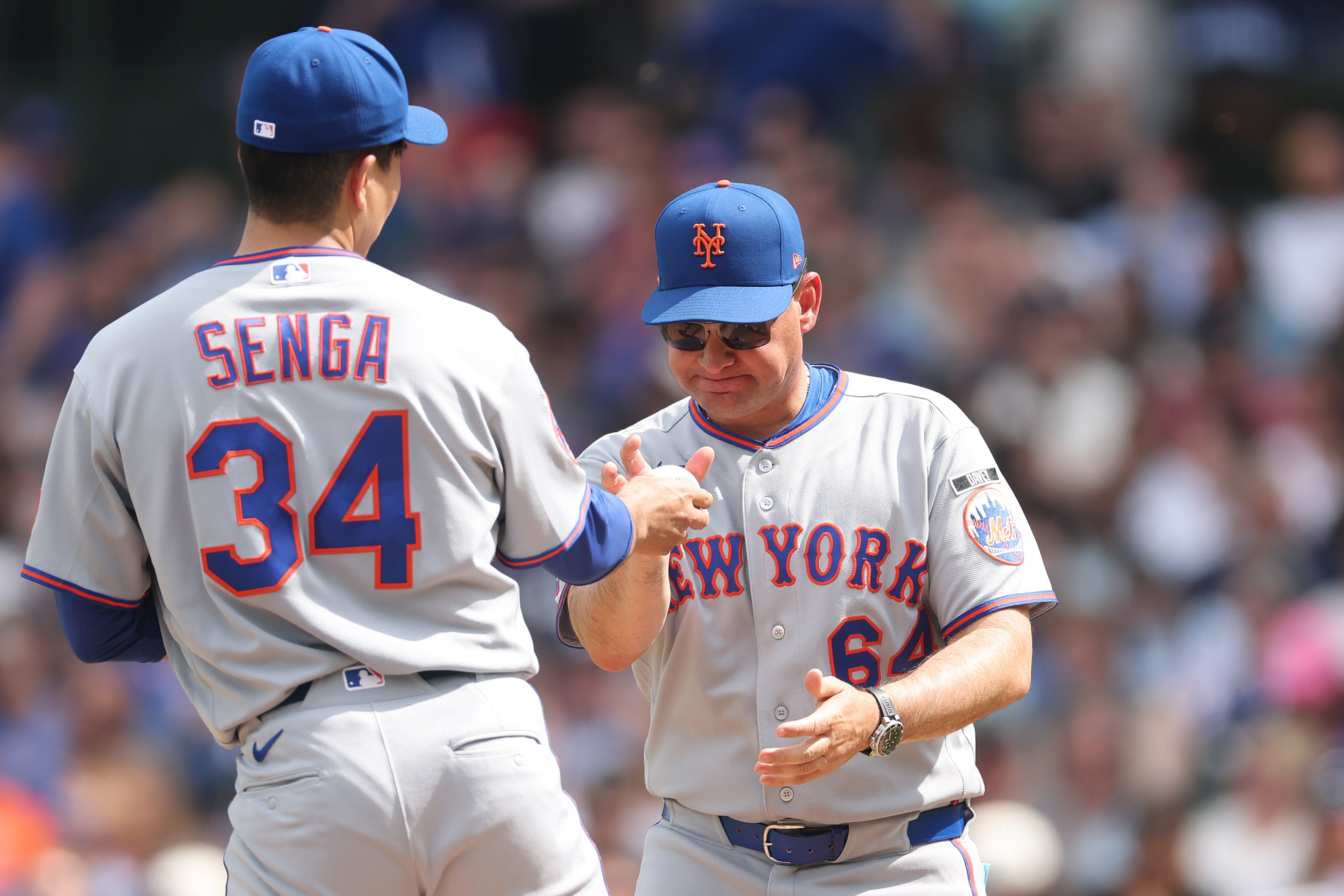
The Mets' issues are obvious. Owner Steve Cohen has spent eleventy skillion dollars on a team that just powered through a 12-game losing streak, beat the Twins twice and then got swept over the weekend by THE COLORADO ROCKIES, FOR BAAL'S SAKE! They currently feature the league's highest payroll, its fourth-oldest roster, and the sport's worst figures for fewest runs scored and OPS. Carlos Mendoza still has his job because, as near as we can tell, Cohen is pissed that he didn't think of doing that before John Henry thought of firing Cora, let alone firing him so spectacularly.
The Mets' high-intensity, low-wattage flameout has enabled the Phillies to seem stealthily bad in comparison. And bad they truly have been, despite having the league's sixth-highest payroll; the major nauseating factors here are the third-highest runs allowed total and the worst opponent's batting average. They too are 9-19, and their run differential of minus-54 through the first 28 games ranks dead last, although in fairness, it is less than half as bad as that of the last Oakland A's team in 2023; those weasels fired their hometown but still have the same manager. Rob Thomson, too, still has his gig even though the Phillies have lost 11 of their last 12 and 16 of their last 19.
Now, we are not advocating that either Mendoza or Thomson lose their jobs. For one, unlike the vast majority of our comrades, we could not be less moved by the plights of their favorite teams or any of the characters therein. Sorry kids, but total indifference is a right as hard-fought as unalloyed fandom. Just look at what caring about these guys has done to Comrade Roth.
For two, the performative nature of managerial firings makes the act almost always a waste of everyone's time. A deck chair or two being vigorously rearranged might feel better than ongoing inertia, but the team's failures tend to go on unimpeded after that alteration. Only one team with a run differential this bad this soon has ever finished with a winning record, and that was the 1925 St. Louis Browns. The average win total for all those teams is 58.
For three, the general managers who made these rosters and increasingly proscribe the in-game managing by remote-control nerdery almost never get the chop in the middle of the season, which seems to be the path the Red Sox players would have supported.
And for four, soccer is way better at this than we are, which Fenway Sports boss John Henry doubtless knows. Nottingham Forest, for example, has fired three managers since September and has won only 10 of 34 matches in the interim—and they're still not in the relegation zone.
But somehow, we imagine that Cohen and Phillies owner John Middleton are saying to their shareholders right about now, "But we CAN'T fire him; the Red Sox already did that, and we don't want to look like we're just doing it because they did." Moreover, there's just enough recent success here to bring sentimentality into play. Mendoza was on the bench when the Mets squeaked into the postseason and streaked to the NLCS; Thomson guided the Phillies to the 2022 World Series. Either firing could be seen as a sign of ingratitude and impulsivity, which would be a problem if owners believed that either of those mattered, which they most assuredly do not.
And so it seems that, in a thoroughly arse-backward way, Mendoza and Thomson's jobs might be safe at least for a few days. There hasn't been a true pre-May Day managers' bloodbath since 2002, when four got the hatchet. None of those teams were fixed by the replacement, either. For all the arguments for firing Mendoza and Thomson, their security may have been provided by Cora's ouster and the backlash that followed. That may not make sense on the merits, but that's not necessarily how decisions like these are made.
We cannot vouch for their safety in the longer term, but we are relatively secure in saying that neither the '26 Mets nor the '26 Phillies will do nearly as well as the '25 Browns. Then again, neither Juan Soto nor Kyle Schwarber is any match for Baby Doll Jacobson.