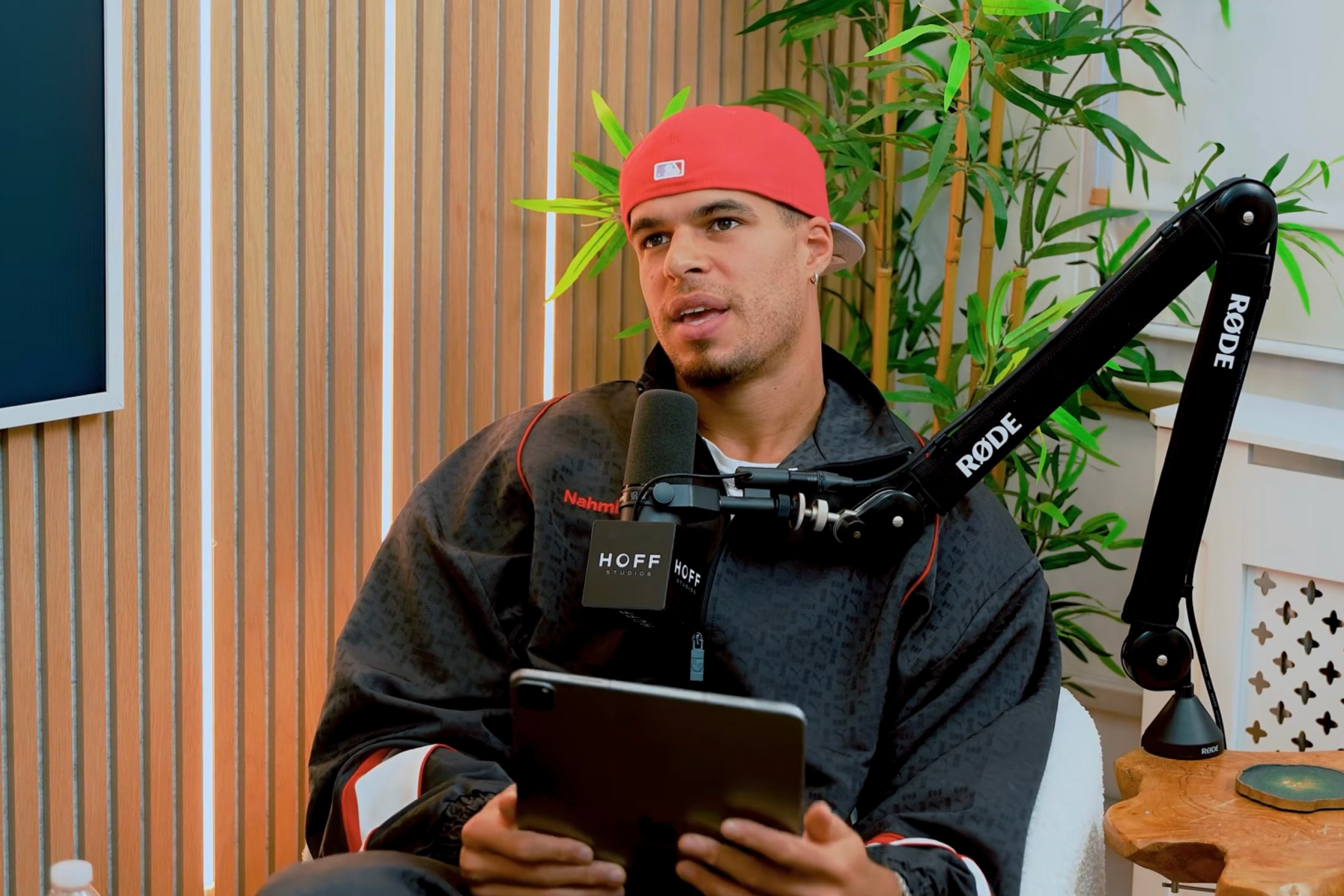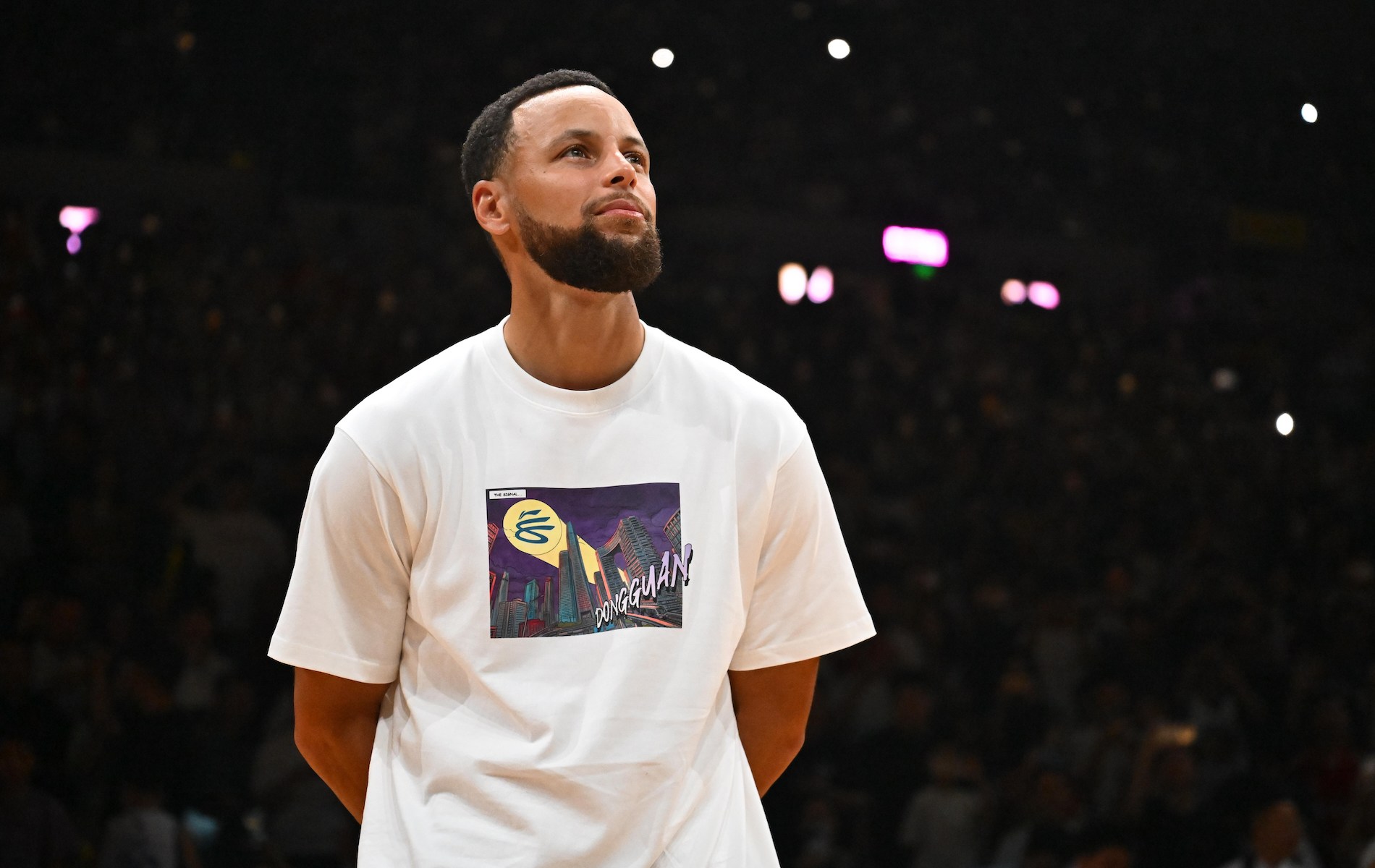
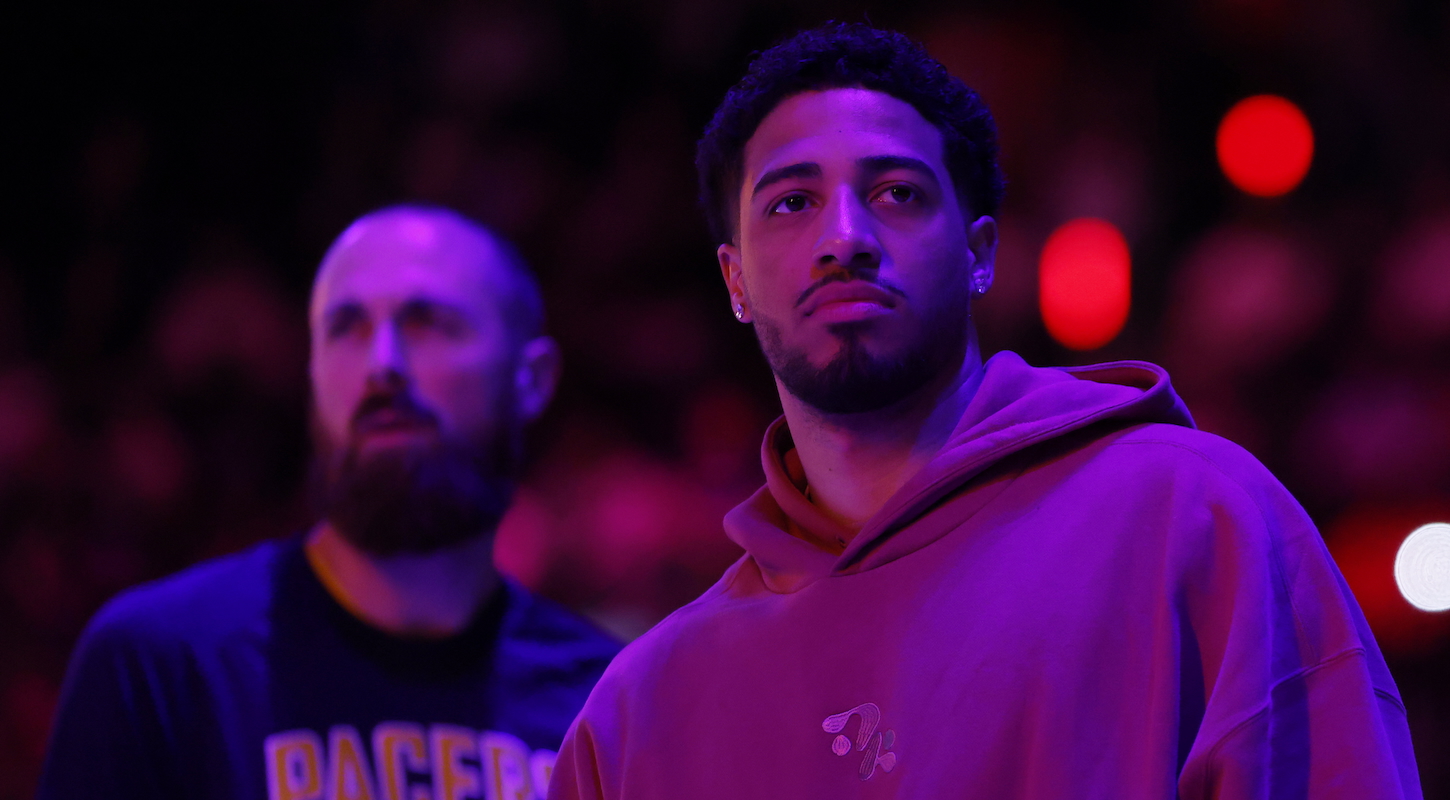
Tyrese Haliburton can only be a spectator to Indiana Pacers games this season, watching from the sidelines in outfits that make him look like an increasingly cool substitute teacher. Regardless, I have found myself thinking about his role on the so-very-almost NBA champions as they have sunk to a 6-21 record in his absence. A debate over Haliburton's stardom bloomed during last season's playoffs, fueled by The Athletic's player poll deeming him the most overrated player in the league (he received a truly overwhelming 13 votes of a possible 90). A psychedelic run of game-winners across the Pacers' four playoff series mostly quieted that debate; his Achilles turning into a Fruit Roll-Up in Game 7 of the Finals—he'd nailed a trio of deep threes inside the first five minutes—ruling him out of that game and this entire season, killed it off for the moment.
Haliburton threw in some sleepy, stinky performances during that ecstatic streak, but made it obvious he was most responsible for the Pacers' unfailing heart. The degree to which Haliburton powered the team's engine, too, is becoming clear. At their best, the Pacers raced back and forth with such speed that opposing teams always tired first, leaving them vulnerable to that last-minute comeback. Without Haliburton, the Pacers have found themselves skewered on the pointy end of close games they won consistently last season.
The Oklahoma City Thunder beat them in double overtime in the season opener. The Minnesota Timberwolves edged them by four. The Dallas Mavericks got them by two. The Detroit Pistons, the best team in the East, won by five. The Toronto Raptors and Milwaukee Bucks needed Haliburtonian buzzer-beaters from, respectively, Brandon Ingram and Giannis Antetokounmpo to get their wins. A diabolical loss to the Philadelphia 76ers (Joel Embiid took 18 free throws, almost as many as the entire Pacers team) wasn't as close—10 points—but the Pacers led 100-95 in the fourth quarter before the 76ers ended the game on a 20-5 run. Of Monday’s 108-89 loss to the 3-20 Washington Wizards, we simply will not speak; some topics are too much to bear.
Watching Haliburton pilot the Pacers to improbable victories via paths that seemed invisible or impossible was thrilling. Usually the existing best teams are the ones that can channel magic, but here, a good team transformed into an extraordinary one, evoking the feeling that anything could happen at any time during its games. Watching Indiana play without its divine intercessor even available is miserable, and underlines just how much sorcery the Pacers needed for that playoff run in the first place. I'm no basketball injury expert, but practically half the roster joining Haliburton on injured reserve seems an inevitable consequence of a thinner team distributing increased workloads in an effort to sustain the pace from last season.
On Thursday, the Pacers hosted the New York Knicks, who fell to Indiana’s batshittiest dose of comeback magic in the Eastern Conference Finals back in May. Had you not known better, you'd have thought from the last few minutes of Game 1 of that series that Aaron Nesmith was not only Indiana's primary scorer, but the second coming of Steph Curry and one of the best players in the goddamn league. (Did I fall into this category at the time? I will not say! I will only confess that, thoroughly under the Pacers' spell, I may have blown out a few vocal cords plaintively whining, "Aaron, you need to get involved in this!" during ensuing games in which he scored maybe five points.) Yet the defining moment of that game belonged to Haliburton: What at first appeared to be a game-winning three-pointer at the end of regulation hit the back of the rim, bounced higher than a number of local skyscrapers, and dropped cleanly through the hoop. The Knicks' Jalen Brunson had won the Clutch Player of the Year award less than a month earlier; Haliburton made a compelling case for its retroactive reassignment.
With Pacers legend Reggie Miller sitting courtside as a commentator, Haliburton couldn't resist reenacting Miller's famous choking gesture from the 1994 Eastern Conference Finals. When video review revealed Haliburton's shot to have been merely a long, game-tying two-pointer, the gesture briefly seemed nearly as improvident as the original—the Pacers lost that '94 series, to the Knicks—but Indiana prevailed in overtime, and the Pacers ended the '25 series by thumping the Knicks in Game 6. Thursday was a rematch, against an improved New York team. I bet Haliburton wished he could have played even more than usual. Instead of trying to repeat his heroics, Haliburton wore street clothes and watched Brunson live up to the Clutch Player honor.
New York trailed for virtually the entire game—when the Knicks fell behind by 16 in the first and third quarters, I contemplated whether they were hungover from NBA Cup victory celebrations—but made fierce surges each time the game threatened to slip away. The Knicks played without Karl-Anthony Towns and Josh Hart, bringing them down to the level of the Pacers' hobbled lineup, and Indiana led by two with a few seconds left. Alas, unlike the Pacers, the Knicks had their best player on the floor. Brunson described his performance afterwards as "garbage at the start of the game. I was garbage in the second half as well," but one pure moment overruled all that trash: His three-pointer over Andrew Nembhard found the bottom of the net, and proved the decisive bucket when Pascal Siakam slipped and fell on the final play of the game.
The Pacers snapped up my loyalties with their comeback against the Knicks in May, a finishing kick of such howling audacity that I had no choice but to surrender my affection. Watching a team seemingly buoyed by destiny en route to the NBA Finals was such great fun that the suddenly nasty fates coming to collect their dues isn’t much of a surprise in hindsight. Just let Siakam stay on his feet, I beg of you!
As the Pacers’ record has plunged, the Thunder, propelled to that franchise's first NBA title by the sproinggg of Haliburton's rupturing Achilles, have leveled up and are now decidedly too good. Even in the moment of June's Finals, the Thunder were clearly the better team, making Indiana's ability to rock and rattle them all the more exhilarating. The two teams' diverging fortunes only accentuate the agony of how the Finals ended. Why couldn't the Pacers have stolen that series before the likely dynasty got going? The 2025 Finals feel far closer in time than any plausible future return for Indiana, fueling masochistic nostalgia. Memories wear and warp over time; the only thing that can truly never be taken away in sports is a title, and the Pacers didn't get th—you know what, I paid for this therapy session. Let's move on.
Watching this diminished Indiana team is not without its pleasures. Siakam remains very good and cool (as well as the author of a genuinely moving Players' Tribune essay), even if his pretty fadeaway jumper has produced a few airballs lately. Every morning I relieve myself, toast a couple Eggo waffles, and thank every god I can think of that he hasn't gotten injured yet this season. Nembhard is a cheekily fun watch, stealing jump balls controlled by the opposing team and hitting threes in the opposing star's face. New center Jay Huff blocks more shots than anybody in the league and looks as though he belongs atop a cloud, clutching a gnarled wooden staff. He is maddeningly indecisive when it comes to shooting threes and his main offensive move, faking the long shot before darting to the basket, is so predictable that even I have clocked it. Smiley rookie Ethan Thompson is more enjoyable, playing twice as hard as everybody else on the floor and grabbing scrappy rebounds. Garrison Mathews's right arm is enshrouded in tattoos and his left arm is bare; that's something. Bennedict Mathurin creates shots out of nothing better than even the starters, and I am sad the team reportedly wants to trade him. These players fit into the lovable motley crew just fine, except for the fact that they can do little to save the team from languishing at the dank bottom of the Eastern Conference.
Indiana is obviously suffering in the absence of Haliburton's skills—the quick passes, the long threes, that lanky stride gobbling up the court. I think the Pacers miss the childlike joy with which he commanded the team, too. It must have felt pretty good to play on the same squad as a guy anointed by various deities of basketball and drama, up until his Achilles went kablooey. Haliburton's enthusiasm spread to his teammates and through the screen. For a while there, whenever Indiana didn't win via logic-defying comeback, it felt jarring rather than an appropriate status quo. The mood is markedly different now.
Coach and players are far too proud to tank—see Rick Carlisle's fury at unfavorable calls, resulting in a technical foul at a vital moment against Philadelphia; Mathurin and Nesmith crumpling despairingly after missing potential game-winners against Dallas and Toronto; the Pacers giving the Thunder more hell this season than teams with far better records and healthier rosters could—but are so shorthanded that their spirit only grinds them into dust without glory. This season does come with one blessing for the Pacers, though, and one not many losing teams get: a plight clear and unjust enough to absolve them of their failures.