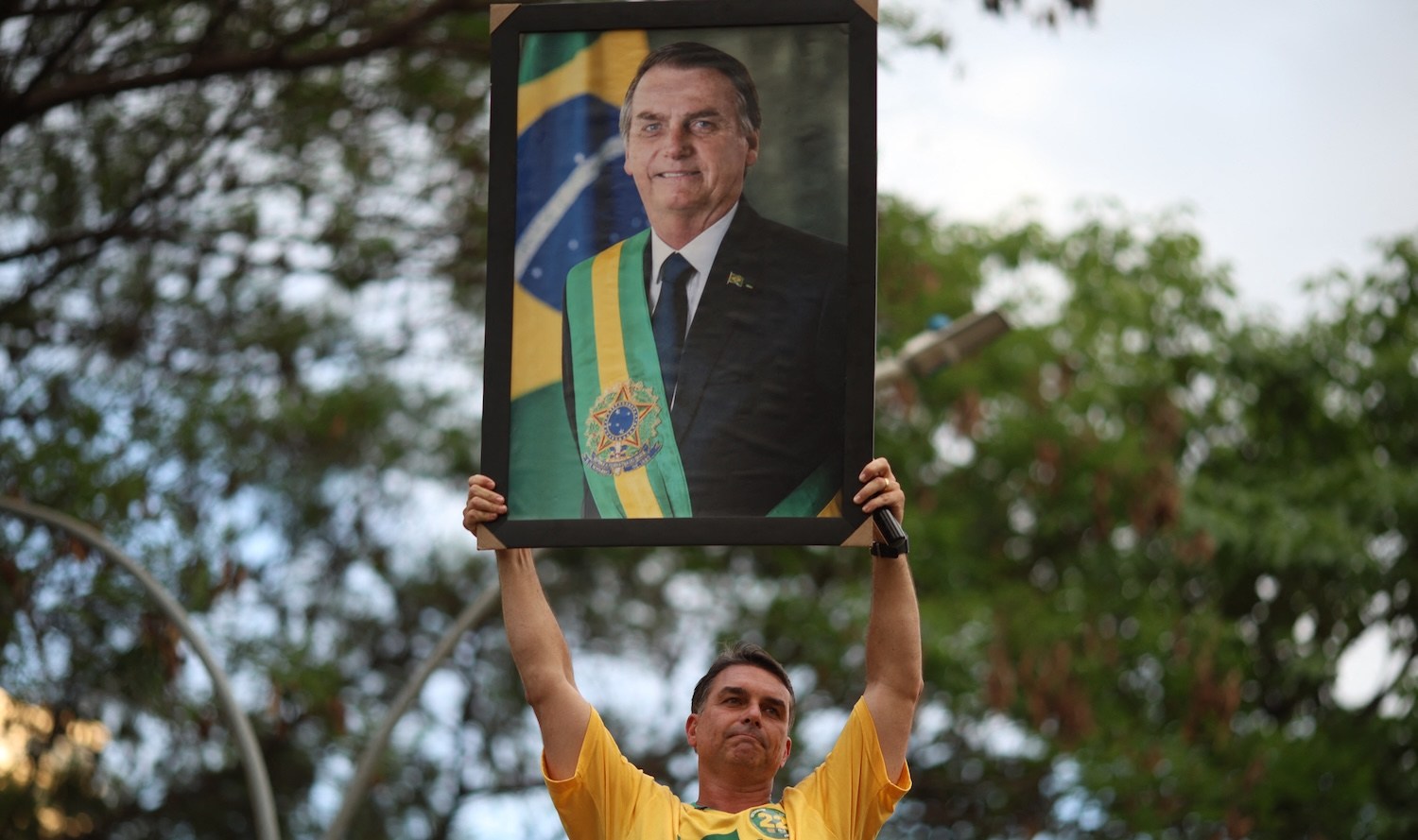
While the world's attention has largely been focused on the war the United States and Israel launched on Iran a few weeks ago and the rapidly unfurling series of subsequent, predictable calamities, such as the invasion of Lebanon and the constriction of the Strait of Hormuz, the U.S. is simultaneously choking off Cuba in an attempt to topple that nation's government. Don't take my word for it: That's what Donald Trump is saying. "I do believe I will be having the honor of taking Cuba," Trump said on Monday. "Taking Cuba. I mean, whether I free it, take it. I think I can do anything I want with it."
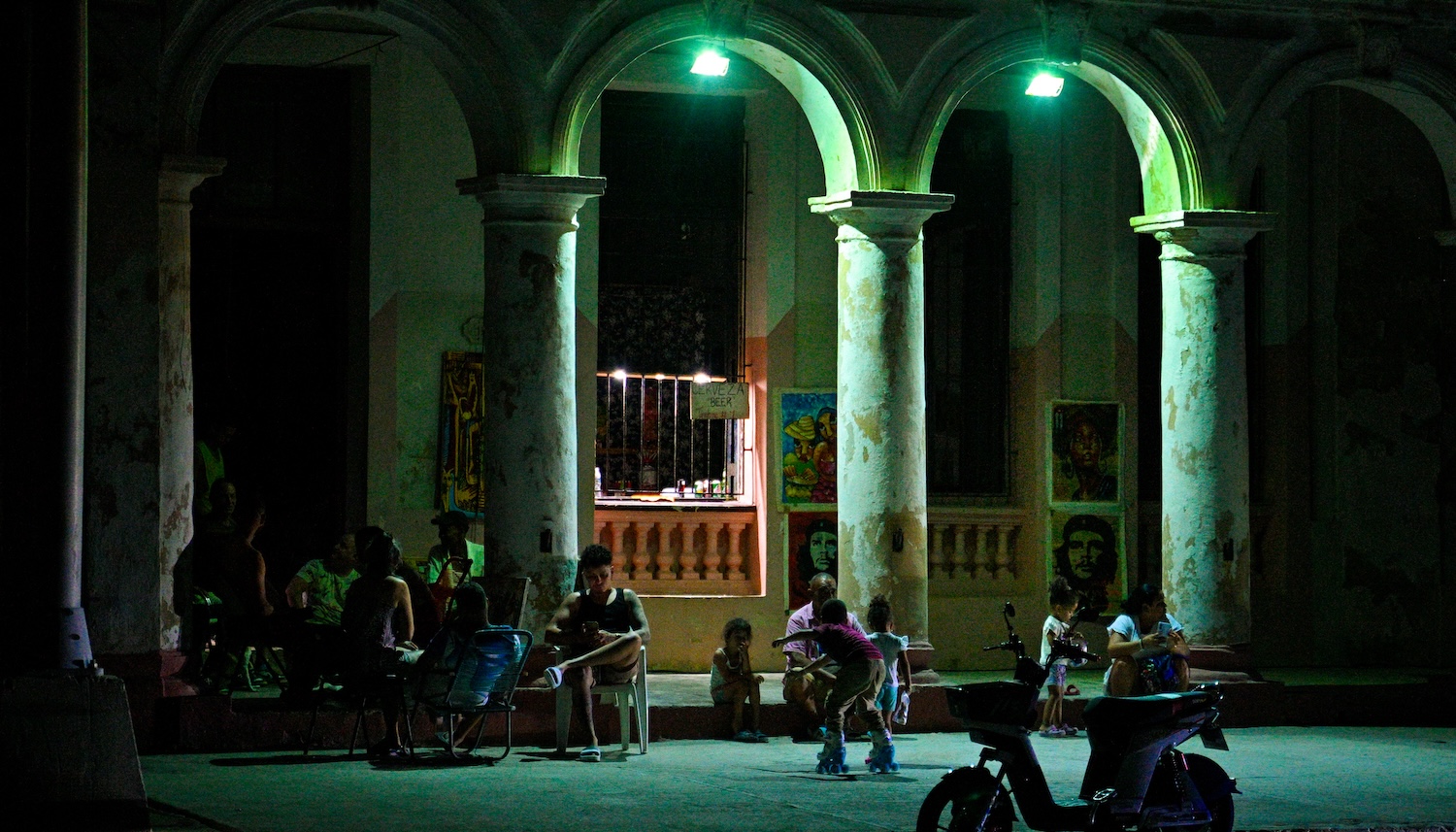
What this looks like in practice is the total enclosure of the island and its 11 million people. Cuba has been contending with American economic warfare and sanctions of varying severity for over six decades. It remains an extremely poor country and, since the collapse of the Soviet Union, an increasingly isolated one. But over the past two months, the U.S. has squeezed tighter on Cuba than it has at any point since the Cuban Missile Crisis in 1962. The already anoxic conditions have now reached a crisis point. Cubans face crippling food and medicine shortages, and their fuel supply is almost totally exhausted. Per an NBC News report Tuesday night, there are currently 25 functioning ambulances, which shakes out to one ambulance per 440,000 people. Cuba experienced an islandwide blackout on Monday. It will not be the last one.
The Trump administration started hinting that it was planning something like this shortly after the Jan. 3 kidnapping of Venezuelan president Nicolás Maduro by U.S. special forces, and the subsequent U.S. takeover of the Venezuelan oil industry. Cuba relied on Venezuela for the majority of its energy, and once Trump's State Department seized control and began capturing oil tankers headed for the island, Havana quickly started going dark. Trump has threatened sanctions against any nation, particularly Mexico, that comes to Cuba's aid. While the State Department scarcely pretends to justify these actions, the clear objective is to exacerbate the suffering of the Cuban population until the government collapses. Noah Kulwin, journalist and host of the Blowback podcast, told Defector he'd been to Havana during the run-up to the blockade and seen a society "functioning under astonishing conditions of deprivation under the strain of the U.S. oil blockade."
Kulwin and his co-host Brendan James traveled to Cuba to meet with local officials and journalists at the end of January, three weeks after the kidnapping of Maduro. "The day after we left, the blockade was announced," he said, noting that even before the formal isolation of the island, the government had started rolling out planned blackouts to conserve a dwindling energy supply. Kulwin said the blockade is "the way the American policy and sanctions regime has now brought the island to a crisis point," which U.S. officials have also said, only as an endorsement rather than a condemnation. On Jan. 29, U.S. Charge d’Affaires Mike Hammer told U.S embassy staff: "The Cubans have complained for years about 'the blockade.' But now there is going to be a real blockade. Nothing is getting in. No more oil is coming."
In response to the blockade, the Cuban government has turned up the volume on public overtures about opening itself up to private investments. Cuba's communist government had already begun integrating into the global economic system after making a deal with the Obama White House, only for Trump to sweep into office and immediately negate it. "Cuba is open to having a fluid commercial relationship with U.S. companies, also with Cubans residing in the United States and their descendants," deputy prime minister Oscar Pérez-Oliva Fraga told NBC News on Monday. Contrast that quote with what Trump and others are saying, and you can see the impossible position the U.S. has backed Cuba into. Trump wants the government toppled, which is a different demand than liberalizing the economy. "They have to get new people in charge," U.S. Secretary of State Marco Rubio said on Monday. "What they announced yesterday is not dramatic enough."
"The most telling and important thing in all of this is the U.S. is demanding all of these reforms and Cuba is trying to do them," Kulwin said. "At the same time, the U.S. has not done anything that would draw back sanctions that would actually allow it. Whatever the long-term strategy is, the U.S. wants to inflict more pain on Cuba." The blockade has certainly been successful on that front.
"Policy goals cannot justify actions that in themselves violate human rights," a spokesperson for United Nations human rights chief Volker Türk told reporters. "We are extremely worried about Cuba's deepening socio-economic crisis—amid a decades-long financial and trade embargo, extreme weather events, and the recent U.S. measures restricting oil shipments." Those quotes were given on Feb. 13, more than a month ago. Since then, the crisis has only deepened, and not just for Cubans themselves but for those they help out: The U.S. State Department is even trying to persuade countries that make use of Cuba's widely lauded medical brigade to kick them out with vague promises of "infrastructure modernization." Cuba's 24,000-strong brigade of doctors is a crucial element of the healthcare systems of many Caribbean and Latin American nations, as well as a source of both money and goodwill for the Cuban government. But what's a couple hundred dead people in Guyana measured against the opportunity to starve several million Cubans?
Aside from this having been made easier for the U.S. by its seizing control of the Venezuelan oil supply, why is this happening now? There is a grim logic to choking Cuba while also waging war on Iran, but even though various U.S. administrations from both parties have prized toppling the Cuba's communist government since its inception, it's not like all they needed was the cover of a larger-scale disaster elsewhere to distract the public. Also, the blockade preceded the first strikes on Tehran by a month. The ugly answer is that the Trump administration simply doesn't fear the consequences. The punitive sanctions regime the U.S. imposed on Cuba for decades differed from the current blockade in degree, not in kind, moderated by the optical need to allow Cubans a minimum standard quality of life to preserve a veneer of international cover. Under Trump, that pretense has been abandoned.
There was a telling bit in the White House's justification for the blockade. "The Cuban communist regime supports terrorism and destabilizes the region through migration and violence," the official statement reads, claiming that the Cuban government creates "a safe environment" for Hamas and Hezbollah, "so that these transnational terrorist groups can build economic, cultural, and security ties throughout the region and attempt to destabilize the Western Hemisphere." The repeated invocation of Hamas is yet another sign of how thoroughly Israel's obliteration of life in Gaza and the U.S.'s gleeful aid of that project have broken the frameworks and pretenses of the liberal international order.
As Kulwin emphasized, the statement's nods to migration and destabilization also point to the connections between Trump's disastrous domestic situation and his increasingly destructive foreign policy. "They essentially had a domestic agenda that was organized around aggressive immigration enforcement and a signature Trumpian deal thing with DOGE," he said. "That ended up totally backfiring. So starting this broader sweep of international conflagrations has become a way to shape his legacy. This is about doing all the stuff no other president could."