
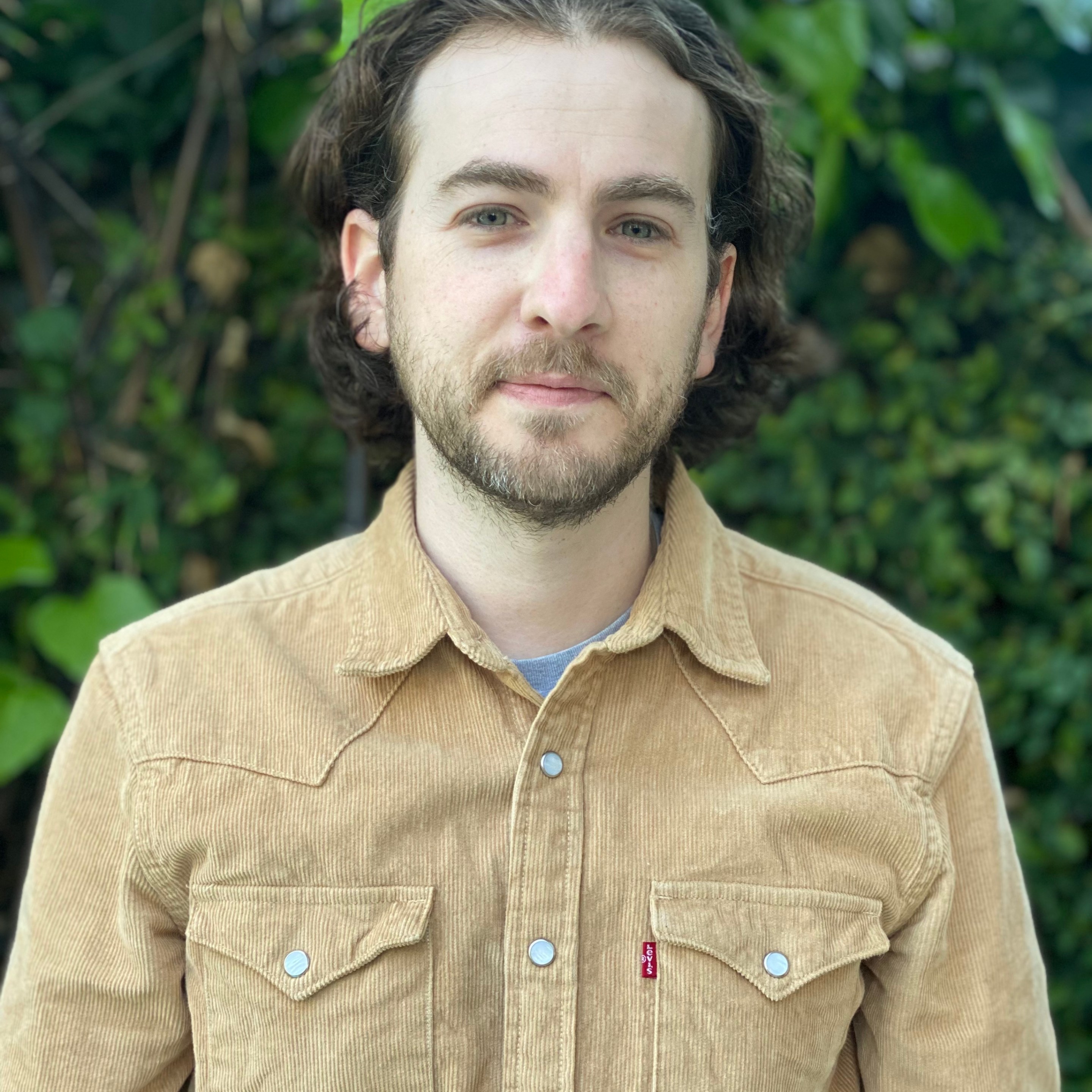

If you walked down Colorado Boulevard in the Eagle Rock neighborhood of Los Angeles at some point in the past three years, you might have noticed a modest, pueblo-style beige building with “PHOTO” painted above its door. And if you had decided to go in, there was a decent chance you’d know the person working the counter. This part of town is on the up; the adjacent building was sitting empty and in disrepair for at least 15 years, but it recently became a Turkish textile and loungewear shop. Down the street is an artisanal cheese store. Two spots up is a Taco Bell—gentrification does not scare the Taco Bell—but if you were hungry, you could always try the photo shop, where there were sometimes donuts around for the taking.
Even those who have never been to LA might have been familiar with Eagle Rock Camera & Goods, which opened in 2023, because it was regularly advertised to the 450,000 Instagram followers of the store’s proprietor, pro skater turned actor turned fine-art photographer Jason Lee. You could buy analog cameras or photo books at the shop. If you’re like me, you could browse in order to motivate yourself to dig your old film camera out of the closet. Or you could just hang out, talk art, and make friends. “It’s kind of a little local community hang spot as much as it is a retail store,” Lee told me while sitting on a couch in the back of the shop, next to a refrigerator filled with film available for purchase.
Some of those who recognize Lee from his acting may reasonably hesitate at the offer of a pastry or treat; one of Lee’s most famous bits, from Kevin Smith’s 1995 movie Mallrats, is when his character Brodie rubs his hand in his asscrack before giving a nemesis a chocolate-covered pretzel. These are the types of roles that made Lee an omnipresent face in a certain sector of Gen X cinematic malaise: He would play invariably scruffy, wise-ass sarcasm machines banking on their charm to guide them through the world. Their names were Earl, or Banky, or Beaver, and they tended to capture an idealistic form of degeneracy—one in which a lack of ambition didn’t reflect a lack of latent intelligence.
But these characters are not what Lee, now 55, is actually like—the slacker part, anyway. For one thing, slackers don’t open brick-and-mortar small businesses. “He just gets shit done,” said Raymond Molinar, a photographer and professional skateboarder who co-founded Eagle Rock Camera with Lee. In 2009, Molinar was signed by Lee’s skateboarding company, Stereo, and the two became friends. Molinar described them as a pretty neat and “OCD” pair, and, to be sure, Eagle Rock Camera had an aggressively minimalist vibe. During my time at the shop, Lee would occasionally notice something slightly askew and habitually go over to straighten it.
“I think having a family, and all the stuff he’s been through, has probably changed him a lot and made him a lot more mellow,” said skater and artist Ed Templeton, who’s known Lee since they were teenagers together in Huntington Beach, a suburban city about 90 minutes south of LA.
Still, Templeton does see the goofy Jason Lee characters in the real Jason Lee, and remembers him being voted class clown in high school. (This is true: I dug up the Ocean View High School yearbook from 1988 and there was Lee, posing with a cheeky smile and his arm contorted in a ridiculous way.) If you talk to people who know him, they’ll say Lee is still a cutup to this day. “But, you know,” Templeton added, “maybe he is a little more guarded around ‘The Enemy,’ to quote his character from Almost Famous.” Templeton was more right than he knew.
The paradox of Jason Lee—to me, The Enemy, at least—is that he is a celebrity who openly invites fans to come hang out with him on a regular basis, but who also has historically remained a notably private person. Who essentially dropped out of acting for a full decade and moved to Texas, just because he felt like it. Who would eventually tell me with sincere frustration that he would have said no to our interview if he knew the extent of what I was planning to ask. Who agreed to a profile and then successfully had it killed by the magazine in which this article was originally meant to run.
Oddbird, the Turkish textile place next door, shares more than a wall with Eagle Rock Camera. It’s run by Ceren Alkaç-Lee, Jason’s wife and the mother of four of his five children. Jason, wearing a blue chore coat over a gray Oxford, does indeed have a salt-and-pepper dad vibe these days, which was hammered home at one point when Lee’s oldest, Pilot Inspektor, came by to pick up prints of his photos.
“These turned out really, really good,” Jason said, handing the set over. I asked to see the photos, and they were really good: sensory-filled portraits of emotion and depth. Pilot, whose mother is actress Beth Riesgraf, is subdued and didn’t inherit his father’s booming voice, but he did inherit the tall height and strong eye. Pilot, at 22, has been recently doing video portraits for The New York Times.
Jason’s father, Greg, had his own artistic streak that he fostered by making custom cars, but was at his core a blue-collar Southern California car salesman. Lee’s grandfather, Chet, “literally worked at a gas station at night, and during the day he climbed scaffolding and brought brick up onto buildings,” Lee said. “When I grew up and where I grew up, you definitely take some of that with you in terms of work ethic.”
Skating was a developing artform when Lee got to it in the ’80s—still in that nascent phase between Z-Boy surf-style and open-world street tricks. Lee went pro while still a teenager, and became known for pushing forward the popularity of 360 flips. The trick—a combination of a 360 pop shove-it and a kickflip—was invented by Rodney Mullen, but perfected by Lee, who added a certain kind of swagger. “He wasn’t necessarily the kind of guy who was jumping down the biggest handrail or the biggest set of stairs,” Templeton said. “It was just very pleasing to watch him skate.”
Along with Blind co-founder Mark Gonzales and a then-14-year-old Guy Mariano, Lee was featured in Spike Jonze’s 1991 skate video Video Days, now regularly picked as one of the best in the genre’s history. Lee started Stereo with Chris Pastras the next year, and was one of the most marketable figures in the growing sport: the cover of Transworld, prominent sponsorships, you name it. He lived the dream of countless young skaters around the country. But within a few years, Lee decided to outright retire from skating and pursue acting. Just like that.
“My thinking at the time was, like, ‘Why keep putting out boards with my name on them if I’m not putting in the work?’” Lee said. “I didn’t feel like it was fair to skateboarding.” In the ’90s, he said, being a 23-year-old skater felt ancient. “Now you’re still just an absolute baby at 23, but back then age meant a lot more.”
Regardless, people were pissed. “Skaters are really tribal in that way,” Templeton said, recalling a “flash point” incident around that time when Lee was quoted in a publication saying something to the effect of, It’s childish to keep skating your whole life. Wherever this quote ran, it’s buried now, and Templeton figured it was taken out of context or printed with the wrong tone. But it went around in the moment. “He was beloved,” Templeton said. “It was more a hurt-feelings kind of thing than, like, ‘What an apostate’ or something.”
Lee insisted that he didn’t quit skating to be an actor, just that acting was something he wanted to give a shot around that point. His girlfriend at the time, Marissa Ribisi, had just been in Dazed and Confused, and Jason hung around what was a notoriously raucous production in which the cast all partied together. Lee caught the bug. Marissa’s mother, Gay Ribisi, was a powerful Hollywood manager (and a powerful Scientologist), and soon helped Lee get the part in Mallrats, Kevin Smith’s highly anticipated follow-up to Clerks, even though he had essentially no professional acting experience.
“Acting is a job of choices,” Smith told me. “What performance comes down to is the way an actor chooses to say a given line. And [Lee’s] choices were more interesting than everybody else’s. Just like Nic Cage always makes an interesting choice. Alan Rickman always made an interesting choice. Jason Lee—I wrote the words, so in my head, I had an idea how they should sound, right? But he made interesting choices that made me go, like, ‘I like his movie better than mine.’”
What Smith didn’t expect when taking a shot on this unknown, though, was that Lee would come in as a supporting character and “slowly become the lead, just by virtue of the strength of his performance.” Lee had been “retired” for only a few months, and suddenly he was on movie posters, triumphantly towering above the rest of the cast, with Shannen Doherty clutching his leg.
The posters would come in a steady stream for the next 10 years: more Kevin Smith movies (Chasing Amy, Dogma), blockbusters (Enemy of the State, Vanilla Sky), romantic comedies (Heartbreakers, A Guy Thing). Then, in 2005, he was convinced to do a TV show for the first time. My Name Is Earl, a dirtbag redemption comedy, promptly became one of the most popular shows on the air.
A hit sitcom is a blessing and a curse: Lee grinded out 96 episodes of Earl over five years, and, aside from voice work and an Alvin and the Chipmunks live-action kids movie, stopped doing much else in the acting realm. After Earl was canceled in 2009, Lee appeared in projects here and there, but by 2015 it was Hallmark Channel romances and low-budget capers. It was around this time that he walked away from acting and moved to Denton, Texas, with his family. Just like that.
“I loved when he was on a network TV show, because it made me feel so smart,” Smith said. “It made me feel like I knew this motherfucker was somebody, and I was happy for him, because he made all that fucking TV loot back when there was TV loot.” But doing 96 episodes of “corporate time” is going to wear on anyone, Smith added. “He still got to make the show he wanted to make with [showrunner Greg Garcia]. He was proud of it and shit. But after all that time, I could see the guy being like, ‘You know what? I’m gonna go take pictures for a while.’”
About 20 years ago, right around the time My Name Is Earl took off, Lee first started taking photography seriously as a means to scratch a familiar itch. “Skating and photography are very akin,” he said. “It’s a very individual activity, and there’s a lot of gratification for visualizing something and accomplishing it.” Rather than photographing people, his instinct was to find barren landscapes and sleepy, middle-of-nowhere towns.
“The first time I went outside of the studio with the large 8-by-10 Polaroid film,” Lee said, “I wanted to go out and see what it looked like. And for whatever reason, I thought to just go drive. I didn’t just go down to the street and set up the big tripod with the big large-format camera to ask people to make portraits of them or something like that.” Once you start looking at the still world through a camera lens, he explained, it shifts on its axis: “I started seeing strange things and noticing the landscape a little bit differently.”
Lee’s photo-taking drives kept stretching farther outside of LA, to the point that he eventually started taking long-distance road trips just for the express purpose of getting shots. He usually does these trips—sometimes with Molinar—in old cars, like a 1987 Mercury Grand Marquis that he recently drove from Florida to LA. “There’s just something about rolling around in an older sedan that feels more right to me than doing a photo road trip in a Prius,” he said. Two of these drives are documented in a recent box set, TX | CA 17/19, put out by the publisher Stanley/Barker.
Denton called to him from the road. He liked the highway out in rural Texas, he liked the area, so his family decided to write a new chapter. But the process also reopened an old chapter, when “rumors” began to go around town that Lee was planning something related to Scientology, the religion to which he had been affiliated throughout his acting career. In a 2016 interview with a local Denton publication, Lee pointedly responded to the rumors by saying that he and his family “don’t practice Scientology” and “have no plans to open a Scientology center.”
Lee never proselytized to the press about Scientology—in 2006, he told The Washington Post to talk to Tom Cruise if they wanted a church spokesperson—so his level of involvement was vague. But there were nuggets of telling information, like Smith casually noting at one point that Lee had (successfully) asked for a Scientology joke to be removed from Dogma. And in 2015, Lee’s first wife Carmen Llywelyn wrote a Gawker essay alleging that after she told her and Jason’s manager, Gay Ribisi, about reading a book critical of Scientology, she received “disconnection letters” from Gay and Jason two days later. (Lee and Llywelyn divorced in 2001.)
Given that it’s been almost a decade since Lee first announced his separation from Scientology, I figured it wouldn’t be inflammatory to gently ask about it; whether he would want to divulge much of anything was another story. But I never got to finish my question. At the first mention of the word “Scientology,” Lee cut me off: “I’m not going to answer that, sorry, man.”
He said he was under the impression that we were just going to talk about photography and the camera shop, and that he felt I was out of line asking him about his personal life. “I thought you were a fan of photography,” he said. “You’re talking about having a Pentax [camera], and you’re talking about liking the shop, and now you want to start talking about controversial religions and stuff.”
What caught me most off guard was that Lee didn’t just want to talk about something else or end the interview, which was close to running out of its allotted time. Instead, he really wanted to “challenge” me, as he put it, on the ethics of asking him about this. He wanted to know why I felt it was appropriate, journalistically, to ask “probing” questions. “Do you not worry about offending the people that you’re interviewing?” he asked.
We continued to speak for nearly an hour just about this one issue—this impasse. I explained that I felt it was my job not to ignore sensitive subject matter, and that I didn’t want to mention Scientology in the story without asking him about it and giving him a chance to comment if he wanted to. He felt that it was “tabloidy.”
“No matter how cool and nice you are,” he said, “and how apologetic you are about this thing or that thing, and how explanatory you are about this or that, there’s always going to be people out there that don’t like you, that think you’re a weirdo, or a kook, or a bum or not funny, or a terrible actor, or a lousy person. That’s just the way the world works, unfortunately. So what are you going to do, explain yourself so that people don’t have the wrong idea of you? All you can do is live well, be a good person to the best of your ability. Be a good family man, which I believe myself to be. Work hard, be kind to people. That’s all you can do, really.”
At a certain point, the tension started to break. Lee, reclining back in his seat, seemed a little remorseful for how intense things got. “I just don’t like the idea of explaining myself in an effort to make sure that people like me,” he said. “I think that feels very icky. I understand that Scientology is unbelievably controversial. All I can speak to in terms of that is I personally never experienced any of that stuff.”
It took an hour, but I did end up getting the brief answer to my Scientology question that I never finished asking in the first place: “In short, that’s just not something that is a part of my life—has not been for much longer than people realize,” he said. “It’s just not my thing. But I’ve never experienced anything awful and don’t think about it. It’s just not a part of my life. That’s the extent of what I can say.”
Lee did some voice work while in Texas, and made time for two cameos in Smith’s movies, but his recent part in the Netflix show The Residence—as the failbrother of the U.S. president, bumbling through a murder investigation—appeared to mark a recommitment to acting. Still, Lee never scrutinized his exit, so why overthink his return? “I didn’t really ever look at it as like a comeback TV show or anything like that,” he said. “It was just the right timing.”
I read Lee a quote I had found from a 2000 interview he gave with IGN: “The day I become the jaded, cynical, asshole actor that takes it all for granted,” he had said, “doing parts just for money, is the day I get the fuck out of acting for good. I’ll never let that happen.”
Lee seemed a little surprised by his own previous statement, which he didn’t remember making. That was a different Jason, not the Jason sitting before me. Skater Jason, for example, would never have wanted to live anywhere but the busy city. But now he happily lives in the semi-suburbs nearby, in Pasadena. “It’s a beautiful irony, you know what I mean?” he said. “I really dig it. I have a leaf blower.”
Being unafraid to dive into a new phase, a new career, a new artform—this is probably Lee’s greatest trick, other than the 360 flips. Still, is Lee innately more talented at these different artforms he’s excelled in? Or does he just have the confidence to fully commit to new paths in a way that most people don’t?
Either way, skating might be the key to understanding where everything else came from. Templeton thinks the individualistic aspect of the sport, particularly in the ’80s, lent itself to alienated kids who had issues they needed to find outlets to work out. “The people that found skating were all damaged in some way,” he said. “All of my friends, Jason included, came from broken homes.”
From there, he explained, skating created a community of hyper-creative, self-motivated people who encouraged each other to do more than just skate—to take pictures and paint and make music. To be the type of person to believe you can just show up at a movie audition for the first time and get the part, or open an analog camera store in the age of the iPhone.
By the time I left the shop, I’d been there for two hours longer than we had scheduled. As Lee was walking me out, he offered an explanation for the upset earlier. “My entire existence is in connecting with people and talking about really exciting, inspiring things,” he said. “And so feeling like that’s where we were going to go today, hearing that … Hopefully you can understand more now why that would have been so off-putting.”
I walked away thinking we had come to an understanding, and I wrote this profile, which was originally for a national magazine. Only as we were trying to set up the photo shoot did it become apparent that there was no understanding, that we weren’t cool. That I probably should not accept a pastry from Eagle Rock Camera & Goods anytime soon.
Lee’s publicist began petitioning my editor to have the story killed, arguing that it was somehow misconduct to ask about Scientology in the context of an interview focused on the camera shop. “You and I both know that’s bullshit,” my editor wrote to me in an email. But, he went on to explain, the publicist had mentioned Lee’s lawyer, and the perceived headache of that threat was all it took to decide to abruptly ditch the profile.
That was last year. On Feb. 1 of this year, Lee and Molinar announced on Instagram that, “due to issues with our location,” Eagle Rock Camera would be closing. A few days later, I asked for any additional comment before this story ran in Defector, and Lee responded with a letter from a law firm. “Mr. Lee’s religious beliefs and personal matters bear no connection to his camera shop or to any matter of legitimate public concern,” the letter read in part, “and their publication would serve no purpose other than to embarrass, humiliate, and cause harm to our client, and generate controversy and ‘click bait’ at the expense of our client’s dignity, reputation and privacy.” Should the story run, the letter said, Lee was “prepared to pursue all available legal remedies.”
This story was always going to be about a man willing to walk away from things, so it made sense to be curious why Lee had walked away from the religion that was once tethered to him. And it’s not like Lee was obligated to discuss Scientology with me; he could have said no comment, and that would have been it. But once he did start talking about it—and talking about talking about it—at length, on the record, with the tape recorder running on the table in front of him, it became part of the story. The subtleties of politeness in interviewing public figures can be debated, but the obligation to honestly recount what takes place in those interviews, both pleasant and unpleasant, cannot. He took us on that path together and there was never any going back.
One way to look at the life and careers of Jason Lee is that he is in perpetual motion. He is on a skateboard cruising downhill through the world, always forward, forward, forward. This makes for a fun ride, and provides rotating vistas, but it can be a hazard if you’re trying to keep up.
“Decisions, it turns out, can be that simple in life, where something just doesn’t click and so you move on,” Lee told me at one point about leaving Scientology. “There doesn’t have to be some great story there. And that’s the case for me.”